What Does "School Ready" Mean? A Parent's Guide to Kindergarten Readiness
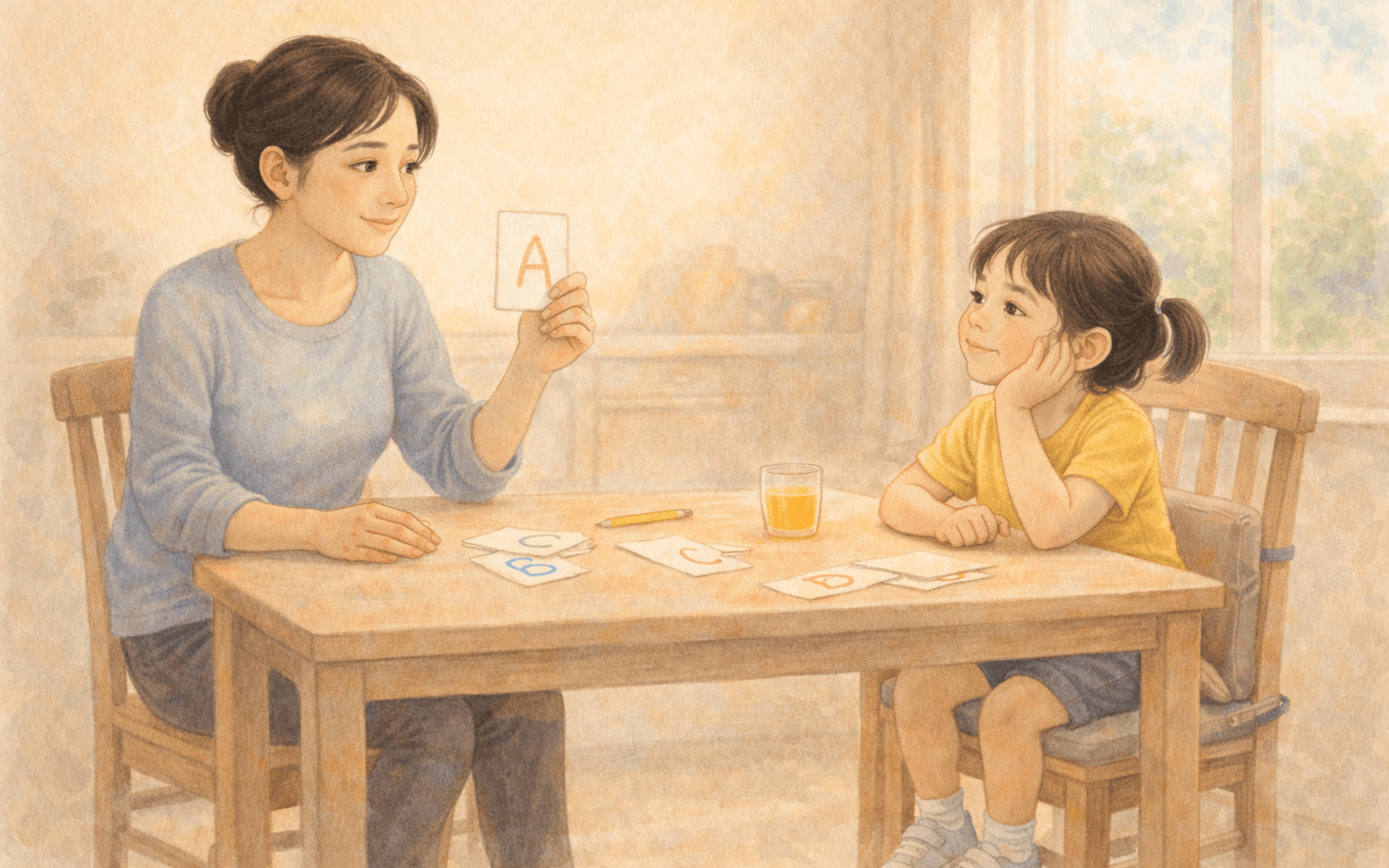
Your child starts kindergarten in September. You've been drilling letters, practicing counting, wondering if the pencil grip is right. Here's what the research says: most parents are preparing for the wrong test.
When the people who actually run kindergarten classrooms are asked what matters on day one, the alphabet doesn't even crack the top five.
- Why standard kindergarten readiness checklists focus on the wrong skills — and what teachers actually rank highest
- What a 19-year study found when researchers tracked kindergarten social competence into adulthood
- The five domains of school readiness — and why cognitive knowledge is one piece, not the whole picture
- Why self-regulation predicts academic outcomes more reliably than letter recognition
- Six everyday ways to build the skills that actually matter before September — no curriculum needed
If the one-sentence answer is enough, you’ve got the gist. If you want the mechanism behind each piece, keep reading.
The Kindergarten Readiness Checklist Problem
If you search "is my child ready for kindergarten" right now, you'll find a hundred checklists that look almost identical. Can your child recognize the alphabet. Count to ten or twenty. Hold a pencil. Write a first name. Know basic shapes and colors.
These checklists aren't wrong — they describe real skills that are useful in a classroom. But when researchers ask the adults who actually teach five-year-olds what matters most on the first day of school, the answers look nothing like those checklists.
In a large-scale survey, teachers ranked the skills most important for school readiness. Academic knowledge — letters, numbers, colors — landed near the bottom. What topped the list? A child who shows up rested and fed. A child who can say "I need help with this" using words. A child who is curious about new things instead of shutting down. A child who can follow a two-step direction and wait without disrupting the group. A child who notices when another child is upset.
The pattern was clear: the teachers who spend every day in a kindergarten classroom believe that school readiness is about how a child functions — not what a child already knows.
What the 19-Year Study Found
One of the most striking pieces of evidence comes from a study published in the American Journal of Public Health. Researchers from Penn State and Duke University tracked over 700 children from kindergarten through age 25. They measured one thing at the start: teachers' ratings of each child's social competence — sharing, cooperating, listening, resolving problems with peers.
Then they followed those children for almost two decades.
The results were remarkable. Children who scored higher on social competence in kindergarten were significantly more likely to finish college and hold steady employment by their mid-twenties. Children who scored lower faced substantially higher odds of arrest, substance use issues, and reliance on public assistance — even after the researchers accounted for differences in family income, cognitive ability, and neighborhood.
One study doesn't prove everything. But it's consistent with a large body of research showing the same pattern: how children interact with other people at school entry matters at least as much as what they know academically.
Five Domains of Kindergarten Readiness (Not One)
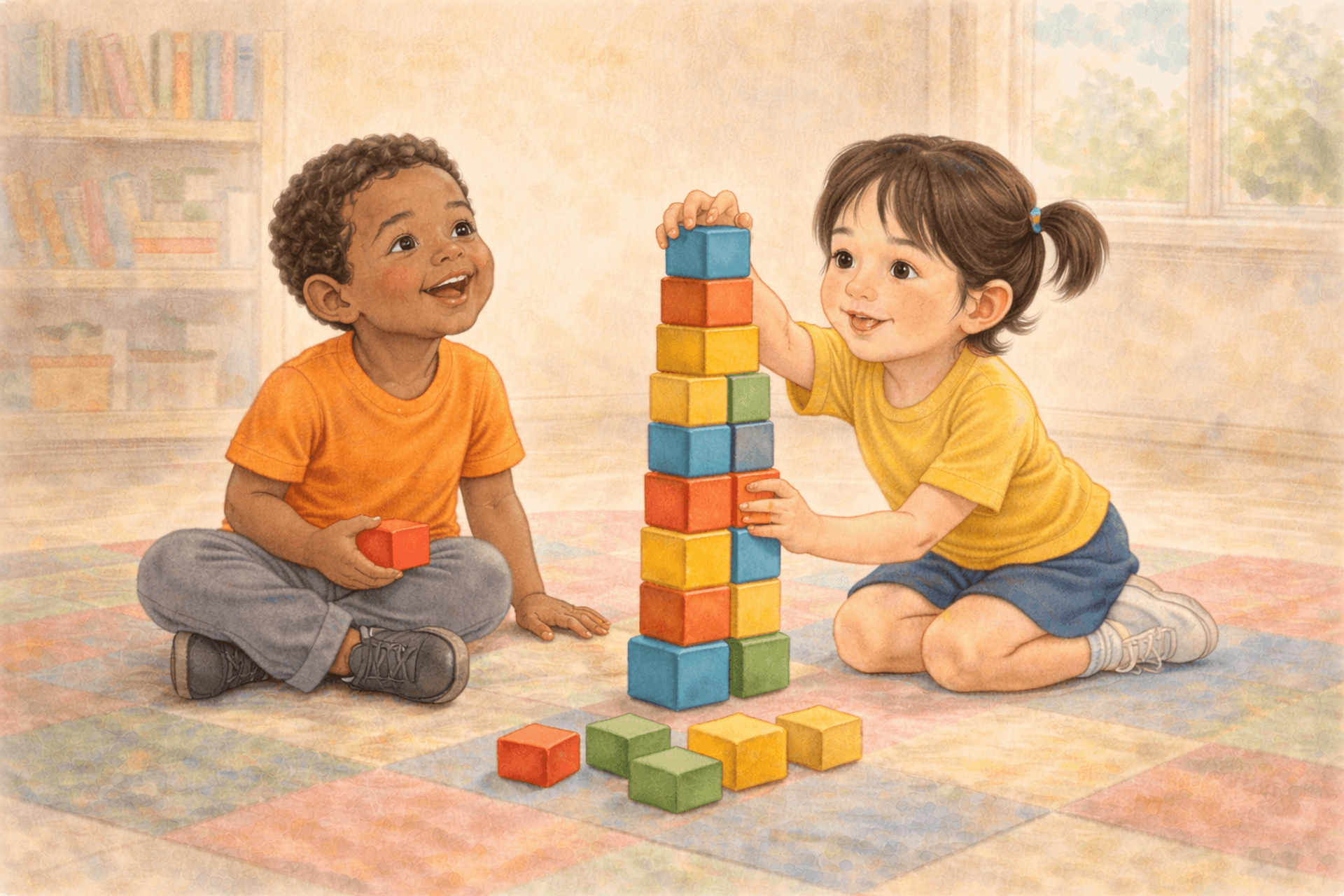
School readiness researchers generally talk about five areas of development, not one. Academic knowledge is in there — but it's one piece, not the whole picture.
The first is social and emotional development — the ability to manage feelings, form relationships with peers and adults, and handle frustration without falling apart. This is consistently rated by teachers as the strongest predictor of whether a child will thrive in a classroom setting.
The second is approaches to learning — curiosity, persistence, attention, and willingness to try new things. A child who gives up after ten seconds with a difficult puzzle and a child who keeps trying for five minutes are in very different places developmentally, even if both can count to twenty.
The third is language and communication — not reading fluency, but the ability to express needs, ask questions, follow multi-step directions, and participate in a conversation. A child who can say "I need help with this" is further along than a child who knows fifty sight words but melts down silently when confused.
The fourth is cognitive development and general knowledge — this is where letters, numbers, shapes, and patterns live. These skills matter. But they develop most effectively on top of the other four, not instead of them.
The fifth is physical development — both gross motor (running, climbing, sitting upright in a chair) and fine motor (holding a pencil, using scissors, zipping a jacket). These are the skills that let a child physically participate in a classroom, and they're often overlooked in readiness conversations.
Why Social-Emotional Skills Matter More for School Readiness
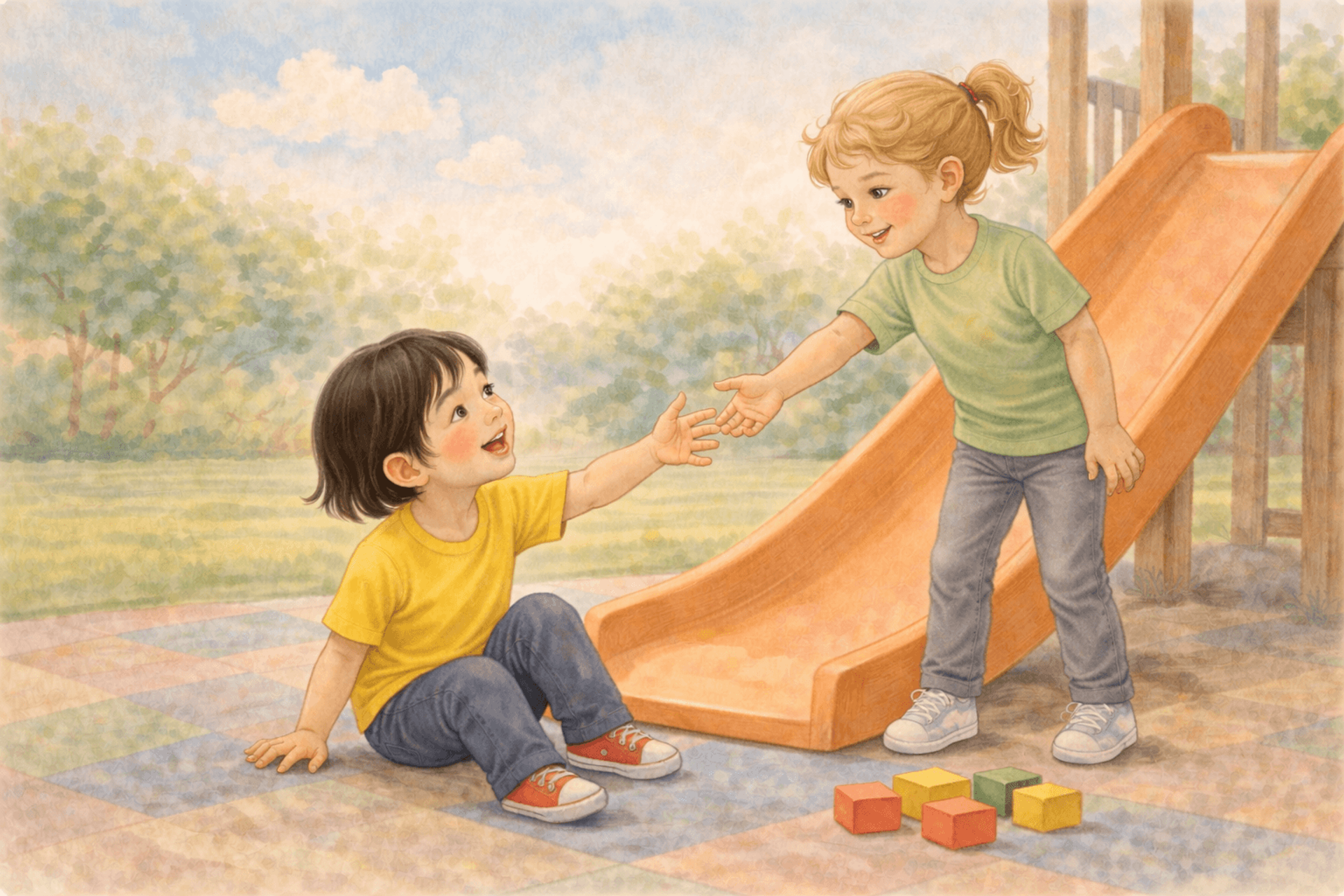
If you're wondering why kindergarten teachers keep putting social skills above academics, the logic is straightforward: a classroom is a social environment. A child who can't take turns, can't sit through a story, or can't recover from being told "not right now" will struggle regardless of how many letters that child can recognize.
Research on this is consistent across multiple studies. Children who enter kindergarten with stronger self-regulation — the ability to manage attention, emotion, and behavior — show better academic outcomes not just in kindergarten, but through elementary school. Executive function skills measured before school entry predict both math and reading achievement in later grades.
The relationship works in both directions, too. Children who struggle with emotional regulation in kindergarten are more likely to have difficulty with peer relationships, which affects classroom participation, which affects learning. The academic and social-emotional pieces aren't separate tracks — they're woven together.
A child who can name all twenty-six letters but can't handle being told "it's not your turn yet" is going to have a harder first year than a child who knows fifteen letters but can wait, share, and ask for help. Good kindergarten programs absolutely work on social-emotional skills. But a classroom of twenty children and one teacher has limited bandwidth for individual coaching — and a child who arrives with a foundation in waiting, sharing, and asking for help will get more out of every lesson from day one.
How to Get Your Child Ready for Kindergarten Before September
If your child is heading to kindergarten soon and you're realizing the social-emotional piece might need attention, the good news is that these skills are built through everyday life — not through a curriculum.
Practice separation. If your child has never been away from you for a full day, start small. Playdates without you present. A few hours at a relative's house. A community class where you drop off and pick up. The goal isn't to make your child comfortable with separation overnight — it's to build the muscle gradually so that September isn't the first time.
Play with other children. Not parallel play — actual interactive play where sharing, turn-taking, and conflict happen. These are the moments where social-emotional learning takes place. A playdate that ends in tears over a toy is not a failed playdate. It's practice.
Give your child responsibilities. Setting the table. Putting shoes by the door. Feeding a pet. These small tasks build the feeling of "I can do things that matter," which is the foundation of the persistence and confidence that teachers describe as "approaches to learning."
Name emotions out loud. "You're frustrated because the tower fell down. That's really annoying." This isn't coddling — it's teaching. A child who can name a feeling is a child who is building the vocabulary for self-regulation. Research consistently links emotion labeling to better emotional management. If you want a visual tool to practice this, our free My Feelings Faces printable gives your child six faces to point to when words aren't enough yet.
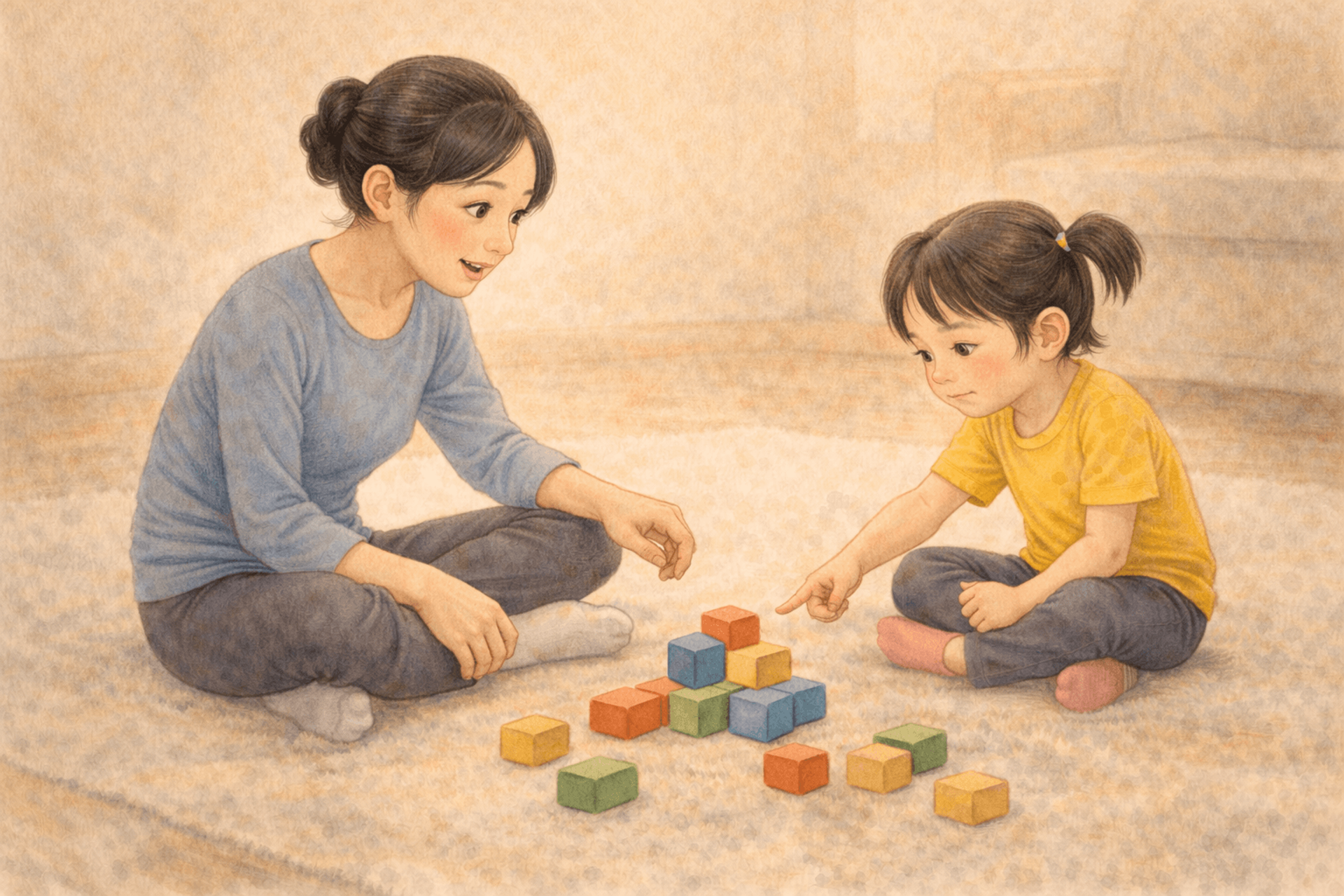
Read together — and talk about the story. Not for the reading practice (though that helps too), but for the conversation. "Why do you think the bear felt sad?" "What would you do if that happened to you?" These questions build perspective-taking, comprehension, and verbal expression — all school readiness skills.
Let your child struggle a little. Not dangerously. Not for hours. But when the zipper is hard or the puzzle piece won't fit, wait before jumping in. A child who has practiced working through frustration at home is a child who won't melt down the first time something is difficult at school. If you're looking for age-appropriate challenges that build exactly this kind of persistence, have a look at our activity guides and printables — each one is designed around a developmental skill, not just busywork.
When to Pay Attention
Most children are ready for kindergarten at five. That's not a coincidence — the age cutoff exists because most five-year-olds have the developmental foundation to handle a structured classroom. But "most" is not "all."
Every child develops on a unique timeline, and five-year-olds vary wildly in what they can do. That said, if something feels off to you — if separation is getting harder instead of easier, if big emotions seem to be escalating rather than settling, if your child consistently avoids other children, or if everyday self-care (bathroom, dressing, eating) feels significantly behind peers — trust that instinct. Talking to your pediatrician or your school's early childhood team isn't an alarm. It's just gathering information. Sometimes a small adjustment or a few months of targeted support makes all the difference — and the earlier you explore it, the more options you have.
The Part That Matters Most
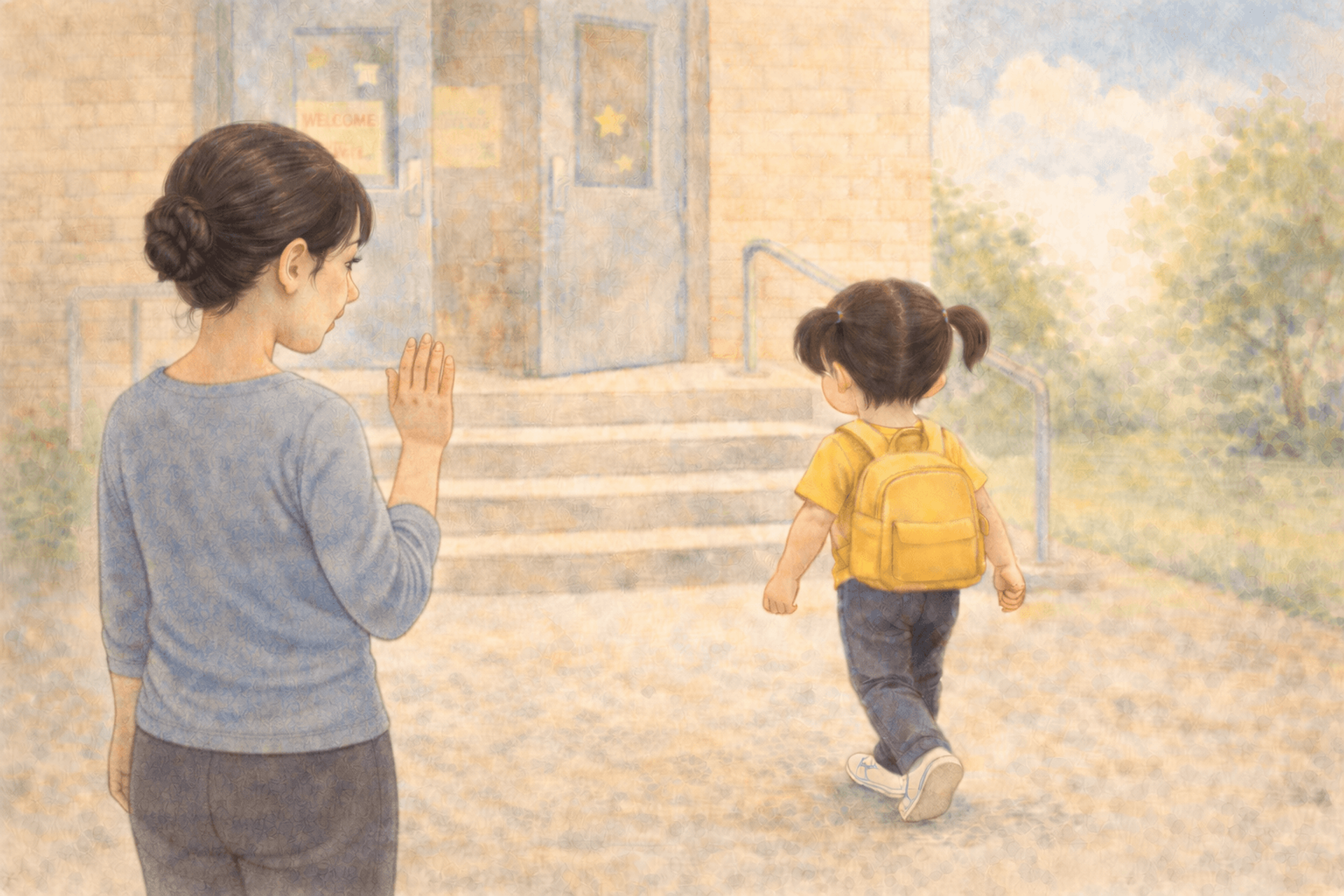
Here's what every kindergarten teacher already knows: the children who thrive in their first year are not the ones who arrived knowing the most. They're the ones who arrived willing to try, able to wait, ready to ask for help, and interested in the people around them.
If your child can do those four things — even imperfectly, even sometimes, even on a good day — your child is more ready than most readiness checklists will ever measure.
The letters will come. The numbers will come. Your job between now and September isn't to cram an academic curriculum into the remaining months. Your job is to keep doing what you've been doing all along: talking, playing, reading, and letting your child practice being a small human in a world full of other humans.
That's what school ready actually means.
Looking for activities that build these skills through play? Our printables and activity guides are designed around developmental research — covering everything from sensory exploration for babies to early learning for preschoolers.
Frequently Asked Questions
School readiness is not about reading or counting. Research shows it includes self-regulation (waiting, taking turns), emotional skills (recognizing and managing feelings), social skills (cooperating with peers), and the ability to follow multi-step instructions. These executive function skills are stronger predictors of school success than early academics.
Most children enter kindergarten between ages 5 and 6. Readiness is not a fixed milestone — it develops gradually through everyday experiences, play, and consistent routines during the preschool years. Every child's timeline is different.
For educational and entertainment purposes only. Not a substitute for professional medical or educational advice. If you have concerns about your child's development or school readiness, consult your pediatrician or local school district's early childhood team.
- Jones, D. E., Greenberg, M., & Crowley, M. (2015). Early social-emotional functioning and public health: The relationship between kindergarten social competence and future wellness. American Journal of Public Health, 105(11), 2283–2290.
- Blair, C., & Raver, C. C. (2015). School readiness and self-regulation: A developmental psychobiological approach. Annual Review of Psychology, 66, 711–731.
- Mann, T. D., Hund, A. M., Hesson-McInnis, M. S., & Roman, Z. J. (2017). Pathways to school readiness: Executive functioning predicts academic and social-emotional aspects of school readiness. Mind, Brain, and Education, 11(1), 21–31.
- Curby, T. W., & Berke, E. (2016). Kindergarten teacher perceptions of kindergarten readiness: The importance of social emotional skills. Paper presented at the American Educational Research Association, Washington, DC.
- Domitrovich, C. E., Durlak, J. A., Staley, K. C., & Weissberg, R. P. (2017). Social-emotional competence: An essential factor for promoting positive adjustment and reducing risk in school children. Child Development, 88(2), 408–416.
- Snow, C. E., & Van Hemel, S. B. (Eds.). (2008). Early childhood assessment: Why, what, and how. National Academies Press.
More Articles
Parallel Play in Toddlers: Why Side-by-Side Is the Social Work
Your toddler spent the entire playdate building separate towers, and nobody shared a single block. That counted — more than it looked. A 2025 longitudinal study found that playing beside a specific child consistently predicted later social play with that same child, but not the other way around. Here's what parallel play in toddlers actually is, why the science calls it strategic rather than passive, and what it means for how you run a playdate.
When Do Babies Point: Why It Matters for Language
Most milestone articles treat pointing as a box to check around 12 months. The research tells a different story — one that starts months earlier, runs through the infant brain, and traces back to how much the parent is pointing. Here's what the last fifteen years of research actually found, and what it means for everyday interactions.
When Do Babies Wave Bye-Bye: Why Your Baby Needs You to Wave First
Most baby milestones unfold on a biological schedule — waving isn't one of them. A 2023 study found that babies develop imitation ability because their caregivers imitate them first, and waving is named directly as a cultural gesture learned through that loop. Here's what the research says about the 9–12 month window, why the first wave looks nothing like a wave, and what helps it arrive.