The Blog.
Real questions about little humans, answered with real science.
- 85articles
- 12topics
- 5age stages
Articles
 Social & Emotional
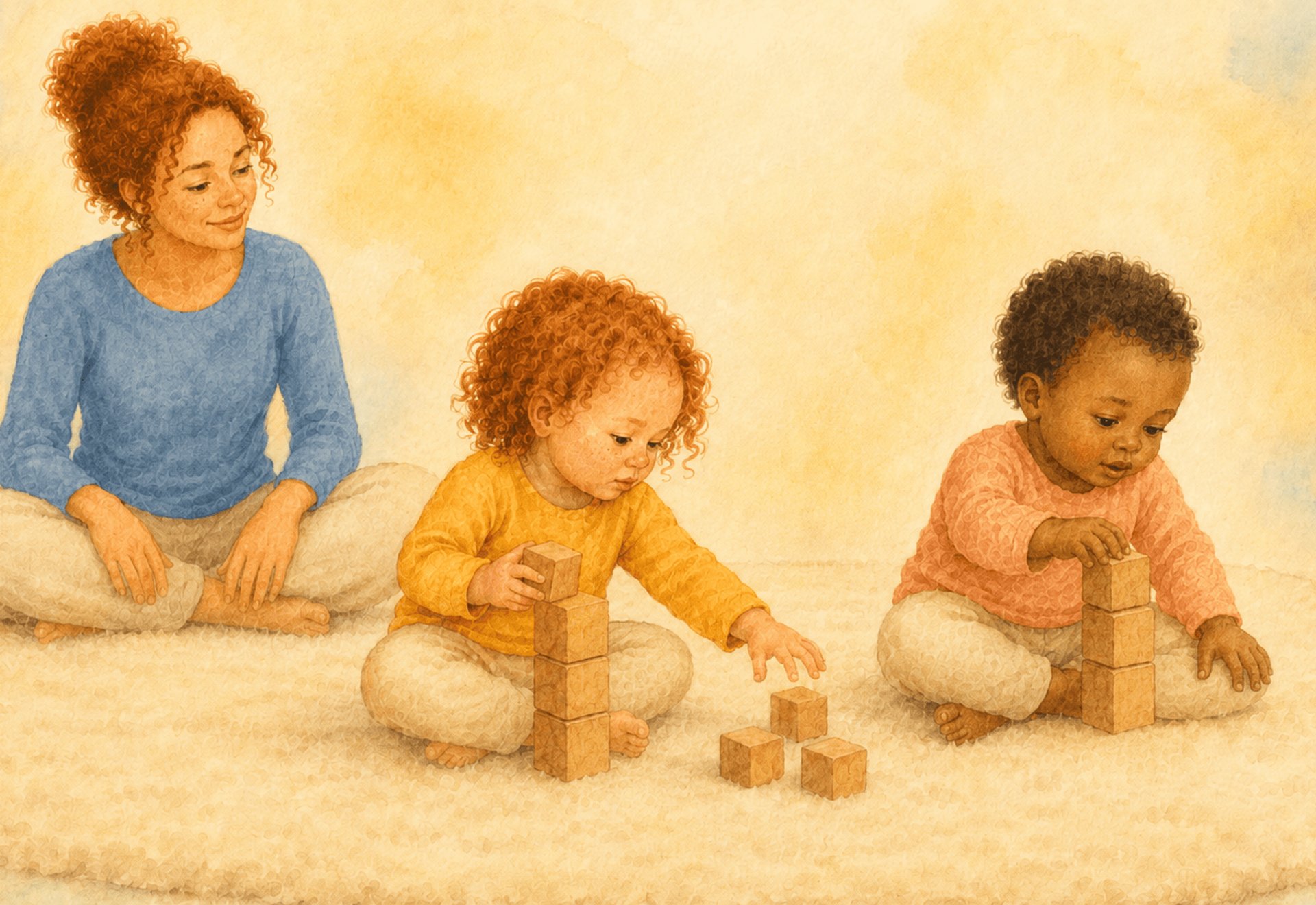
Parallel Play in Toddlers: Why Side-by-Side Is the Social Work
Your toddler spent the entire playdate building separate towers, and nobody shared a single block. That counted — more than it looked. A 2025 longitudinal study found that playing beside a specific child consistently predicted later social play with that same child, but not the other way around. Here's what parallel play in toddlers actually is, why the science calls it strategic rather than passive, and what it means for how you run a playdate.
 Language & Communication
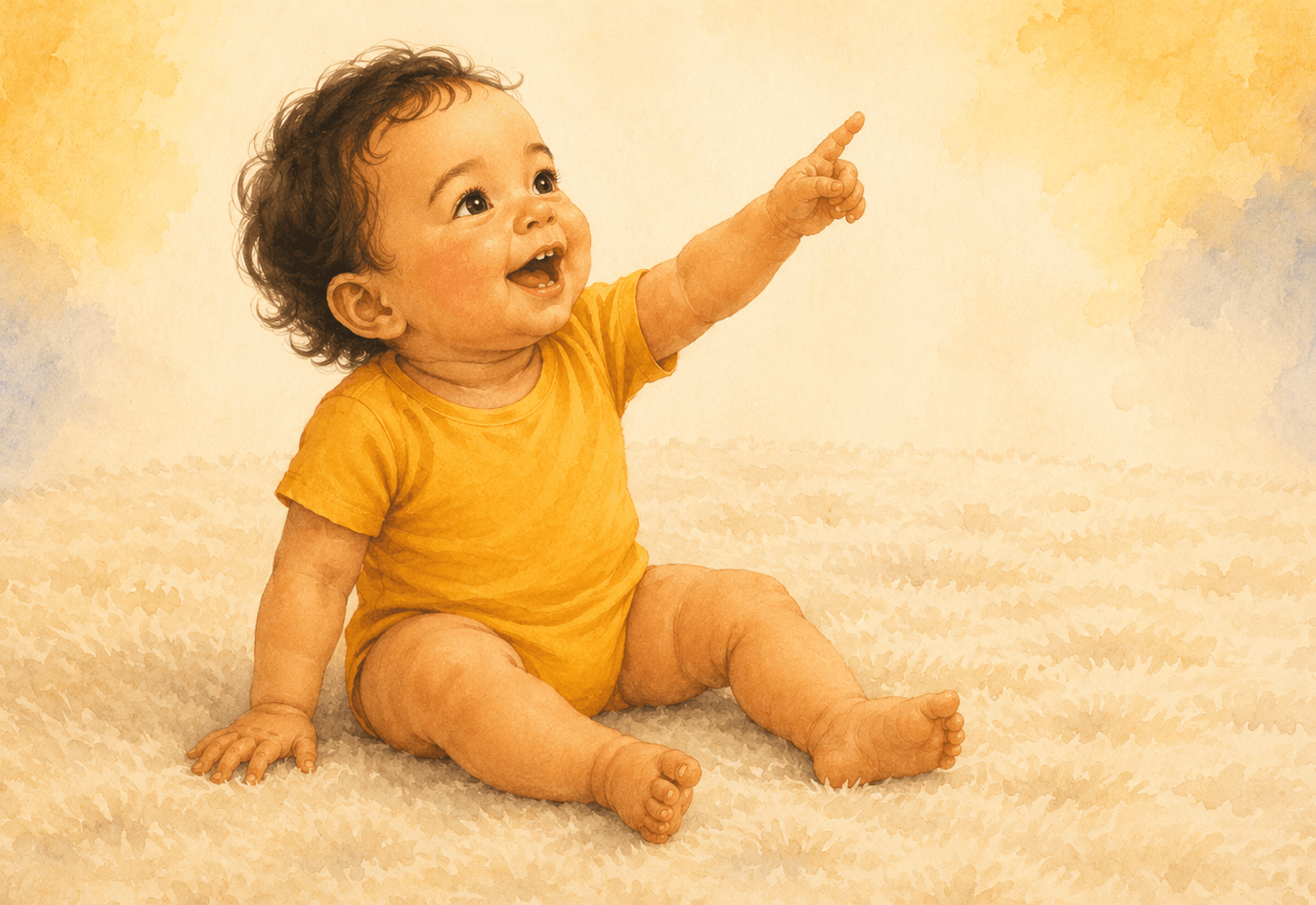
When Do Babies Point: Why It Matters for Language
Most milestone articles treat pointing as a box to check around 12 months. The research tells a different story — one that starts months earlier, runs through the infant brain, and traces back to how much the parent is pointing. Here's what the last fifteen years of research actually found, and what it means for everyday interactions.
 Language & Communication
When Do Babies Wave Bye-Bye: Why Your Baby Needs You to Wave First
Most baby milestones unfold on a biological schedule — waving isn't one of them. A 2023 study found that babies develop imitation ability because their caregivers imitate them first, and waving is named directly as a cultural gesture learned through that loop. Here's what the research says about the 9–12 month window, why the first wave looks nothing like a wave, and what helps it arrive.
 Motor Development
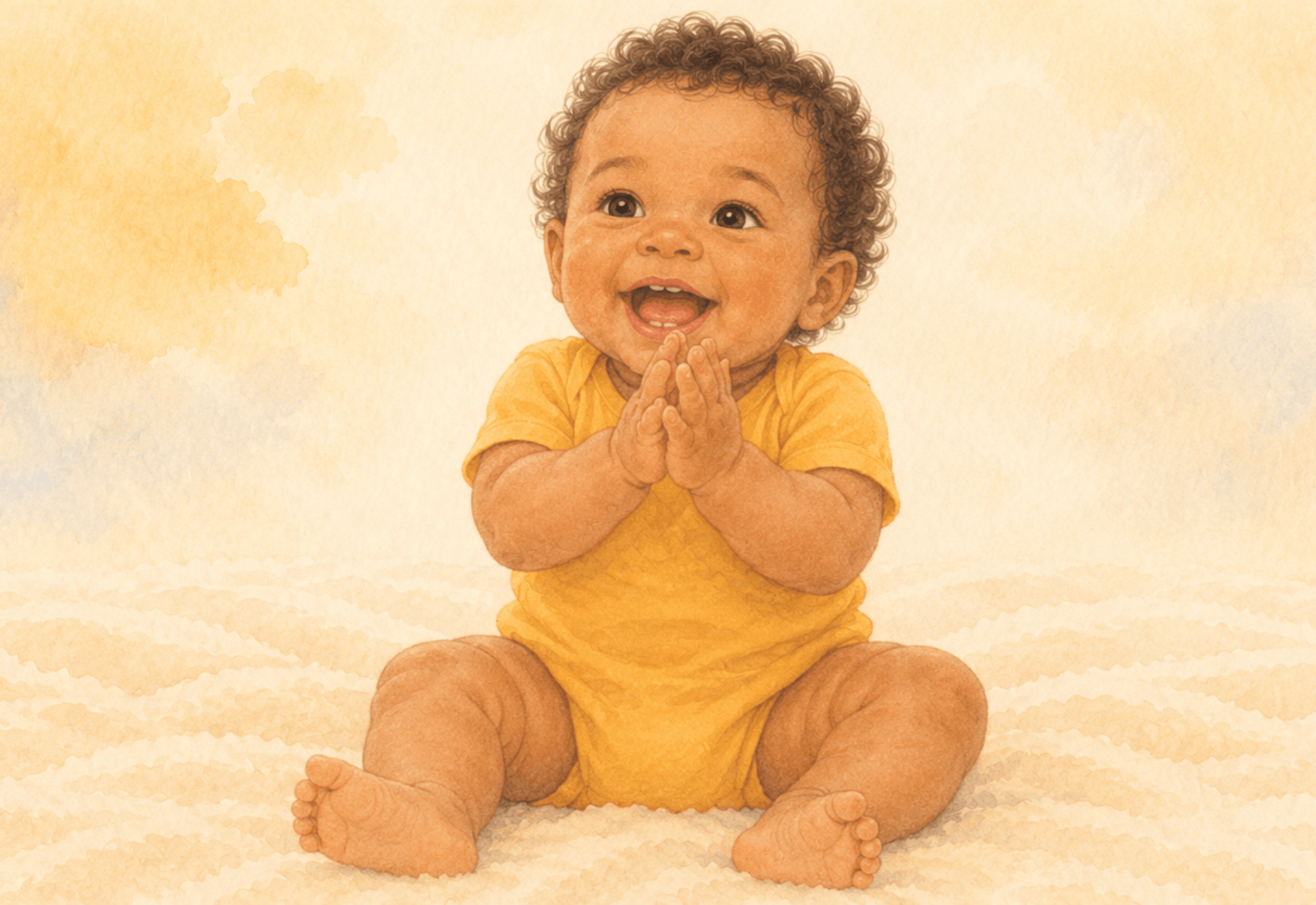
When Do Babies Start Clapping: The Answer Most Parents Don't Expect
Every article about baby clapping will tell you nine months. What they skip is that the brain system behind that first clap has been building since the second month of life. Here's what the CDC actually says about the milestone, what motor and neurological steps have to fall into place first, and how to tell a normal late clapper from a pattern worth flagging.
 Prenatal & Newborn
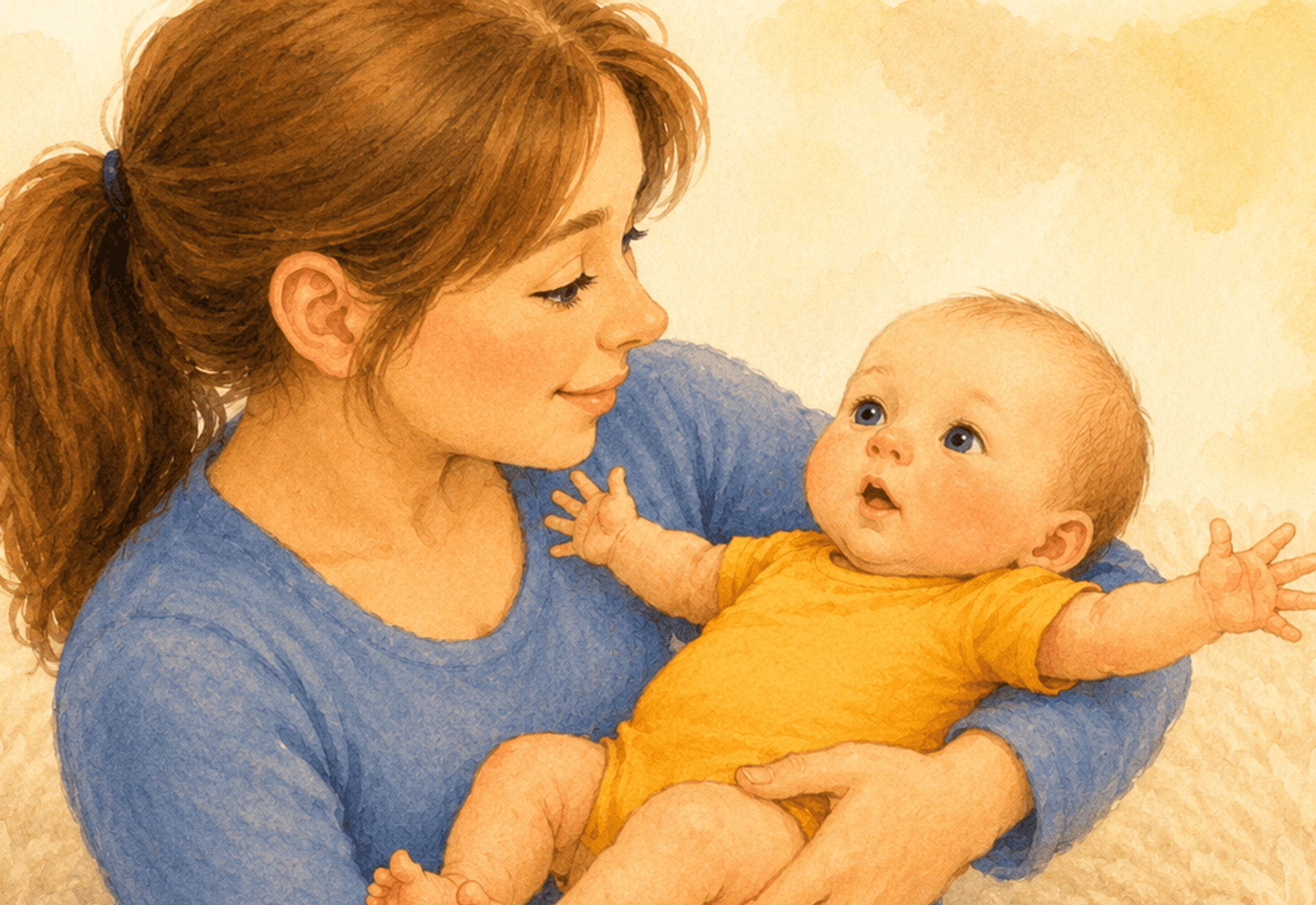
Newborn Reflexes: What They Mean and Where They Actually Go
Your pediatrician runs a finger along your baby's foot and scribbles something in the chart — and most parents have no idea what just happened. Newborn reflexes aren't a cute checklist. They're brainstem programs that helped your baby survive arrival into the world, and they don't vanish when the brain matures — they get switched off. Whether each one is present, absent, or still hanging around at the wrong age tells your pediatrician more than you might expect.
 Parenting
How to Baby Proof Your Home Room by Room: A Danger Map in the Right Order
Most baby proofing starts with outlet plugs and ends in the wrong order. The hazards that actually send babies to the emergency room (unanchored furniture, water, swallowable objects, windows) get handled last, if at all. Here's a room-by-room plan built around what really hurts babies, plus the developmental reason "she can't do that yet" is the riskiest assumption in the house.
 Prenatal & Newborn
Third Trimester Checklist: What the Research Says to Prioritize Before Baby
Every third trimester checklist online is a shopping list — hospital bag, car seat, nursery. But line them up against the research and a gap opens: the items that actually change how your delivery goes and how protected your baby is in those first weeks are mostly different. Two timed vaccines, a verified sleep position, the right week for the GBS test, and the one preparation almost no list mentions.
 Prenatal & Newborn
Newborn Care Basics: What the Research Behind Each Rule Says
Every rule in newborn care — dry cord, fewer baths, back to sleep, hip-healthy swaddling — has a study behind it, and sometimes the study changes how you'd actually do the thing. This is the hands-on mechanics guide: cord stump, bathing, diapers, swaddling, temperature, nails, and nose, each explained with the research that shaped the recommendation.
 Prenatal & Newborn
Your Baby's First Week Home: The Numbers That Replace the Panic
Most of what feels catastrophic in the first week with a newborn has a scientific explanation — and it's considerably less alarming than what your brain invents overnight. The baby has lost weight. The baby fed eleven times before noon. The baby woke every hour. Every single one of those things has a number behind it, and the numbers are more reassuring than the internet.
 Motor Development
Tummy Time Exercises for Baby: The Month-by-Month Progression (0–6 Months)
Every tummy time article tells you the same thing: thirty minutes a day. Here's what none of them mention — there are five completely different physical challenges stacked inside what we call "tummy time," and what the baby is building at week two looks nothing like what's happening at month five. This article explains the progression, the research behind each rung, and how to make every session count.
 Motor Development
Hand Eye Coordination Activities for Babies: What's Really Happening
Every hand-eye coordination guide for babies starts from the same assumption: that the eyes lead and the hands follow. The research says otherwise. From the moment a baby first reaches for an object, the hands are teaching the eyes — not the reverse. Here's what that means for the activities that actually matter across the first twelve months.
 Motor Development
Gross Motor Skills Baby: What the Milestones Don't Tell You
The average American baby spends nearly six hours a day in a car seat, bouncer, or swing — and almost no time on the floor. It turns out that's exactly backwards from what shapes gross motor development. This article covers the real milestone windows (wide enough to stop most of the panic), why walkers delay development through two separate mechanisms, what crawling does to the brain that nothing else replicates, and what to do in each age window from birth through twelve months.
 Motor Development
Baby Fine Motor Skills Activities by Age: What the Research Says
Everything you've read about training your baby's pincer grasp is built on shakier ground than anyone admits — the most famous fine motor "shortcut" in infant research failed its pre-registered replication. What actually develops hand skill in the first year is surprisingly simple: more floor time, postural support, and variety of self-directed exploration. Here's what the research shows, by age, from birth to 12 months.
 Sleep
SleepWhen to Drop a Nap: What the Charts Don't Tell You
Every chart gives you age ranges. What none of them explain is why those ranges exist — and why two toddlers the same age can have completely different transitions. Here's what the neuroscience says, including what happens to night sleep and whether quiet time does anything.
 Sleep
SleepBaby Sleep Regression: Ages, Signs and What to Do
"Sleep regression" has been in every parenting app for twenty years. There is no medical definition for it. What research actually tracks is something more specific: the week your baby learns to crawl, pull to stand, or walk — and what that means for the nights that follow. Why earlier crawlers wake more than later ones, why the four-month change is permanent, and the only intervention with randomized trial evidence behind it.
 Social & Emotional
How to Discipline a Toddler Without Yelling: The Neuroscience Behind What Works
When a two-year-old is face-down on the grocery store floor screaming about the wrong yogurt pouch, "just say no" isn't failing because you're doing it wrong — it's failing because the part of the brain that could make "stop" happen is still being built. Here's what the neuroscience of toddler discipline actually looks like, and which techniques work because of that biology, not despite it.
 Feeding & Nutrition
Toddler Meal Ideas: What Research Says About What Goes on the Plate
Most toddler meal articles hand you a list of fifty recipes and send you on your way. This one starts somewhere different: with the research finding that what goes on the plate is only part of what determines whether a meal goes smoothly. Evidence-based meal ideas for fussy eaters ages 1–3, organized by the nutritional priorities that actually matter at this age (iron, zinc, and dietary variety) plus the mealtime structure that research links to less refusal.
 Feeding & Nutrition
How to Introduce Allergens to Baby Safely: What Happens After the First Taste
Every guide covers the scary first spoonful of peanut butter. Almost none covers what the research says happens next — and why that part is where most families quietly fall short. Here is what two landmark trials found about timing, dose, and the months of regular exposure that drive allergy prevention.
 Parenting
Gentle Parenting: What the Research Says
Everyone cites the same study as proof gentle parenting works — or doesn't. The problem: that study never looked at a single child. Here's what the research shows, which behaviors have 40 years of evidence behind them, and the one condition that decides whether any of it works.
 Brain & Learning
Cause and Effect Baby: When "I Did That" First Clicks
Watch a baby drop a spoon off the high chair tray eight times and you're watching a research project, not a mess. The question the baby is testing — "did I make that happen?" — is one of the most important cognitive questions of the first year. Here's what the brain is doing, and why it matters more than any cause-and-effect toy you can buy.
 Brain & Learning
Object Permanence Baby: When It Develops and What Speeds It Up
Every parenting article says object permanence develops at 8 months. The research tells a more interesting story: signs appear as early as 4 months, and the best-evidenced accelerator isn't peekaboo or any specific toy — it's whether a baby can move their own body through space. Here's what the science says, stage by stage.
 Parenting
Overstimulated Baby: Signs by Stage and How to Help
Most parents learn to recognize an overstimulated baby at stage three — full crying, arching, inconsolable. By then, the window for an easy fix has closed. This guide covers the early signals by age (0–3m, 3–6m, 6–12m), the three stages of overstimulation signs, what to do at each one, and how to structure a day that keeps the spiral from starting.
 Brain & Learning
How Baby's Brain Develops in the First Year: A Bottom-Up Guide
Your baby's brain grows by about 64% in the first three months alone — and a surprising share of that structural wiring happens not during tummy time, but during sleep. This article walks through the regional build sequence (brainstem first, prefrontal last), explains what those sleep twitches are doing, and replaces the standard "stimulate your baby" checklist with something more accurate: the conditions that let a predetermined construction schedule proceed.
 Sleep
SleepBaby Won't Nap: The Real Reason Daytime Sleep Is Harder
Your baby sleeps fine at night but fights every single nap — and it turns out there's a biological reason for that, one that no sleep guide bothers to explain. Daytime sleep runs on a completely different system than nighttime sleep, and knowing that changes everything about how you approach the nap, which tactics are worth trying, and which expectations to let go of entirely.
 Social & Emotional
Separation Anxiety in Babies: The Maturational Clock No One Talks About
Every parenting site says separation anxiety is normal. What none of them explain is why the timing is essentially identical across cultures — from Boston labs to Kalahari forager communities where babies are carried 90% of the time. This article covers when it starts, when it peaks, what the brain is doing while it runs, and what the goodbye research actually shows.
 Parenting
Baby Colic: What Research Says About That 6 PM Cry
Somewhere around week three, most parents of a colicky baby land on the same theory: something is wrong with the stomach. The research tells a different story. Baby colic is most likely a brain-and-clock-driven phase — not a digestive problem you caused or can reliably fix with gripe water. What helps, what the evidence says about dill water, and why the evening peak is so predictable.
 Sleep
SleepWhen Do Babies Sleep Through the Night
"When do babies sleep through the night?" sounds like a question with a simple answer. It doesn't have one — partly because researchers can't agree on what "sleeping through" even means, and partly because a 2025 twin study split night-waking into two separate problems with opposite causes. One is mostly about your family's environment. The other is mostly about your baby's wiring. Evidence-based breakdown of what's driving your nights.
 Social & Emotional
When Do Babies Start Laughing: The Question Behind the Question
Most babies laugh around three to four months — but laughing and understanding what's funny are two separate milestones, about a month apart. The research that pinpointed exactly when that shift happens changes what the milestone means. Plus: why babies laugh in their sleep, what the Navajo First Laugh Ceremony got right, and how tickle-laughter is 10 million years old.
 Social & Emotional
Why Toddlers Bite and How to Respond: It's Not What You Think
When the daycare calls about a biting incident, most parents immediately start questioning their discipline approach. But research on 562 toddler twins found that the vocabulary gap, not the behavior itself, is the real driver — and the window to close that gap closes around 3.5 years. Here's what the science says, and what works.
 Seasonal
Summer Activities for Babies: Safe Outdoor Play by Age
The research case for taking your baby outside this summer is stronger than most parents realize — and so are the safety rules most articles skip. This guide covers what outdoor time actually does for a developing nervous system, the exact AAP numbers on heat, sun, and water, and which activities make sense at 0-3, 3-6, and 6-12 months.
 Seasonal
Summer Activities for Preschoolers: What Changes at 3, 4, and 5
Two playgrounds, same child, same afternoon — one paved, one grass-and-sticks. Researchers who recorded what preschoolers said in each setting found something most activity lists never mention: the surface changes the sentence. This guide breaks down summer activities for preschoolers by age, because what a 3-year-old needs from outdoor summer time is not what a 4-year-old can do, and a 5-year-old heading to kindergarten needs something different again.
 Seasonal
Summer Activities for Toddlers: What the Research Says About Outdoor Play
Most summer activity lists for toddlers are just numbered ideas with no explanation of why any of them matter. This one starts somewhere different: a 2023 JAMA Pediatrics study that found outdoor play measurably offsets developmental costs of screen time, a heat-safety threshold most parents haven't heard of, and a breakdown of what activities actually fit a 12-month-old versus a 3-year-old — because developmentally, those are very different kids.
 Activities by Age
Activities for a 5 Year Old: Kindergarten Prep Starts in the Kitchen
Most kindergarten prep guides focus on letters, numbers, and phonics apps. But a 2019 study that followed nearly ten thousand American kindergartners found something different at the top of the list — and it was already in your kitchen. This piece covers the research on chores, handwriting, spatial play, storytelling, and rhythm: what each one does for the brain, and why the activities for a 5 year old that matter most rarely look like school.
 Prenatal & Newborn
When to Start Reading to Your Baby: The Answer Might Surprise You
Most parents start reading to their baby after birth. The research says to start in the third trimester — your baby's auditory system is actively building a map of your voice by week 28. And the reason to keep reading through the first year goes deeper than vocabulary: a 2022 brain study found that shared reading reshapes how an infant's brain predicts and processes language.
 Parenting
Baby Teething Symptoms: The Real List Is Shorter Than You Think
The standard list of teething symptoms is half right — and the half that's wrong includes a fever worth taking seriously. A decade of prospective studies has narrowed teething to a handful of local, oral signs inside an 8-day window. This article covers which symptoms are actually from the teeth, which ones coincide by accident, and what the FDA has specifically told parents to stop using.
 Activities by Age
Activities for a 4 Year Old at Home: What the Brain Is Practicing
Most activity lists for four-year-olds tell you what to do. This one explains what's actually happening in the brain while your child rhymes, draws, and plays pretend — and why those three things predict reading outcomes, school readiness, and social development more than any flashcard ever will. Evidence-based, with zero worksheets required.
 Activities by Age
Activities for a 3 Year Old: What Play Builds
Most activity lists for three-year-olds are exactly that: lists. This one starts from a different question — not which activity, but whether there's any pretending in it. Turns out that single ingredient changes what the activity does for your child's brain. Here's what the research on pretend play, outdoor time, and reading actually says, and what it looks like on a regular Tuesday.
 Language & Communication
Late Talker: When to Worry About Speech Delay
Your toddler understands everything but barely talks. Is this normal development or a warning sign? Learn when late talking resolves on its own and when it signals a deeper delay—backed by 17-year research tracking children from age 2 to adulthood.
 Language & Communication
Does Baby Sign Language Help Speech? Here's the Research
Baby sign language won't speed up speech — the 2026 research is clear on that. But it does something genuinely useful during the 8-to-14-month pre-verbal window. Honest breakdown plus a practical chart of the first signs to teach.
 Language & Communication
2 Year Old Words: Beyond the 50-Word Milestone
Most parenting sites answer "how many words should a 2 year old say" with the same number. What they don't explain is that the number is the clinical floor, not what a typical two-year-old actually says — and that word count isn't the most predictive signal anyway. This article covers the CDC 2022 update, what the large-scale norming data actually shows, and why two-word combinations matter more than any count.
 Sleep
SleepBaby Wake Windows by Age: The Sleep Schedule Science You Need
Most baby sleep guides hand you a chart and call it science. The biology of how infant sleep actually works — why schedules are impossible before month three, what "sleeping through the night" means in peer-reviewed research, and why the 4-month change is permanent — tells a different story. Evidence-based, no sleep-shaming.
 Language & Communication
How to Help Your Baby Talk: It's Not About Talking More
You've been narrating the laundry and explaining the coffee and singing those same four songs. The research says you're doing it right — and also that there's one part most parents miss. This one is about timing, attention, and a 1986 study that quietly overturns the instinct to always show your baby something new.
 Feeding & Nutrition
Best First Foods for Baby: Why the Order Matters More Than the List
Every list of best first foods for baby looks the same: avocado, banana, sweet potato, oatmeal. All fine choices — and all chosen for the same quiet reason: a six-month-old will eat them without a fight. New research suggests that logic, reasonable as it is, works against you at the dinner table two years from now. Here's what the order actually does.
 Motor Development
When Do Babies Start Smiling: What the 6-Week Number Isn't Telling You
The six-to-eight-week window for baby's first social smile is accurate — but almost no parenting article mentions what those weeks are actually counting from. The answer, which developmental scientists have known since 1982, changes how the milestone works for every parent, not just those with preterm babies. The brain science, the two types of smiles, and what research shows specifically helps.
 Prenatal & Newborn
Prenatal Brain Development: What Happens Before Birth
Your baby's brain starts building itself before a pregnancy test turns positive — and the most dramatic moments happen long before the third trimester. This article covers what occurs in each trimester, from neural tube closure at day 28 to the cerebellum's five-fold growth sprint, plus an honest look at what the research says (and doesn't say) about supporting it.
 Feeding & Nutrition
When to Start Solid Foods: What the Readiness Signs Are Telling You
Six months, when baby shows the signs — that's the answer most pediatricians give in five seconds flat. What it doesn't explain is why those signs and not others, or what the research says happens when the texture window closes later than it should. Here's what's running in the background.
 Activities by Age
Activities for a 2 Year Old at Home: What the Brain Is Practicing
The sensory bin took twenty minutes to set up. Your two-year-old spent that time putting a pot lid on and off. Here's why the pot lid was the better choice — and what's actually happening in the two-year-old brain that makes certain activities work. Twelve evidence-based activities organized by developmental area, plus the Stanford finding that reframes what "good play" actually means at this age.
 Activities by Age
Activities for an 18 Month Old: What's Actually Happening Under the Hood
Most guides to activities for an 18 month old give you a list. This one explains the mechanism — why carrying a wooden block across the room builds language faster than a sensory bin, why shape sorting works when color sorting doesn't yet, and why reading the same book twelve times in a row is, according to a controlled trial, exactly the right call.
 Activities by Age
Activities for a 1 Year Old: What the First Birthday Changes
The first birthday comes with a lot of milestone checklists — and a lot of quiet anxiety about whether your baby is hitting them on time. Here's what most activity guides skip: in 2022, the CDC moved both walking and first words to fifteen months. Twelve months is not a finish line. It's the moment when three specific cognitive shifts happen simultaneously, and each one changes what good play actually looks like.
 Activities by Age
Activities for an 11 Month Old: When the Body Starts Doing the Talking
Most lists of activities for an 11 month old will tell you to start working on pointing — but the research from the last few years says that's a month early. The gesture you actually want to notice is one your baby already does forty times a day. Eleven months is when the body starts doing the talking, and the activities that earn their place are the ones that respond to gestures already happening.
 Activities by Age
Activities for a 10 Month Old Baby: What Actually Changes This Month
Ten months is when one specific thing about language clicks into place. A 2013 study from Bergelson and Swingley pinpointed it: the meaning of "uh-oh" and "all gone" starts mapping right around now. The activities that fit a 10-month-old aren't more toys but a quieter set of shifts — narration with abstract words, in-and-out container play, real cruising space, and a wake-window rhythm that fits at home, in the car, even on a plane.
 Motor Development
When Do Babies Roll Over? The Three Answers, and Why Direction Matters
The first roll usually arrives by mistake, with a soft thud and a startled face. Then nothing happens for two weeks. So when do babies roll over — the accidental version, the deliberate version, or the both-directions-on-demand version? Three different timelines, a 2022 CDC update most parents missed, and a study of 240 Hong Kong infants that flips the textbook "tummy-to-back-first" rule on its head.
 Motor Development
When Do Babies Start Walking? Why the Weeks After Matter More
Most articles answer "when do babies start walking" with a date and stop there. The more useful answer is what happens in the weeks after the first step — vocabulary accelerates, the room gets re-mapped, and the baby's social conversation with the parent reorganizes itself. The 2014 study that made the link, the 2023 follow-up that explained why, and what to do with it before the first step.
 Motor Development
When Do Babies Start Crawling? A Guide to the Most Variable Milestone
In 2022, the CDC quietly removed crawling from its milestone checklist. The scientific literature could not even agree on what crawling is, or when 75% of babies should be expected to do it. Here is the honest answer to one of the first year's most-Googled questions, with the variability that parenting blogs tend to bury.
 Seasonal
Mother's Day Activities with Kids: Who's Actually Getting the Most Out of It
Whoever's typing "mother's day activities with kids" into Google late on a weeknight is, almost certainly, mom herself — running the celebration she's also being celebrated for. There's a kinder twist hiding in the developmental research: for toddlers and preschoolers, the giving part is what produces the emotional payoff, not the receiving. What that means age by age, from a 10-month-old at the window to a five-year-old retelling the year.
 Feeding & Nutrition
Baby Led Weaning: The Honest Guide to Safety and Real Risks
Baby led weaning lives somewhere between life-changing and alarming on the internet, depending on whose reel you watched most recently. The actual research is quieter and more useful than either headline. What the only randomized trial really showed about choking, obesity, and picky eating — and why nearly every family ends up doing some version of a mix.
 Activities by Age
Activities for a 9 Month Old: What Changes at the First Formal Checkup Age
Nine months is when "what to do with the baby" shifts. The CDC promoted 9 months to its own formal milestone age in 2022 for a specific reason, and the research from the last few years has flipped the usual advice — the most useful thing most days is doing less of it. Sustained attention, pre-pointing, A-not-B, pulling up, the new pincer grasp, and what actually fits a 9-month-old's brain.
 Activities by Age
Activities for a 7 Month Old: The Month Everything Starts Working Together
Sitting is stable, babbling has melody, peekaboo becomes a prediction game. Evidence-based activities for a 7 month old that match this leap.
 Motor Development
When Do Babies Sit Up? A Complete Guide to the Sitting Milestone
When do babies sit up? Most babies sit between 4 and 9 months. A research-based guide to the sitting milestone and practical steps to help.
 Activities by Age
Activities for a 6 Month Old: The Month Sitting and Real Babbling Arrive
Six months brings real babbling and independent sitting. Here are the activities for a 6 month old that match this major developmental leap.
 Activities by Age
Activities for an 8 Month Old: Two Kinds of Reach, and What to Do About Them
Pincer grasp is arriving, mobility is starting, stranger anxiety peaks. Evidence-based activities for an 8 month old — including the high chair.
 Activities by Age
Activities for a 5 Month Old: The Month That Changes How Your Baby Learns
At five months, your baby has discovered cause and effect — and two research findings explain why this changes everything. Soska and Adolph found that sitting with support produces 400 more exploratory actions per day than lying down. Parise and colleagues showed that saying your baby's name before showing a new object makes the brain process it more deeply. The activities that matter at five months work with these systems, not around them.
 Activities by Age
Activities for a 4 Month Old: What Your Baby Can Do Now That Changes Everything
At four months, your baby can reach, grasp, laugh, and — according to Baillargeon's landmark 1987 study — already understand that hidden objects still exist. Legerstee showed that 4-month-olds even know whether a hidden thing is a person or an object, choosing to vocalize to people and reach for things. Three decades of research say peekaboo isn't a simple game — it's a three-layer cognitive workout, and your voice makes it work faster.
 Activities by Age
Activities for a 2 Month Old: What Changed and What to Do About It
Most articles about activities for a 2 month old hand you the same list you got last month. But the brain has crossed a threshold — the social smile, cooing, and smoother visual tracking have all come online. A 2015 study in PLOS ONE found that infants as young as 4 weeks already time their smiles strategically to maximize their mother's smiling. The activities that matter at two months are the ones that meet these new abilities where they just arrived.
 Activities by Age
Activities for a 1 Month Old: What Your Baby Can Do Right Now
At one month, your baby's brain is forming connections faster than at any other point in life. The most powerful developmental activities don't come from a toy store — they start with your face at 8 inches, your voice during a diaper change, and gentle touch that a 2017 study in Current Biology found directly shapes how the brain processes sensation for years to come.
 Routine
When to Start Potty Training: Readiness Signs That Matter
Most children show potty training readiness between 18 and 36 months — but the signs that actually predict success aren't the ones on most checklists. What research says about interoception, the autonomy collision, and why starting earlier doesn't mean finishing sooner.
 Feeding & Nutrition
Toddler Not Eating? What's Normal and What Actually Helps
Between 25 and 50 percent of toddlers get called picky eaters — and most of the time, biology explains why. What the research says about food neophobia, appetite changes, and what actually helps at the dinner table.
 Sleep
SleepWhy Your Preschooler Needs a Bedtime Conversation
A three-minute bedtime conversation builds your preschooler's memory, emotional intelligence, and sense of self. Research shows that talking about the day — best, hard, funny — strengthens the same brain systems that process identity.
 Routine
Why Daily Routines Reduce Toddler Tantrums
Your toddler's brain can feel big emotions but can't manage them yet. Research shows that predictable daily routines lower stress hormones, reduce meltdowns, and build the exact brain skills tantrums reveal are still under construction.
 Early Learning
What Does "School Ready" Mean? A Parent's Guide to Kindergarten Readiness
Most kindergarten readiness checklists focus on letters and numbers. Research says social-emotional skills matter more. Here's what school ready actually means and how to prepare your child.
 Social & Emotional
Why Your Toddler Says "No" to Everything (And Why That's Exactly Right)
Your toddler's "no" phase isn't defiance — it's a developmental milestone. Here's what the terrible twos really mean, what's happening in your toddler's brain, and how to handle it with research-backed strategies.
 Language & Communication
When Do Babies Start Talking? What First Words Look Like
Most babies say a first word between 10 and 14 months — but language starts months earlier. From babbling to parentese to conversational turns, here's what the research says about how first words actually happen.
 Prenatal & Newborn
5 Things Your Baby Can Already Do in the Womb
Your baby has been busy before birth — hearing your voice, tasting your dinner, building 250,000 neurons per minute, and running brain exercises with every kick. Five prenatal abilities backed by published research.
 Activities by Age
Screen-Free Activities for Babies: What to Do Instead
Practical screen-free alternatives for the moments you actually reach for your phone — fussy baby, cooking, waiting rooms, and the couch.
 Activities by Age
5 Sensory Play Ideas You Can Do Right Now: no Prep, no Stress
Five research-backed sensory play ideas for babies that take 60 seconds each. No toys, no prep, no cleanup — just you and your baby.
 Brain & Learning
Screen Time for Babies: What the Research Really Says
What does the science actually say about babies and screens? A look at the AAP's 2026 update, the video deficit effect, and why the answer is more nuanced than most headlines suggest.
 Brain & Learning
5 Senses and Your Baby: What Develops When and How to Help
Sight, sound, touch, smell, taste — and two more you probably haven't heard of. How each sense develops in the first year and what kind of everyday experiences support it.
 Parenting
Am I Doing Enough? A Realistic Guide to Baby Play
The 2 AM question every new parent asks. Here's what developmental science says "enough" actually looks like — and why you're almost certainly doing more than you think.
 Brain & Learning
Sensory Play for Babies: A Month-by-Month Guide (0–12 Months)
Every sense is already working at birth — just not at full power. Here's what develops when, what kind of input supports each stage, and how to spot when it's too much.
 Activities by Age
Activities for a 3-Month-Old Baby
Three months is a turning point — longer wake windows, real smiles, and a baby who wants to connect. Here are the activities that matter at this stage, and the science behind them.
 Brain & Learning
When Do Babies See Color?
Color vision doesn't switch on like a light. Here's how it actually develops — from the first weeks through six months — and what the research says about your baby's first colors.
 Activities by Age
What to Do with a Newborn All Day: A Science-Backed Guide for New Parents
Your newborn is awake for less than an hour at a time — and that's enough. Here's what research says actually matters during those tiny windows.
 Motor Development
My Baby Hates Tummy Time: 7 Tips That Actually Work
Baby hates tummy time? You're not alone. 7 evidence-based positions and tips to make tummy time easier for your newborn — from day one.
 Brain & Learning
High Contrast Cards for Babies: Why They Work and How to Use Them
Not all black-and-white baby cards are the same. Here's the science behind high contrast visual stimulation — and how to actually use the cards by age.
 Brain & Learning
What Can Newborns Actually See? A Week-by-Week Guide
Newborn vision is blurry, mostly colorless, and limited to 12 inches. Here's what your baby sees each week — and when color finally appears.