1–2 years.
“Walking by 14 months. First real words by 12. The leap from baby to small person, in roughly 365 days.”
- 20articles
- 20products
- 14free printables

The research swims past.
Reach in and pull out a question. The full archive is below.
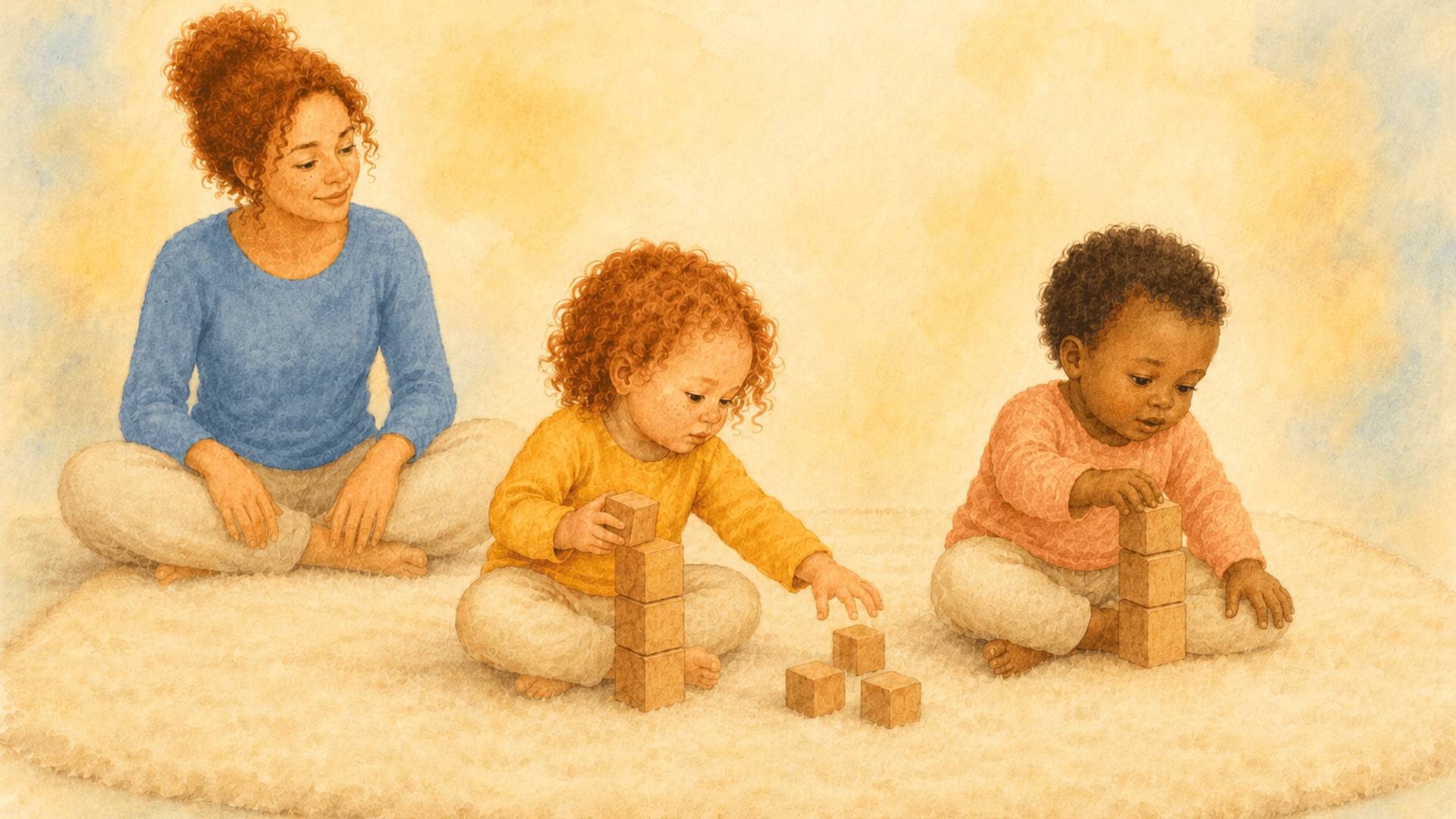
Parallel Play in Toddlers: Why Side-by-Side Is the Social Work
Your toddler spent the entire playdate building separate towers, and nobody shared a single block. That counted — more than it looked. A 2025 longitudinal study found that playing beside a specific child consistently predicted later social play with that same child, but not the other way around. Here's what parallel play in toddlers actually is, why the science calls it strategic rather than passive, and what it means for how you run a playdate.

When to Drop a Nap: What the Charts Don't Tell You
Every chart gives you age ranges. What none of them explain is why those ranges exist — and why two toddlers the same age can have completely different transitions. Here's what the neuroscience says, including what happens to night sleep and whether quiet time does anything.

Baby Sleep Regression: Ages, Signs and What to Do
"Sleep regression" has been in every parenting app for twenty years. There is no medical definition for it. What research actually tracks is something more specific: the week your baby learns to crawl, pull to stand, or walk — and what that means for the nights that follow. Why earlier crawlers wake more than later ones, why the four-month change is permanent, and the only intervention with randomized trial evidence behind it.
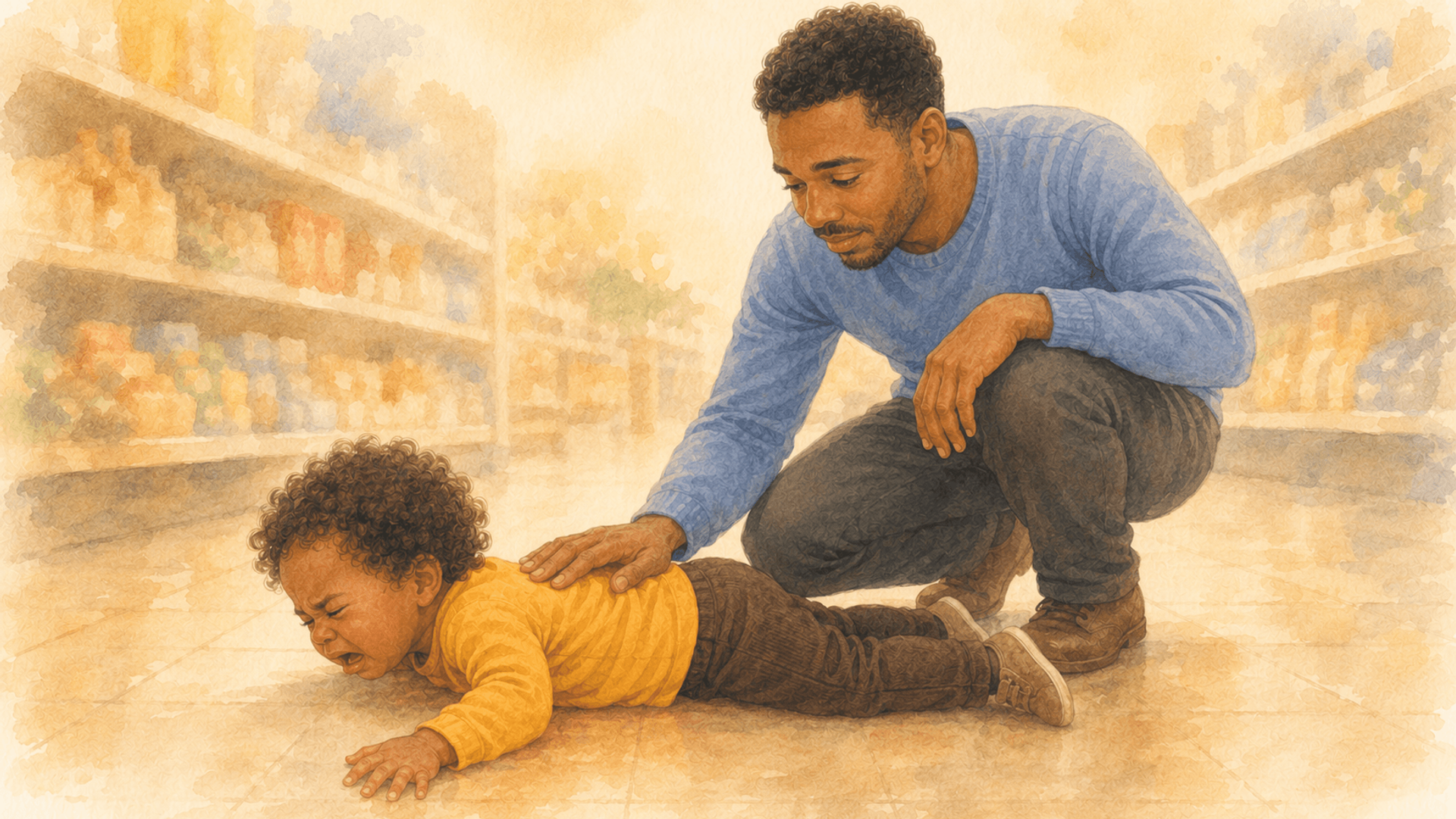
How to Discipline a Toddler Without Yelling: The Neuroscience Behind What Works
When a two-year-old is face-down on the grocery store floor screaming about the wrong yogurt pouch, "just say no" isn't failing because you're doing it wrong — it's failing because the part of the brain that could make "stop" happen is still being built. Here's what the neuroscience of toddler discipline actually looks like, and which techniques work because of that biology, not despite it.
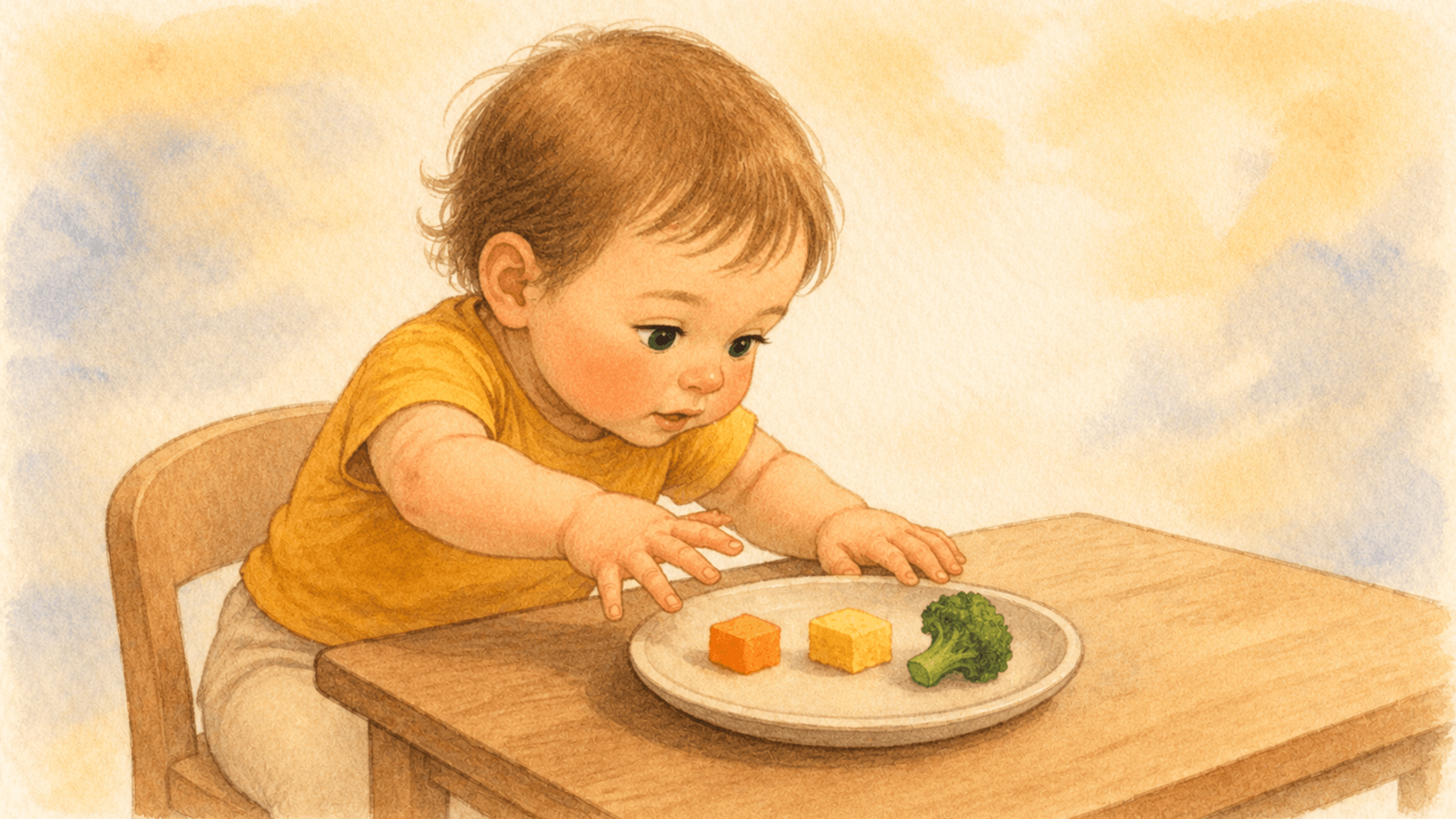
Toddler Meal Ideas: What Research Says About What Goes on the Plate
Most toddler meal articles hand you a list of fifty recipes and send you on your way. This one starts somewhere different: with the research finding that what goes on the plate is only part of what determines whether a meal goes smoothly. Evidence-based meal ideas for fussy eaters ages 1–3, organized by the nutritional priorities that actually matter at this age (iron, zinc, and dietary variety) plus the mealtime structure that research links to less refusal.
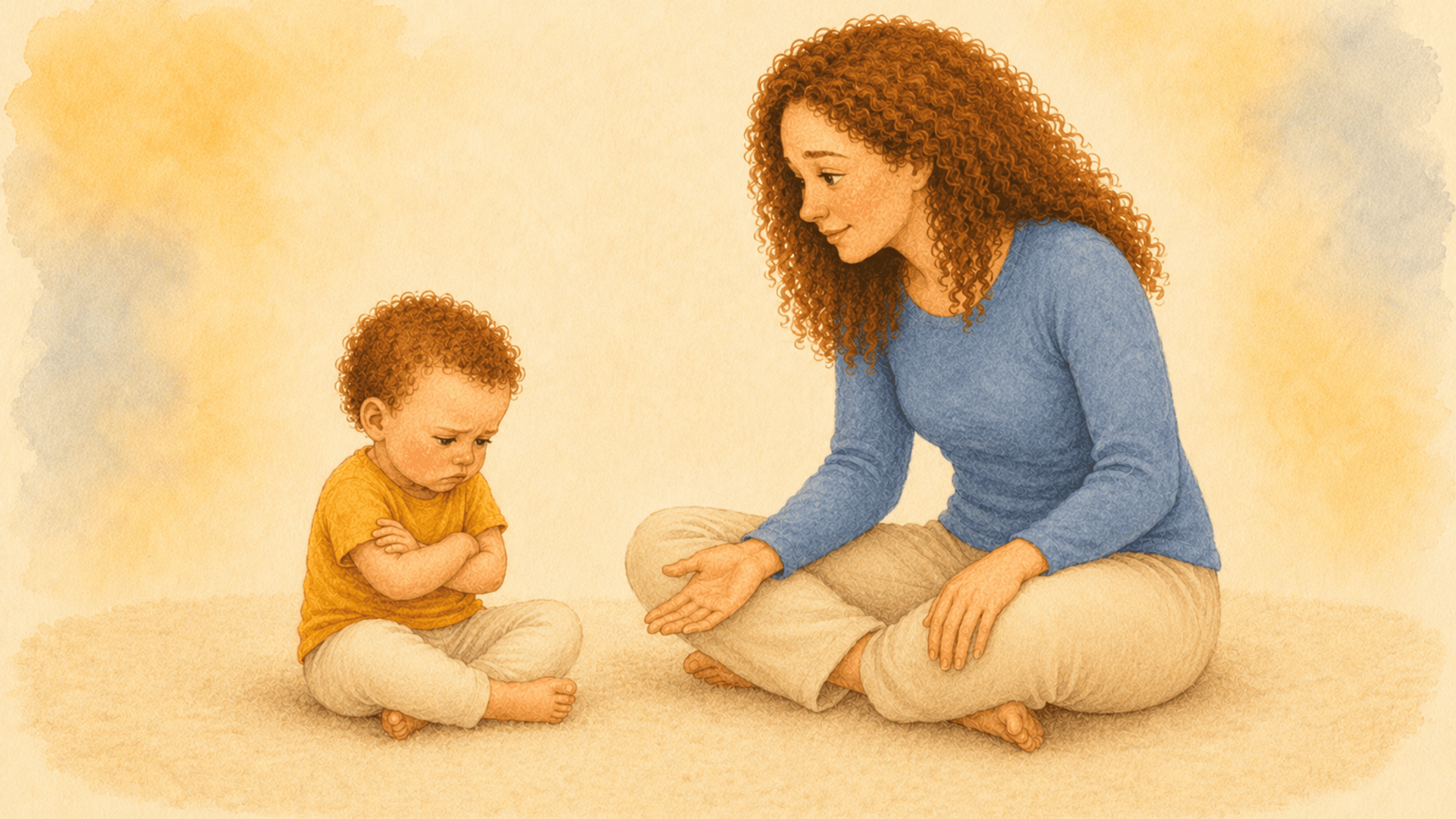
Gentle Parenting: What the Research Says
Everyone cites the same study as proof gentle parenting works — or doesn't. The problem: that study never looked at a single child. Here's what the research shows, which behaviors have 40 years of evidence behind them, and the one condition that decides whether any of it works.
Our collection for this age.
Made for where your child is right now.
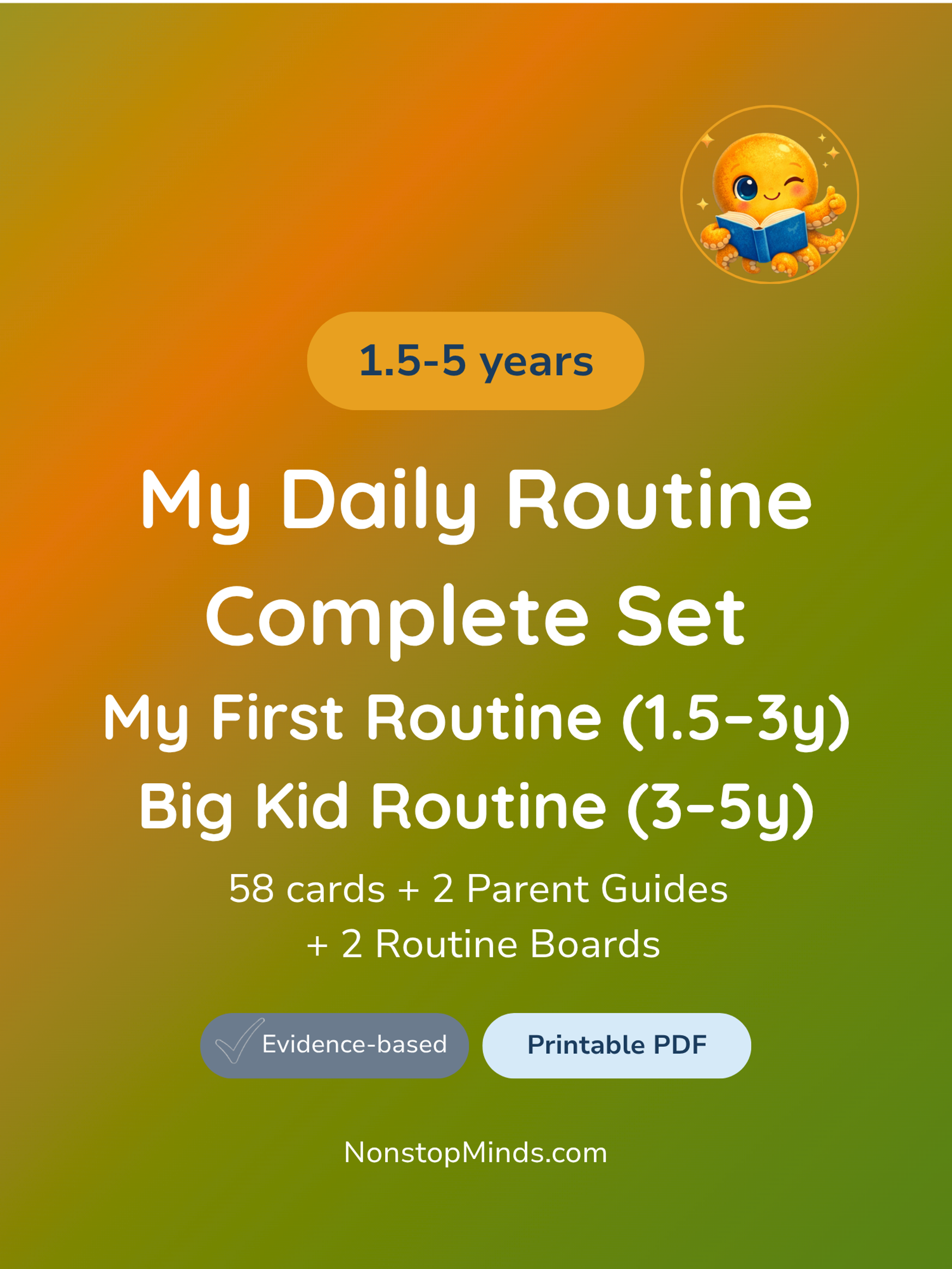
My Daily Routine — Complete Set
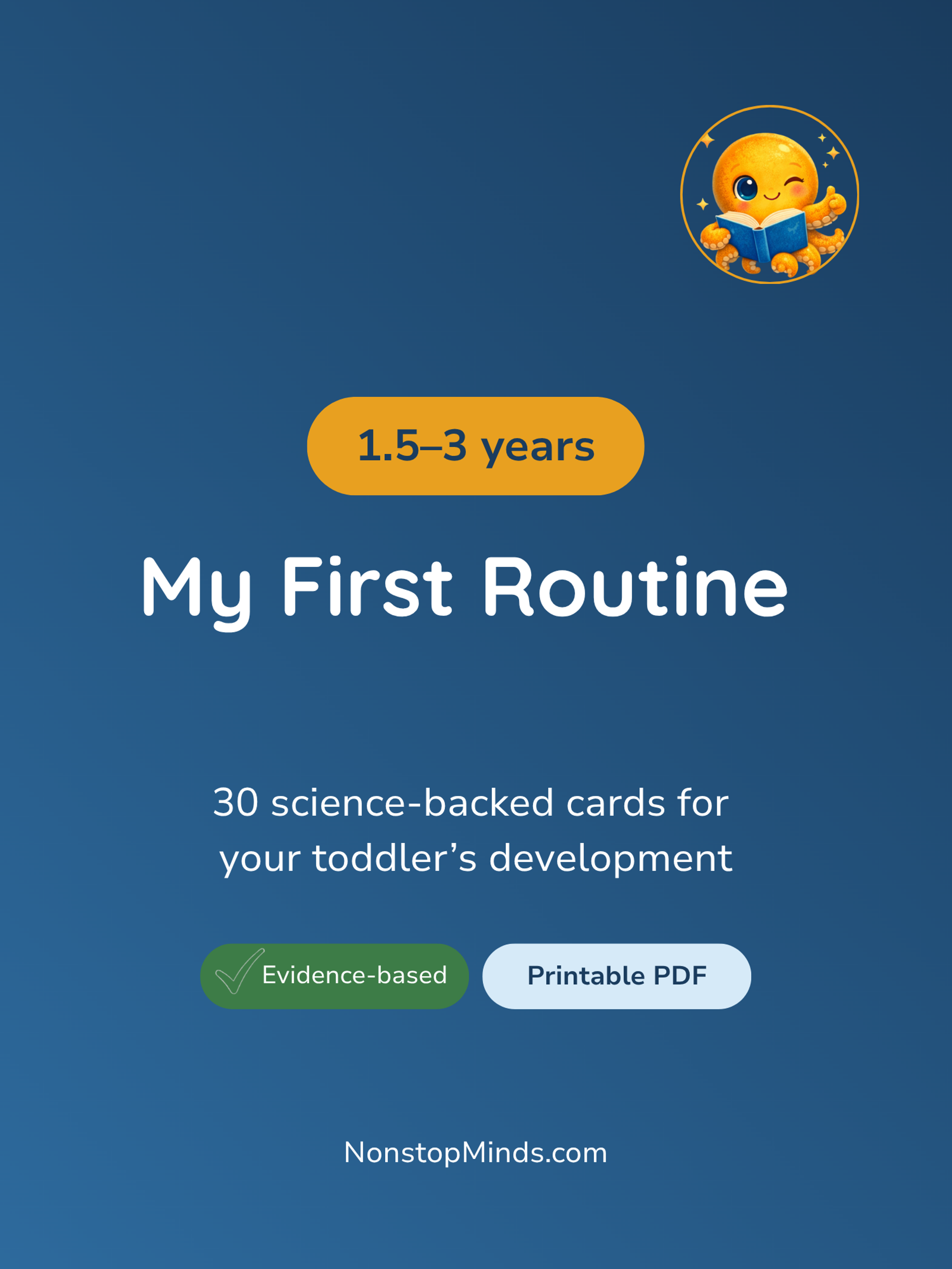
Daily Routine Cards for Toddlers
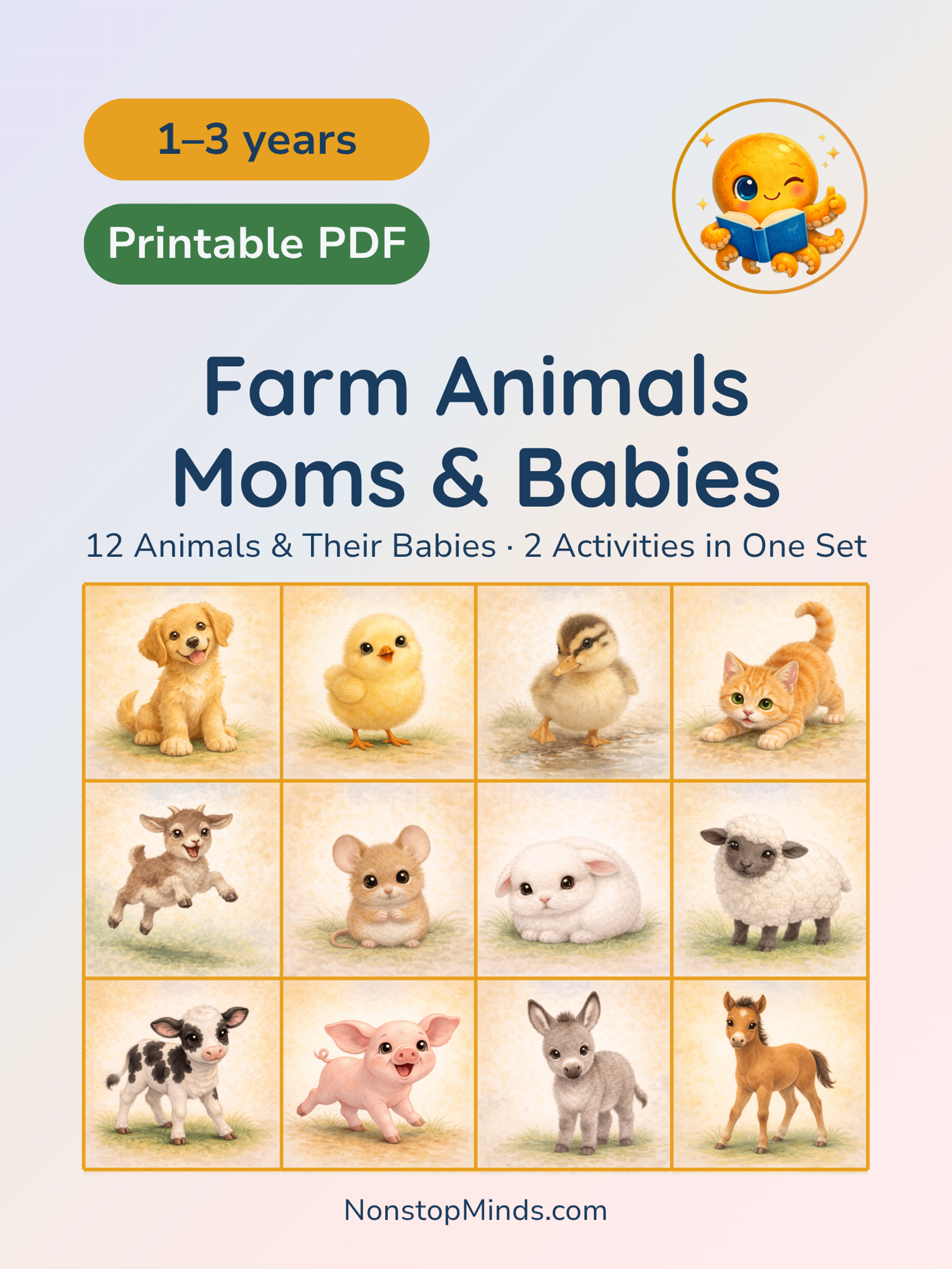
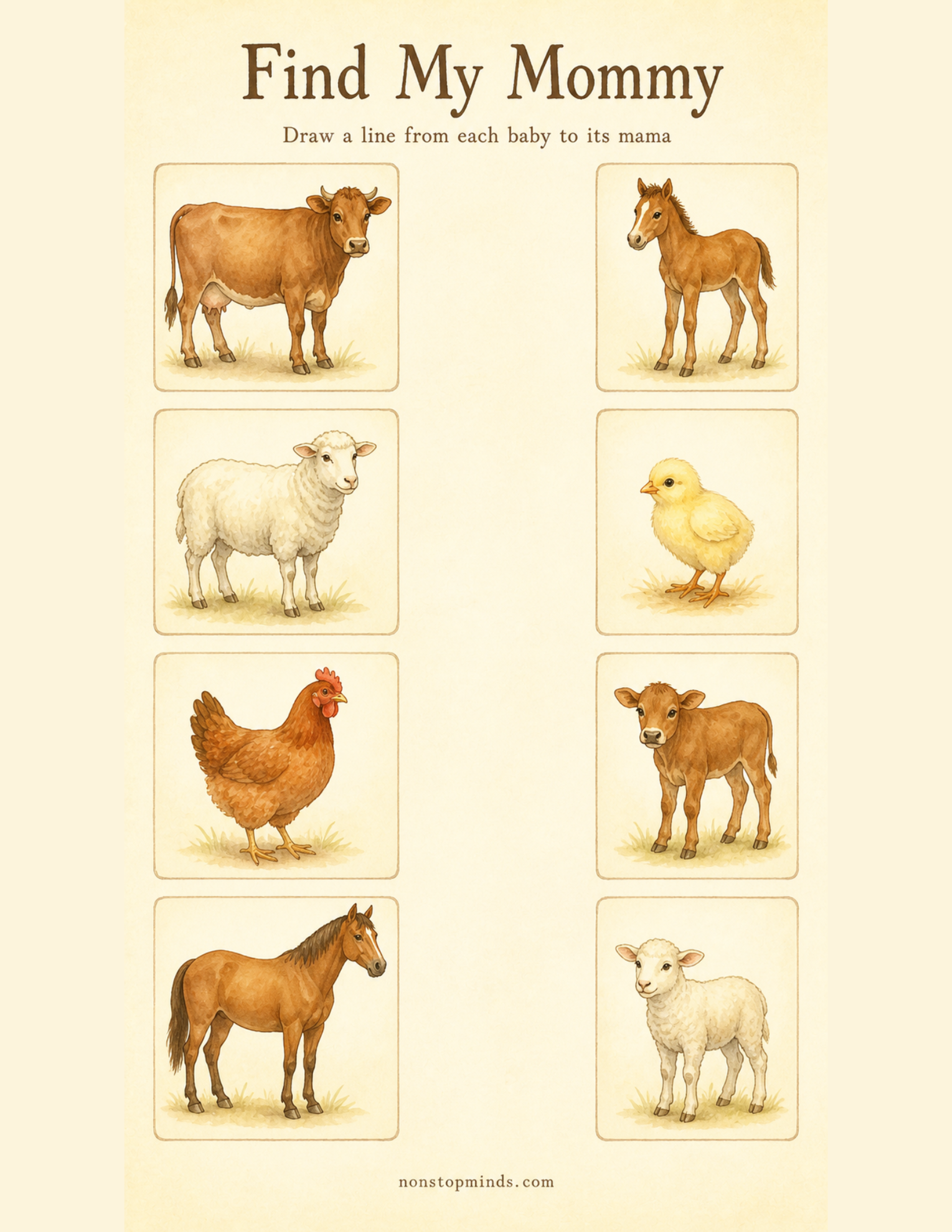
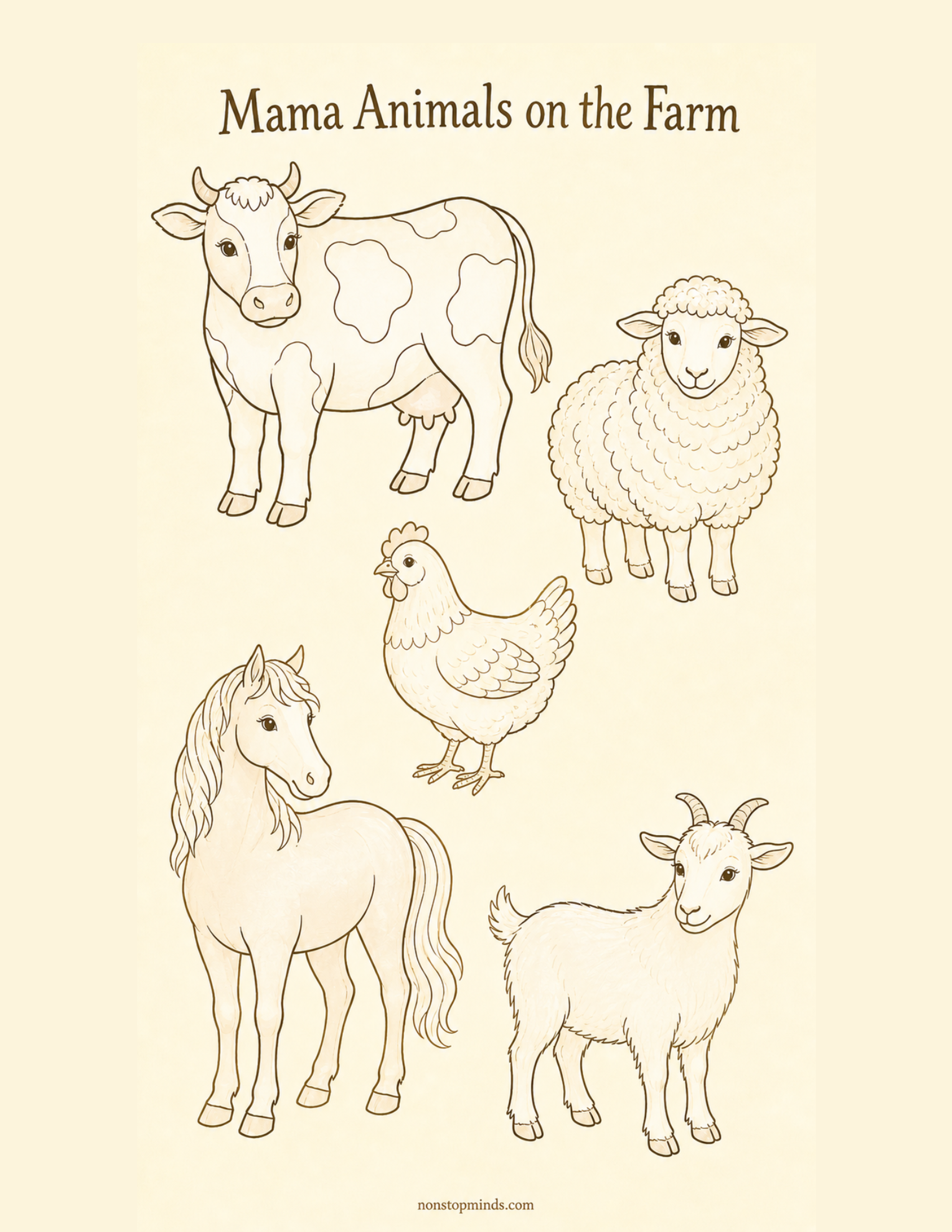
Farm Animals: Moms & Babies
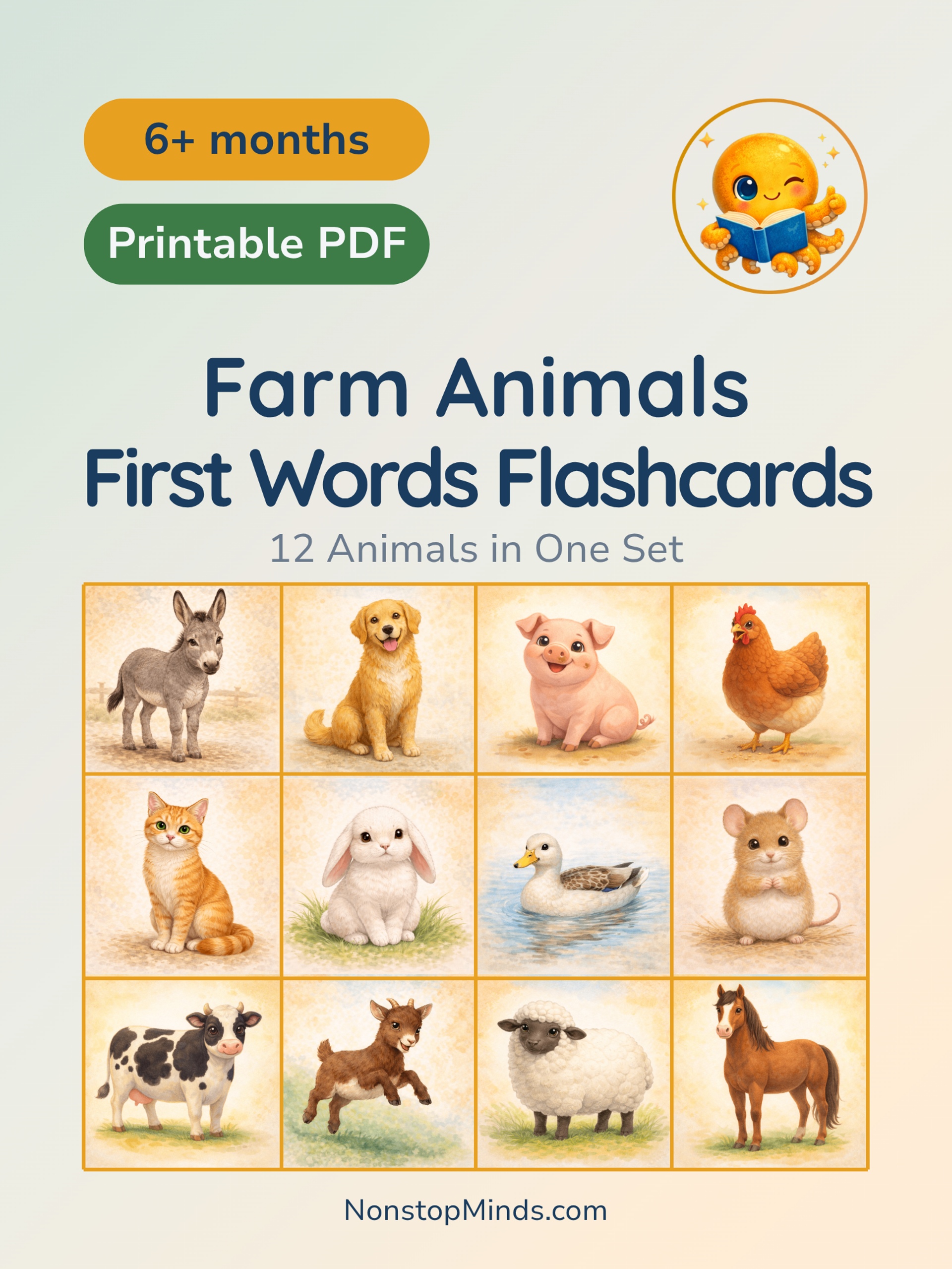
Farm Animals: First Words Flashcards

Vehicles: First Words Flashcards
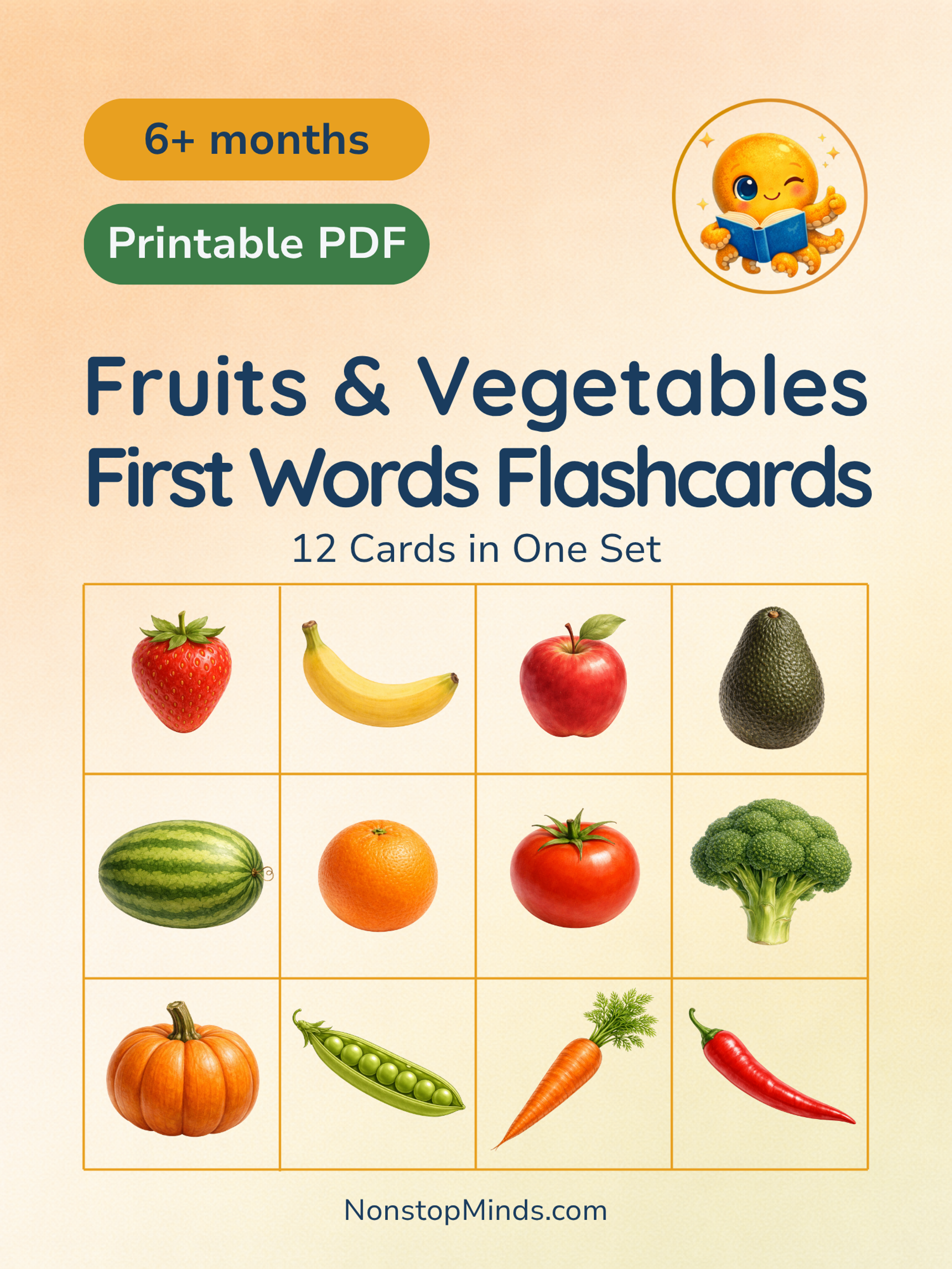
Fruits & Vegetables: First Words Flashcards
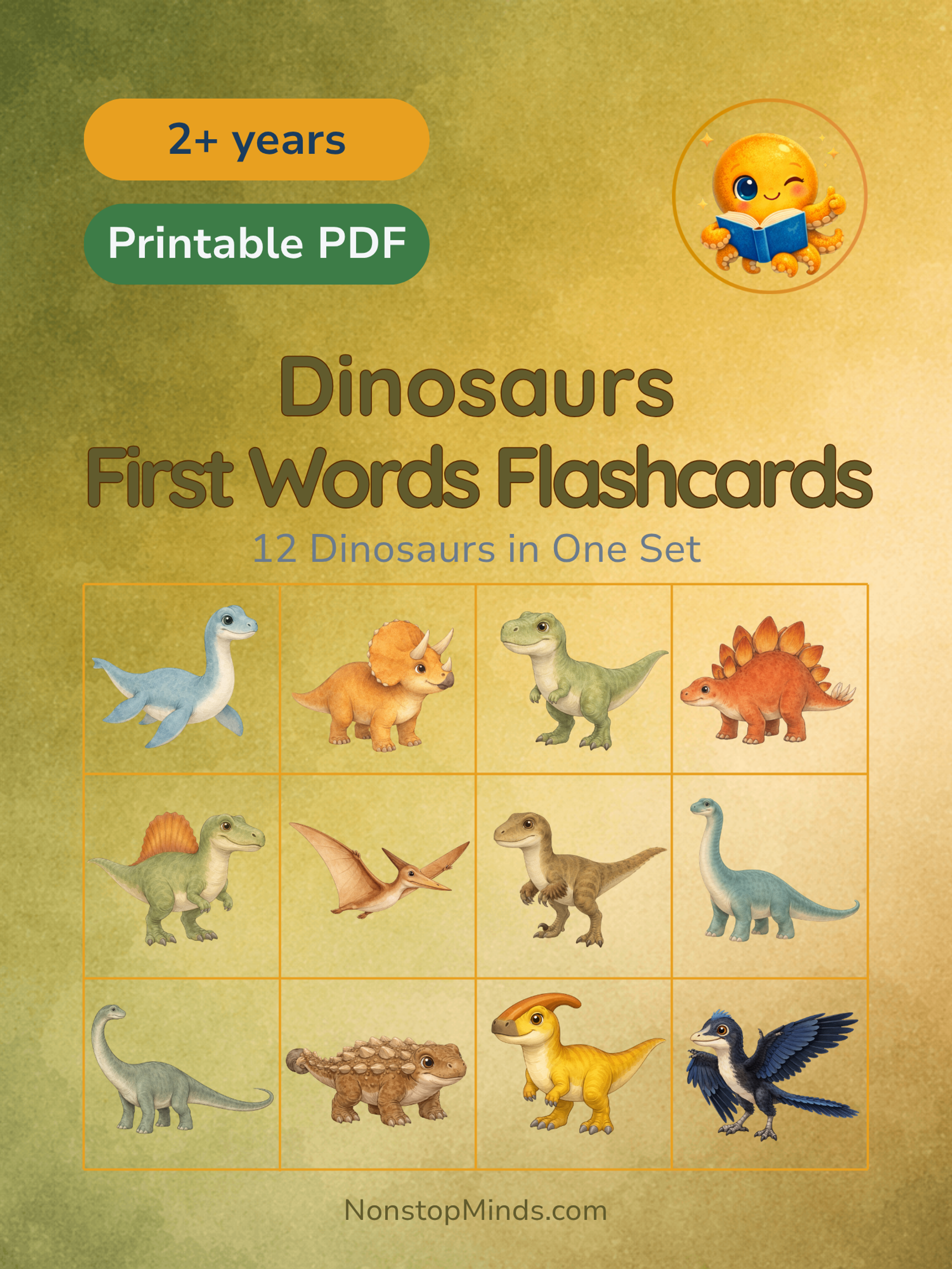
Dinosaurs: First Words Flashcards
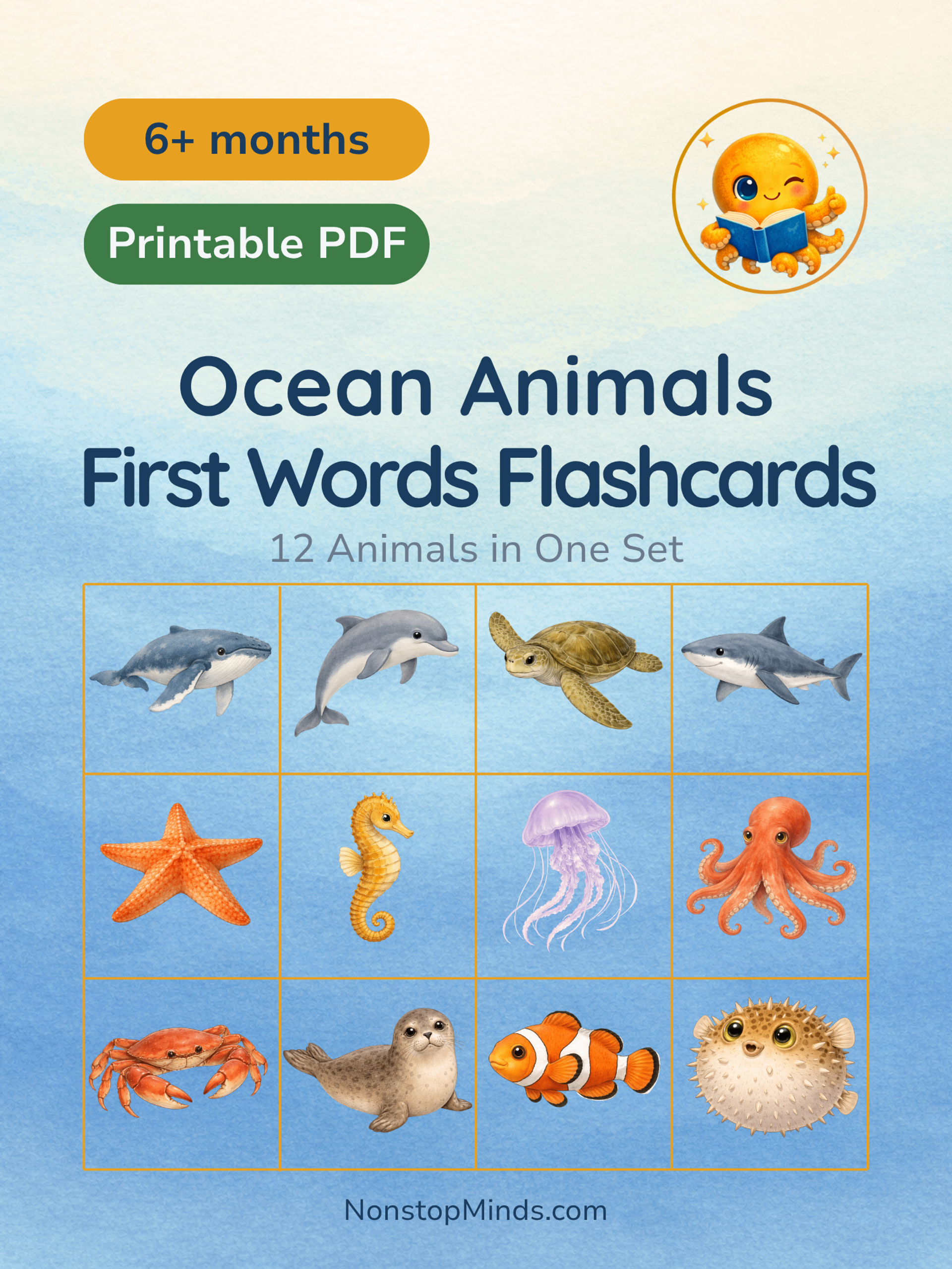
Ocean Animals: First Words Flashcards
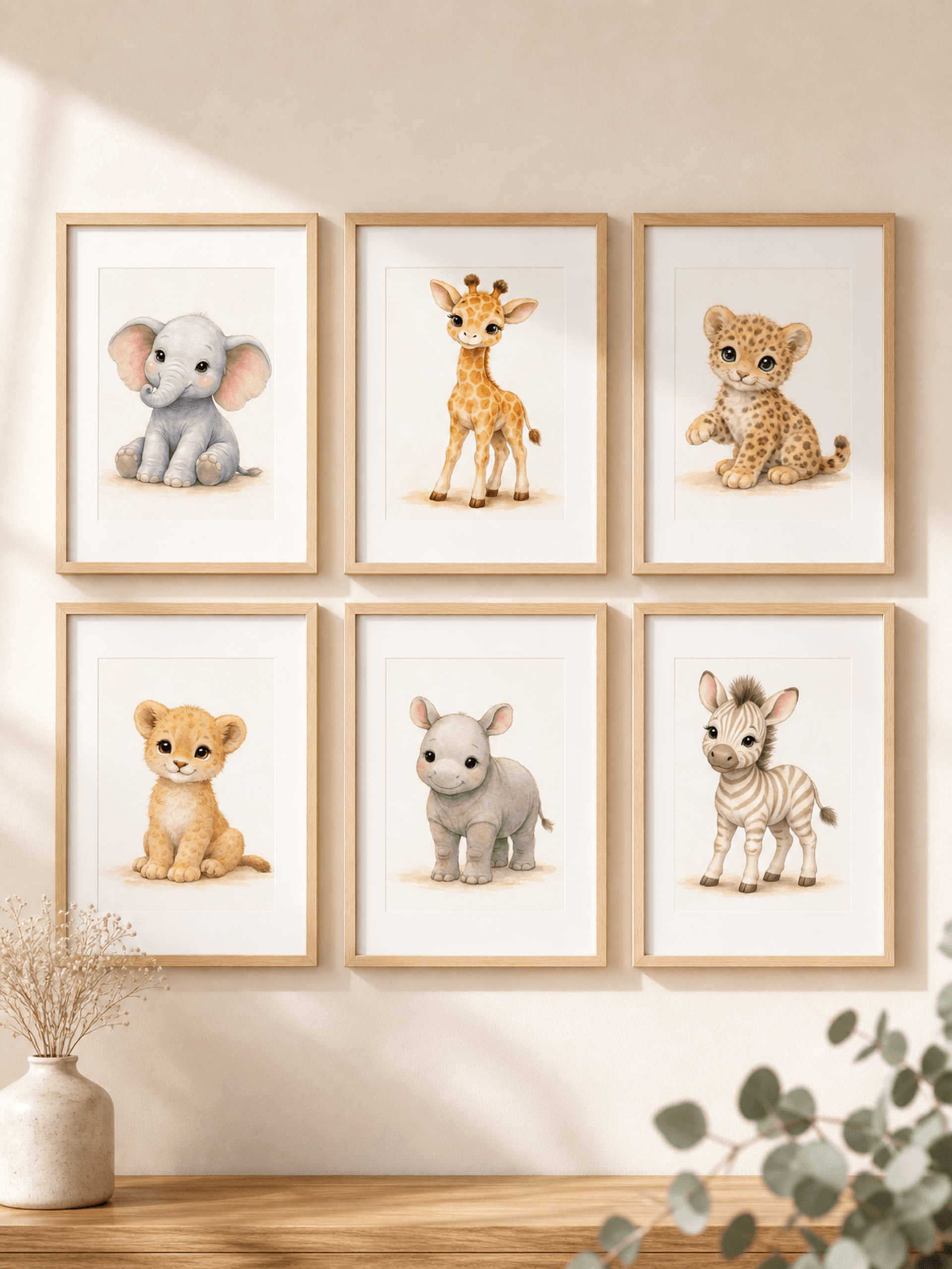
Safari Baby Animals Wall Art

Space Wall Art

Butterflies Wall Art
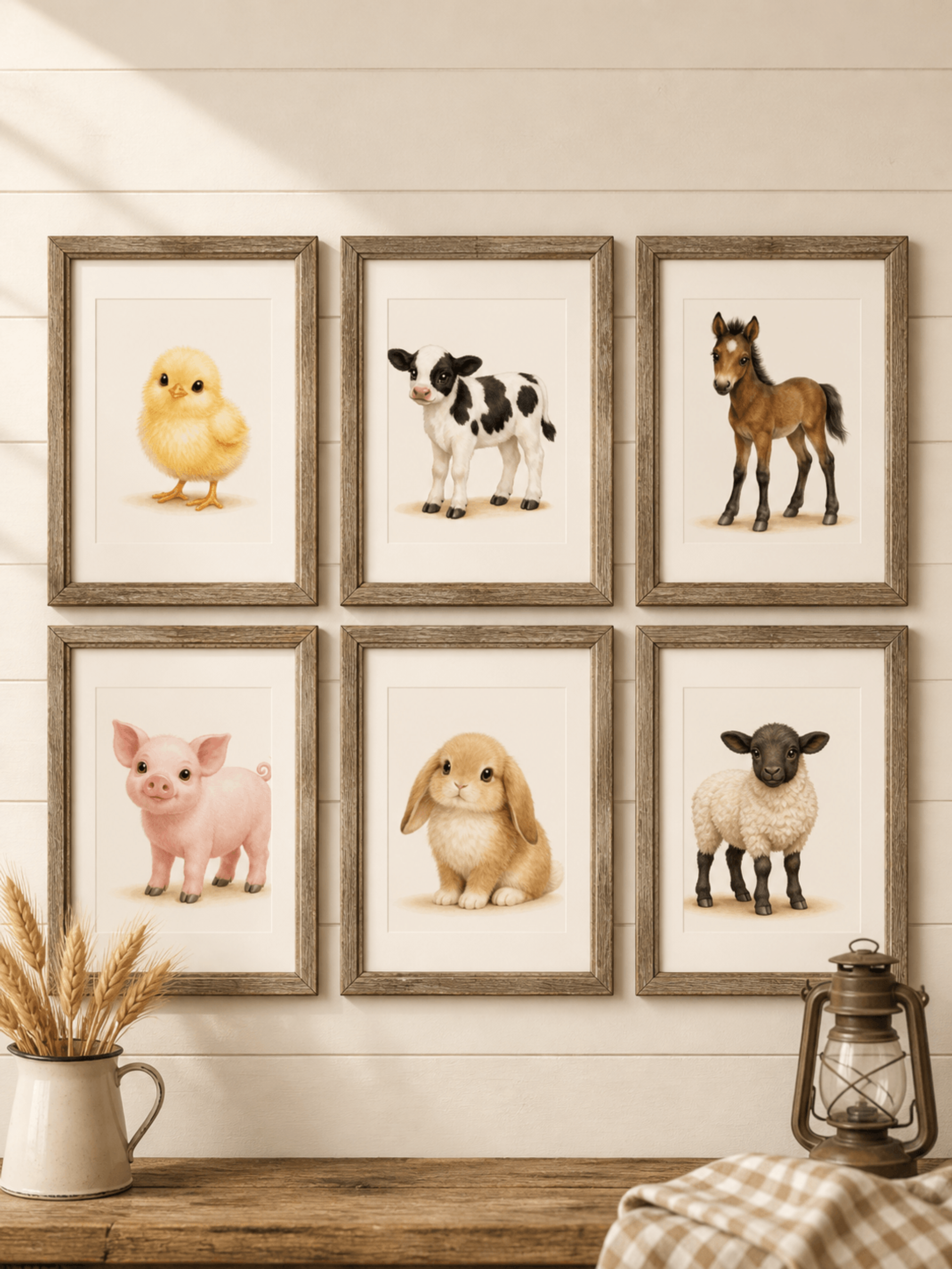
Farm Baby Animals Wall Art

Baby Kittens Wall Art
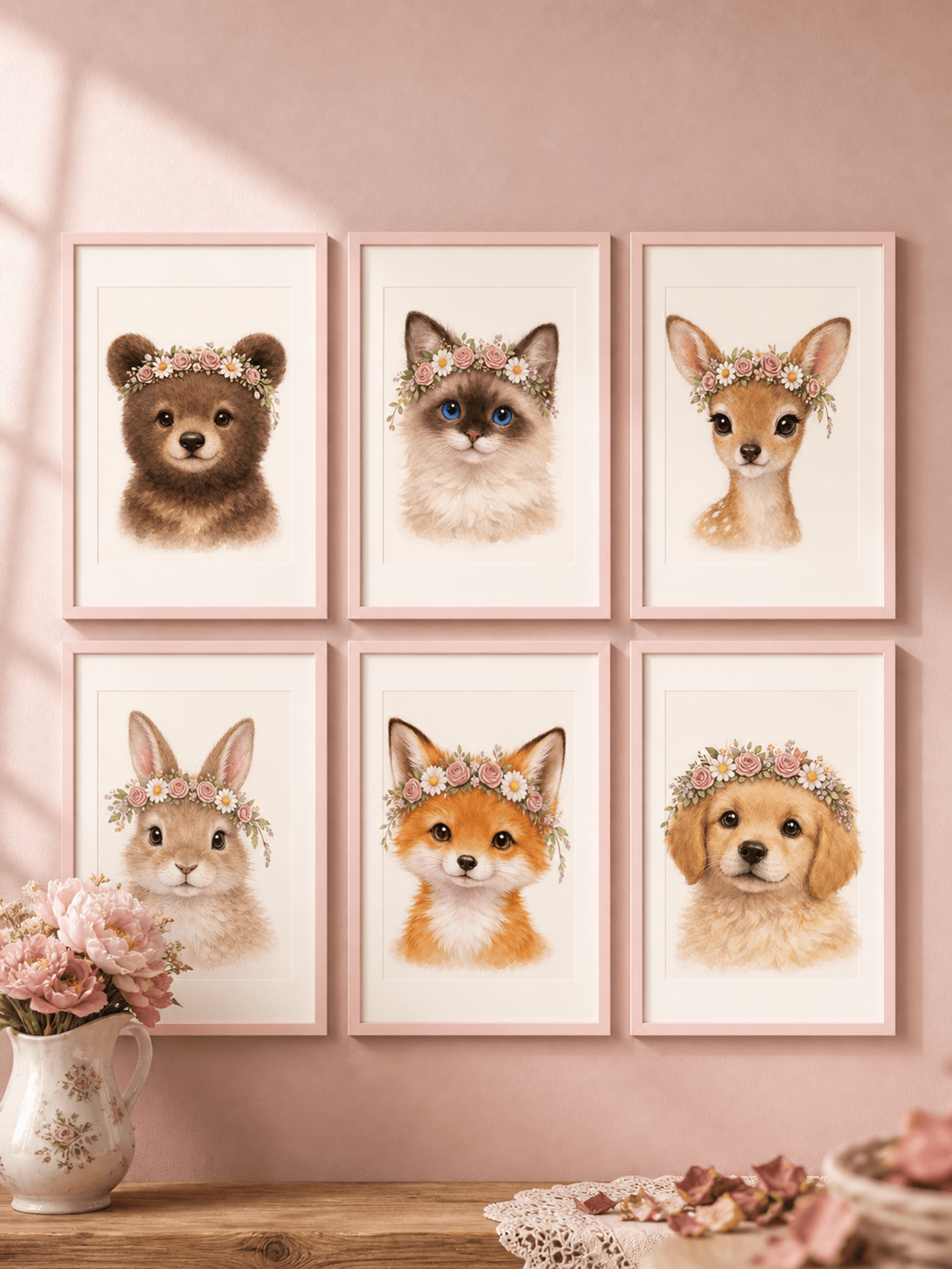
Floral Crown Animals Wall Art
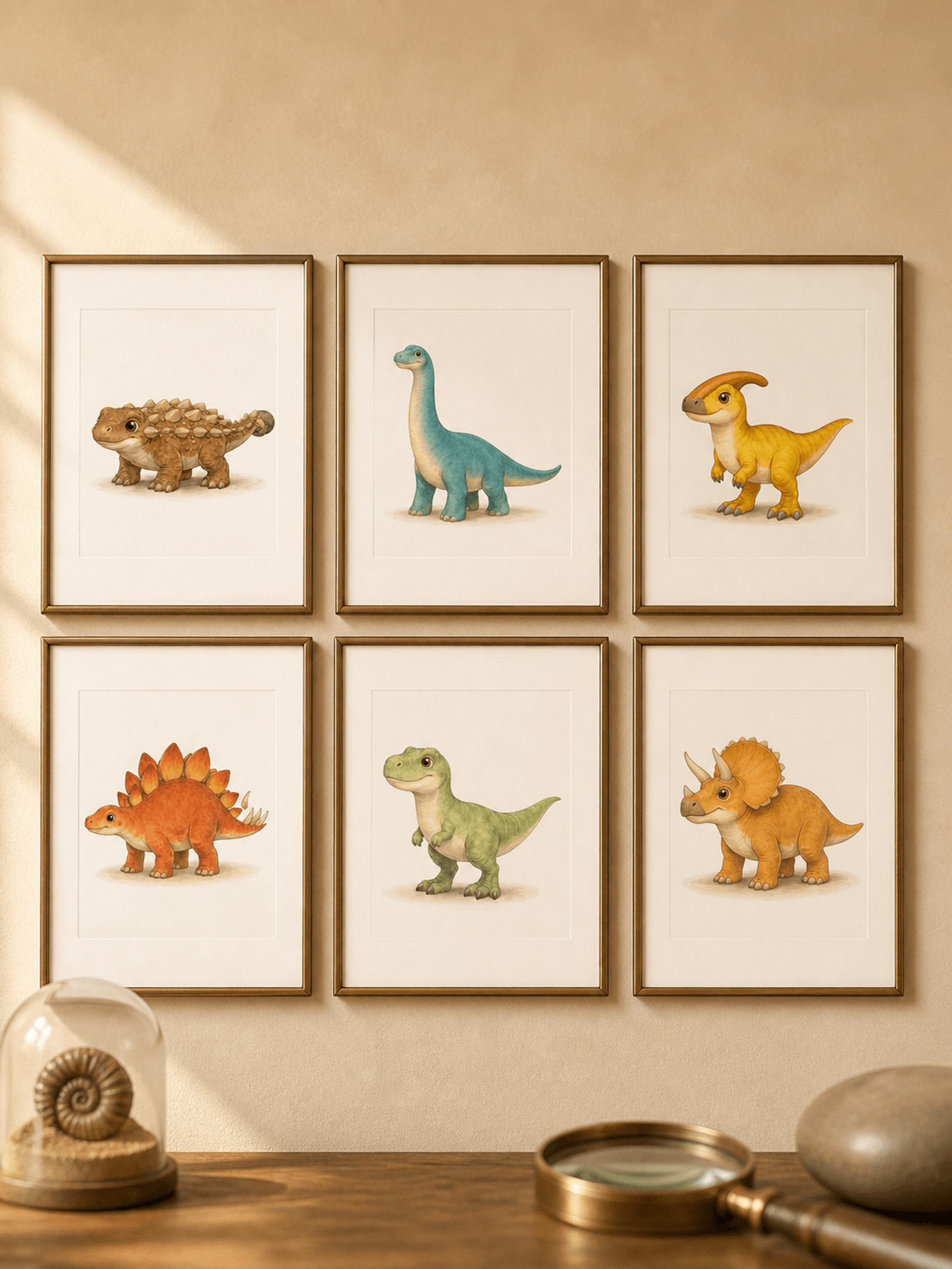
Baby Dinosaurs Wall Art

Botanical Wall Art
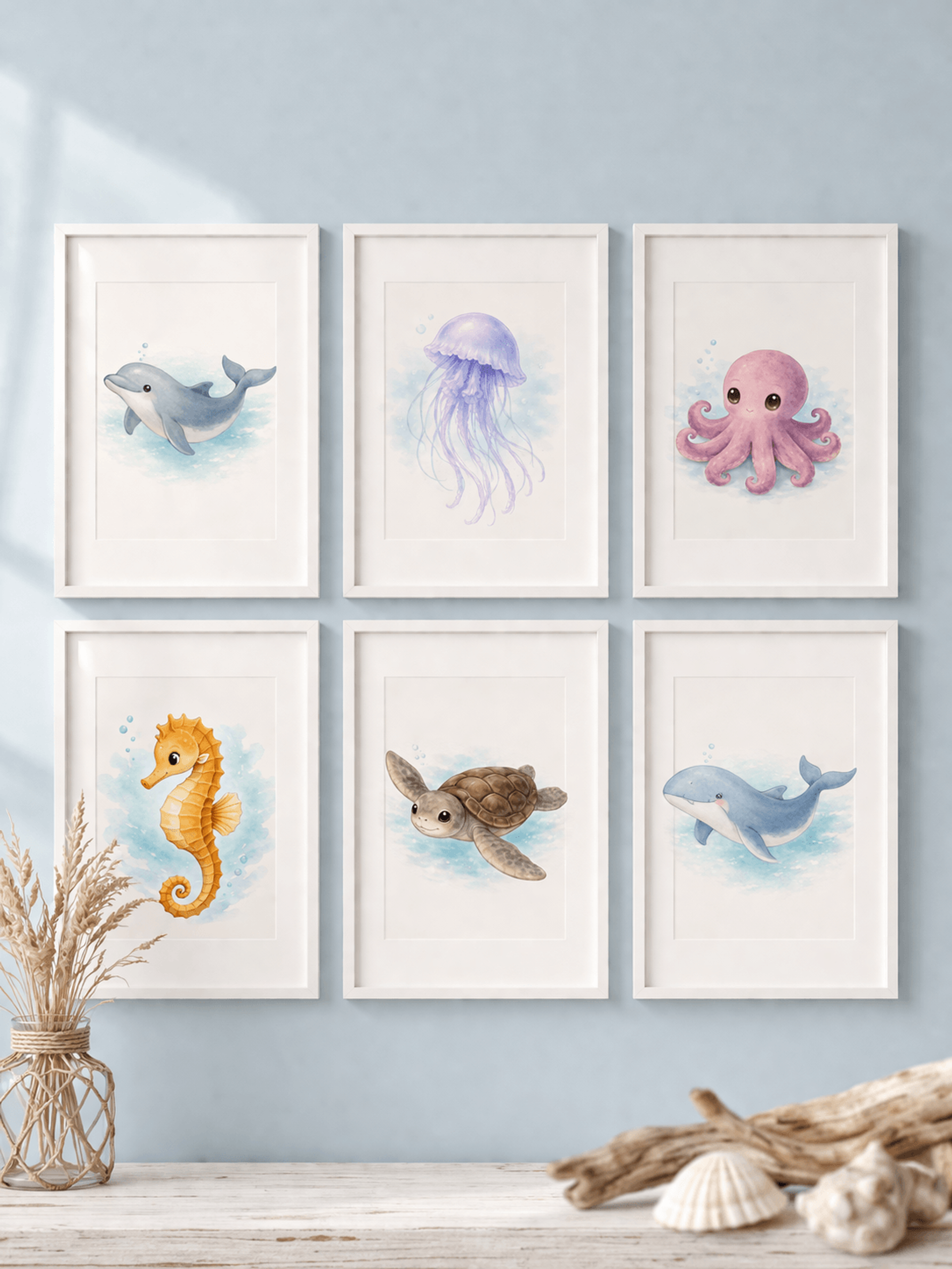
Ocean Baby Animals Wall Art
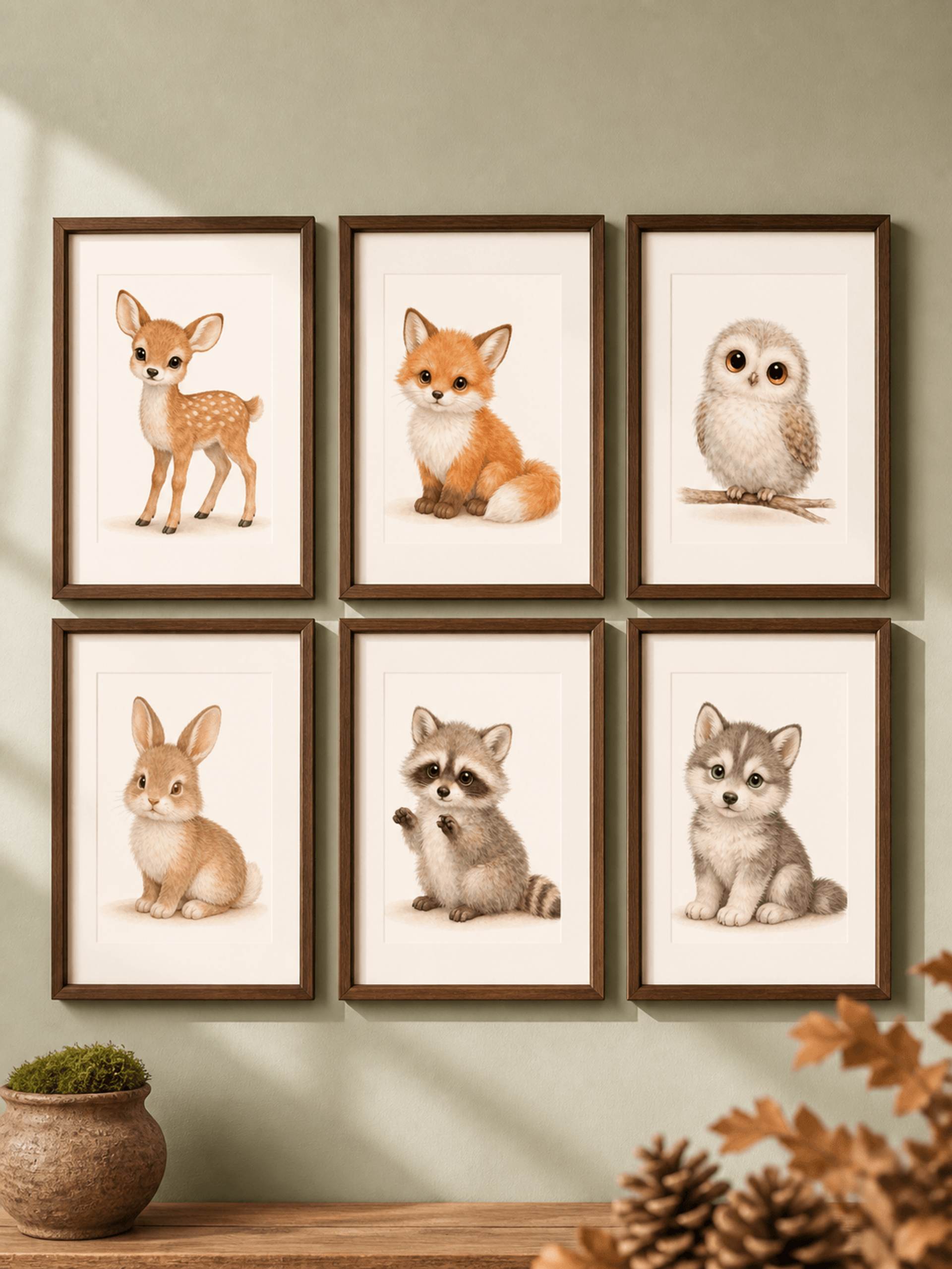
Woodland Baby Animals Wall Art
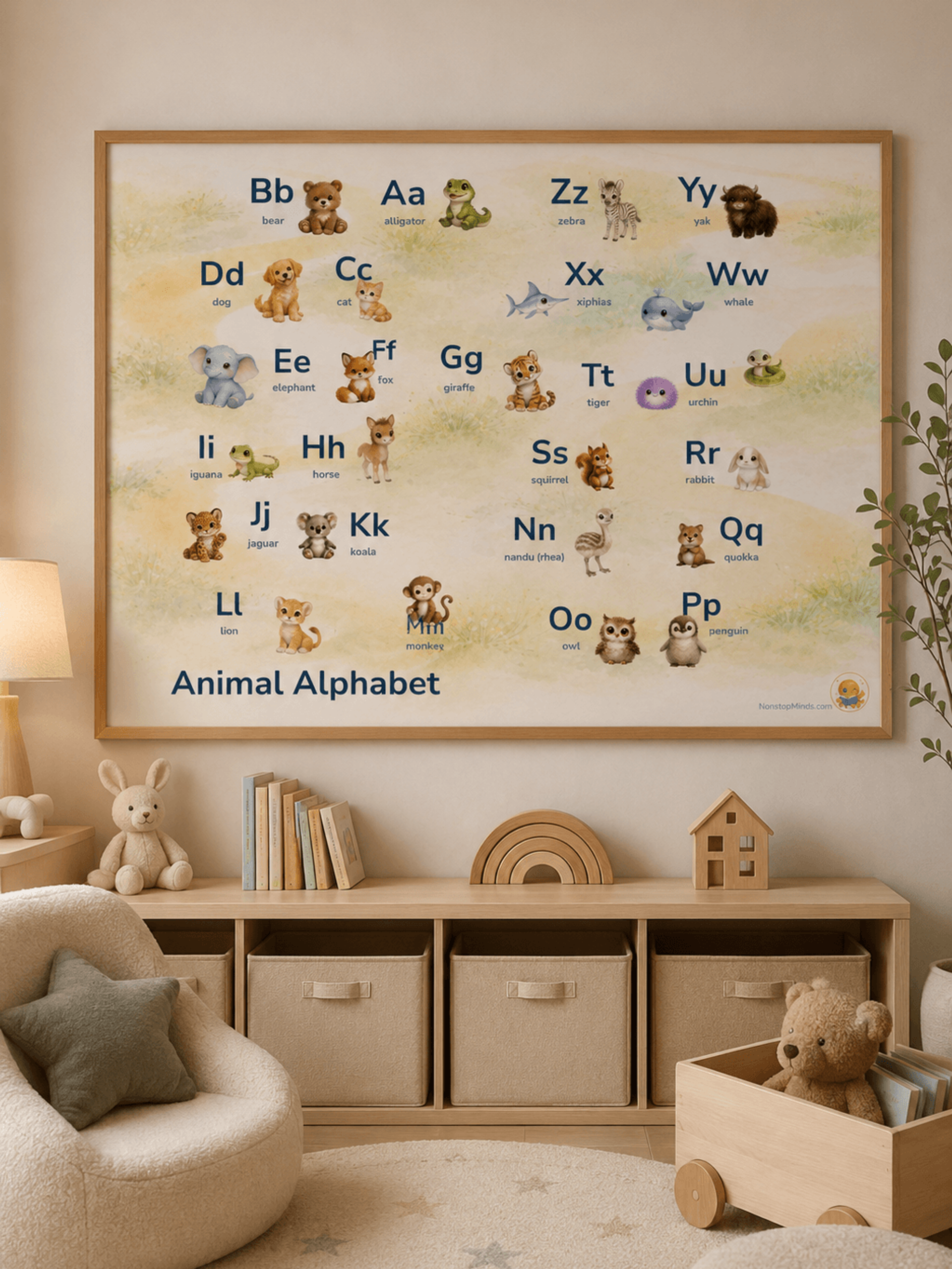
My Zoo Alphabet Poster
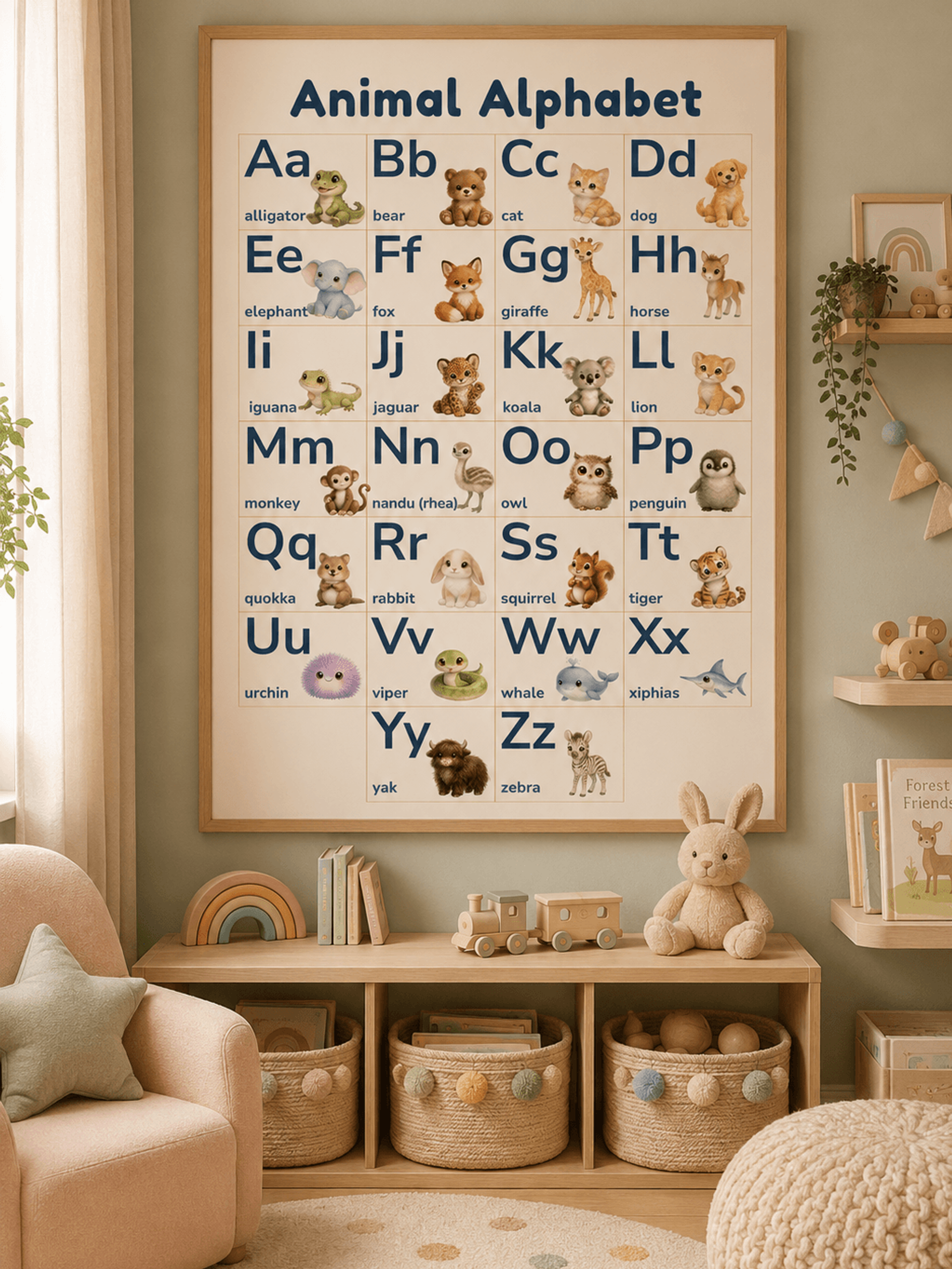
Animal Alphabet Poster
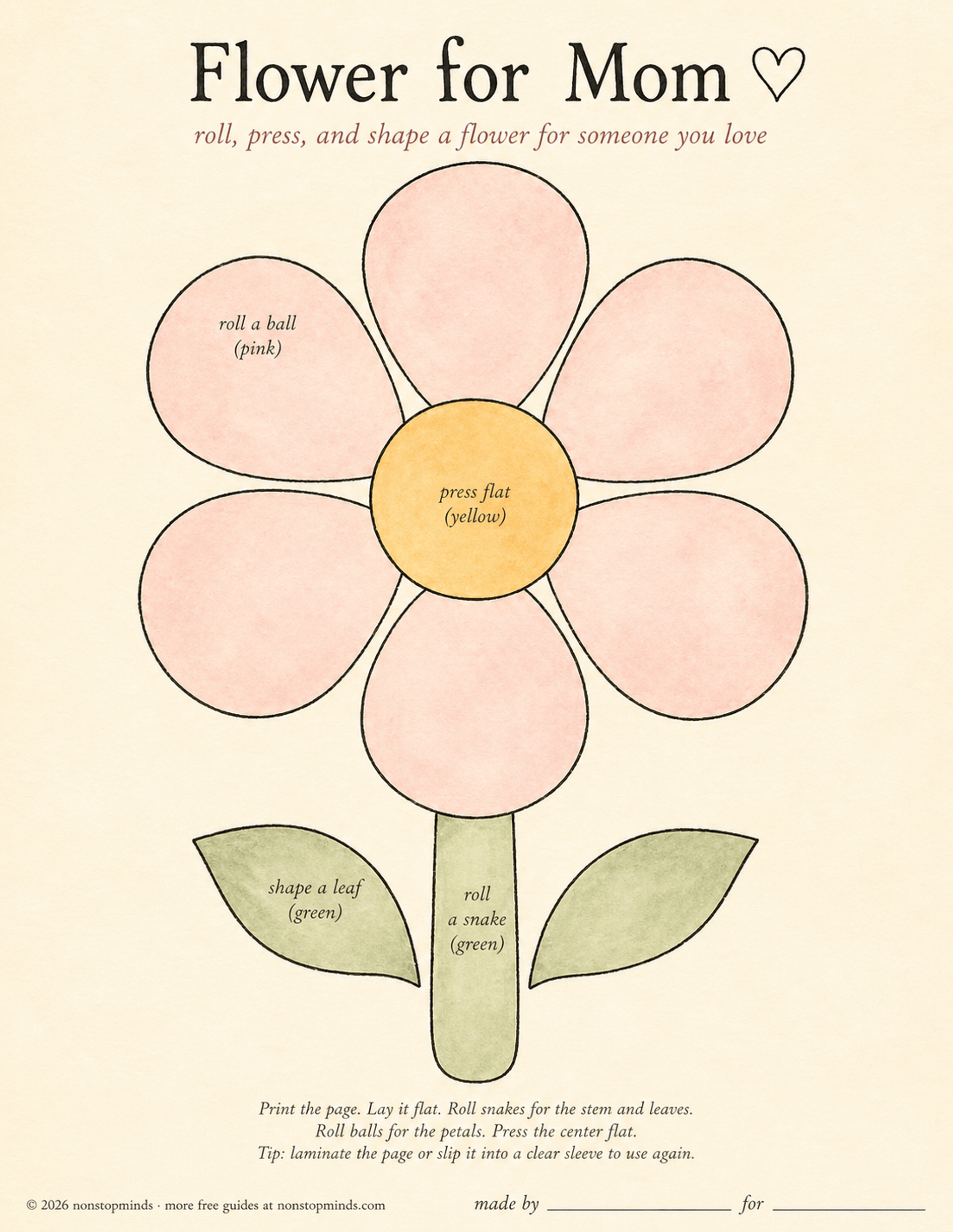
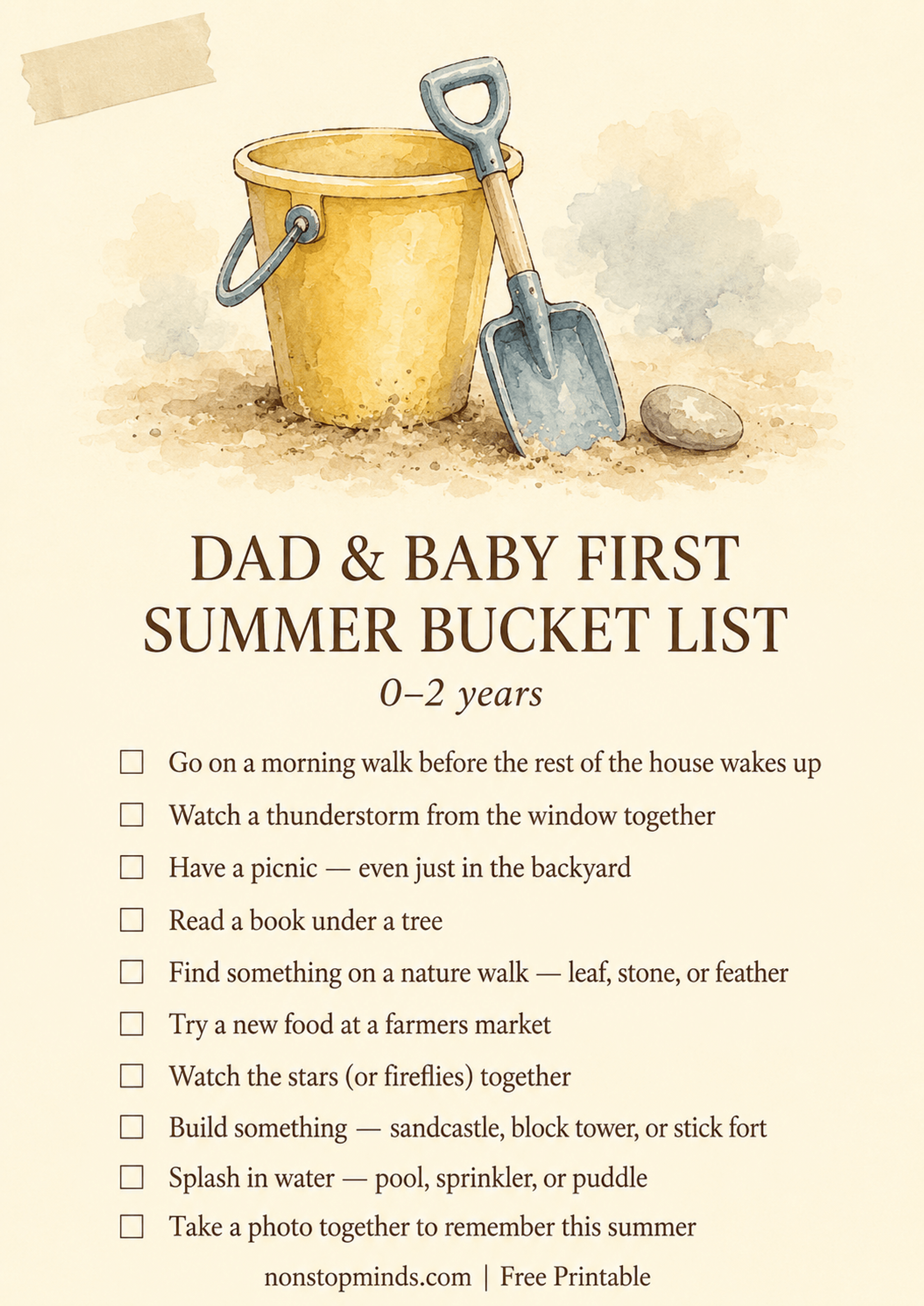
Free printables.
No email gate. Print, fold, use.
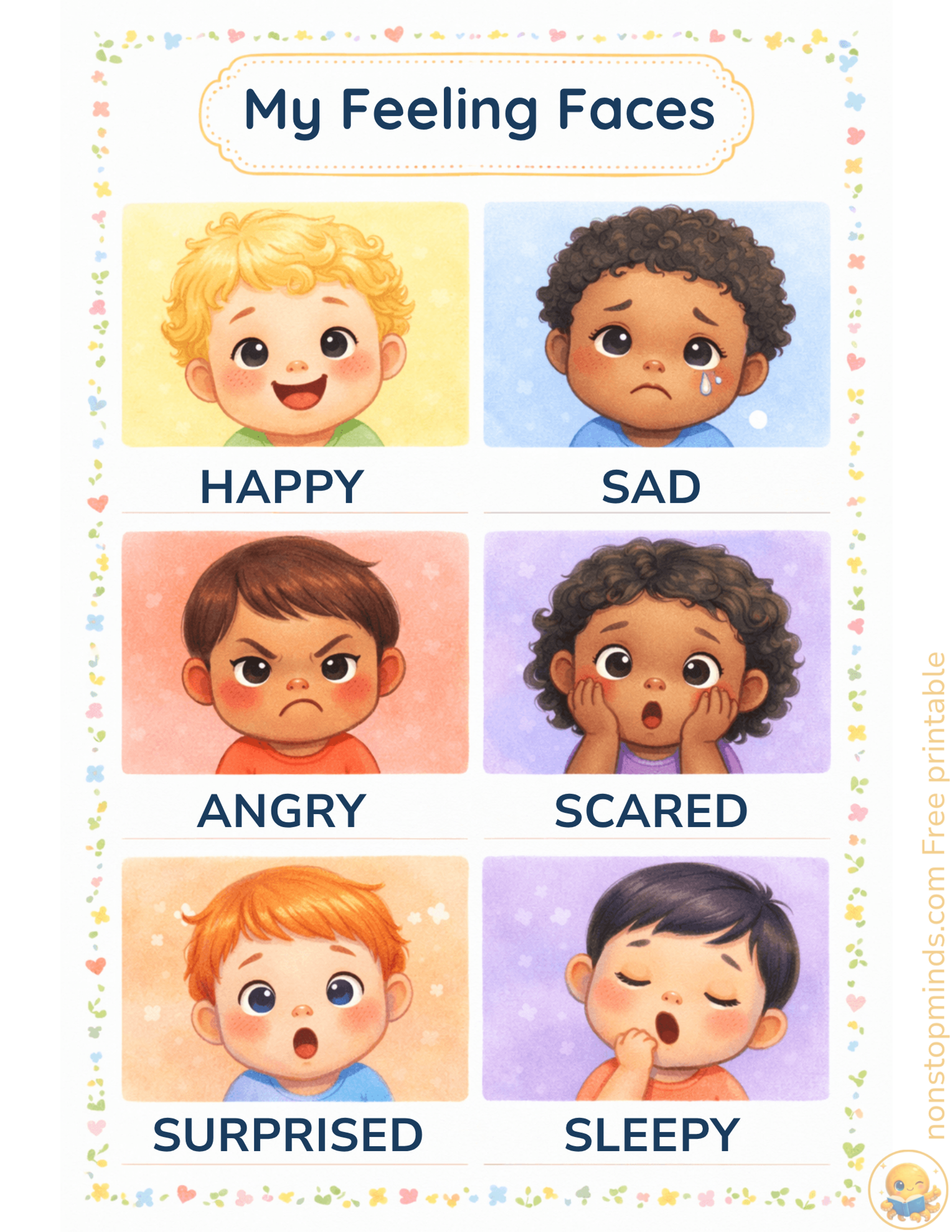
Reefs in progress.
Online activities
Crosswords, color-alongs, gentle games.
Books we love
A reading list with the why behind each title.