Why Your Toddler Says "No" to Everything (And Why That's Exactly Right)
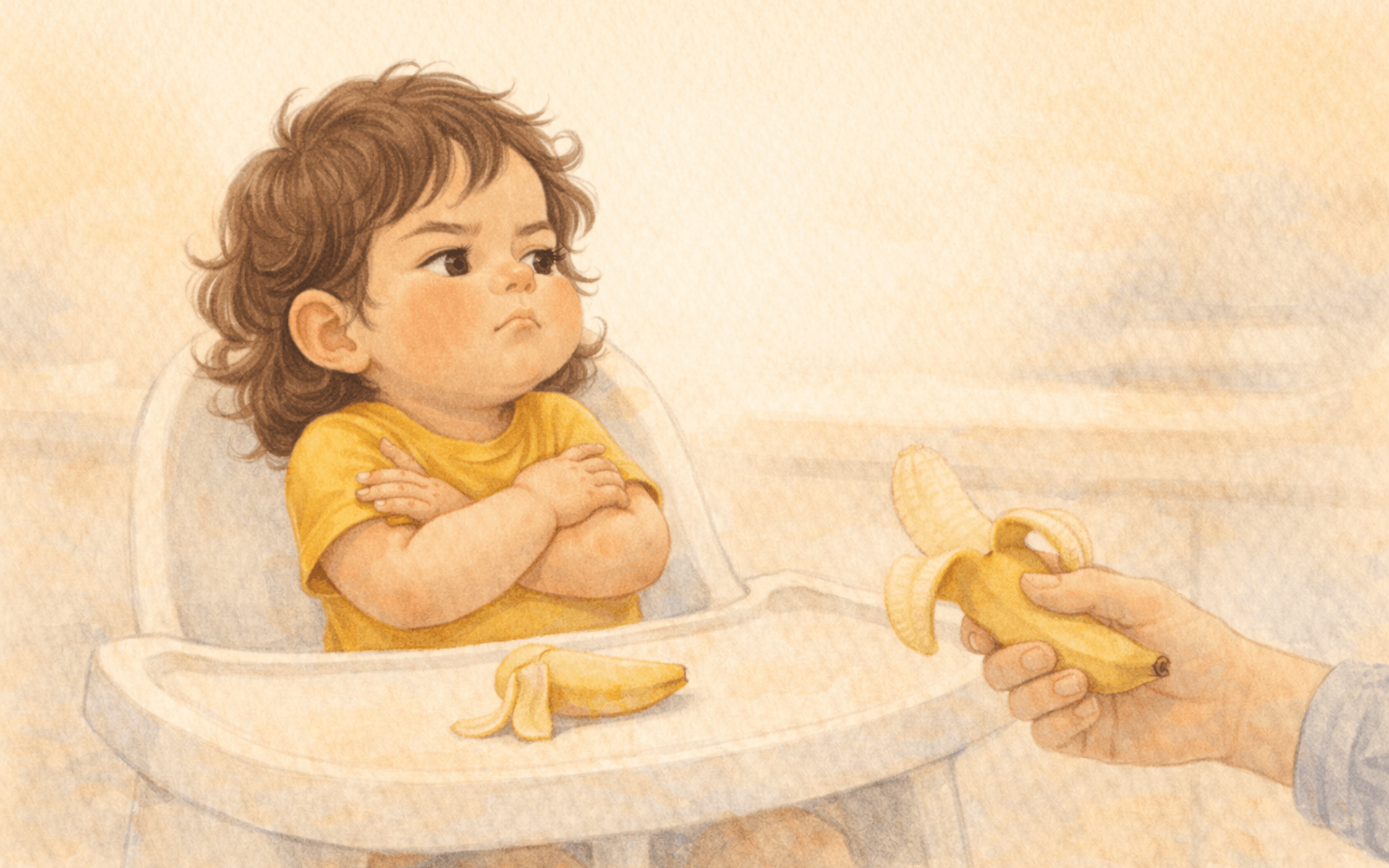
You offered a banana. "No." You suggested shoes. "NO." You asked if your child wanted to go to the park — the park, the place your toddler begs to visit every single day — and the answer was still, somehow, "No."
It's 9:17 in the morning and you've already heard that word fourteen times. You haven't even had coffee yet. And somewhere in the back of your mind, a small voice is wondering: Is this the terrible twos? Is my 2-year-old not listening on purpose? Did I do something wrong?
Take a breath. Your toddler is not broken. Your toddler is building a self.
- Why "no" is a cognitive achievement, not a behavior problem — and what Erikson's autonomy stage actually describes
- What's happening in the toddler brain: why the prefrontal cortex makes logic-based parenting physically impossible at this age
- Why "no" is really about control — and why a world run entirely by adults produces the "no" reflex
- Four research-backed responses that reduce power struggles without eliminating boundaries
- When constant refusal is typical development vs. when it's worth a conversation with a pediatrician
If the one-sentence answer is enough, you’ve got the gist. If you want the mechanism behind each piece, keep reading.
The Word "No" Is a Developmental Milestone
Here's something most parenting advice skips over: the ability to say "no" is not a behavioral problem. It is a cognitive achievement. A toddler who says "no" has figured out something remarkable — that a separate person can have a separate opinion, and that opinion can be expressed out loud.
Erik Erikson, one of the most influential developmental psychologists of the twentieth century, described the period between roughly 18 months and three years as the stage of Autonomy versus Shame and Doubt. During this window, a toddler's primary developmental task is to establish a sense of independence. To discover that "I" exists as something separate from "you." And the fastest, most efficient way a toddler can test this discovery is by disagreeing with every single thing a parent says.
Erikson himself noted that this stage includes — and this is a direct description from his work — "stormy self-will, tantrums, stubbornness, and negativism." He observed two-year-olds resolutely folding their arms to prevent their mothers from holding their hands while crossing the street. Sound familiar?
The takeaway is simple: a toddler who says "no" to everything is a toddler who is doing exactly what development requires. What looks like defiance — the toddler who won't listen, the two-year-old who refuses every request — is actually the earliest form of self-advocacy.
What's Really Happening in Your Toddler's Brain
To understand why your toddler can want the park and refuse the park in the same sentence, you need to understand the prefrontal cortex — or rather, the absence of it.
The prefrontal cortex is the part of the brain responsible for impulse control, logical reasoning, planning, and emotional regulation. In adults, it acts as a kind of internal editor: I want to eat that entire cake, but I probably shouldn't. It's the part of the brain that pauses before reacting.
In a toddler, this region is barely online. The prefrontal cortex is the last part of the brain to fully mature — it doesn't finish developing until approximately age 25. At age two, your child is working with a brain that has strong emotions, strong opinions, and almost no internal system for managing either of them.
Brain imaging studies in young children confirm what every parent already suspects: the parts of the brain responsible for stopping, waiting, and switching gears are still under heavy construction between ages two and five. A toddler's brain is physically not equipped to pause before reacting. The hardware for "let me think about this first" is years away from being installed.
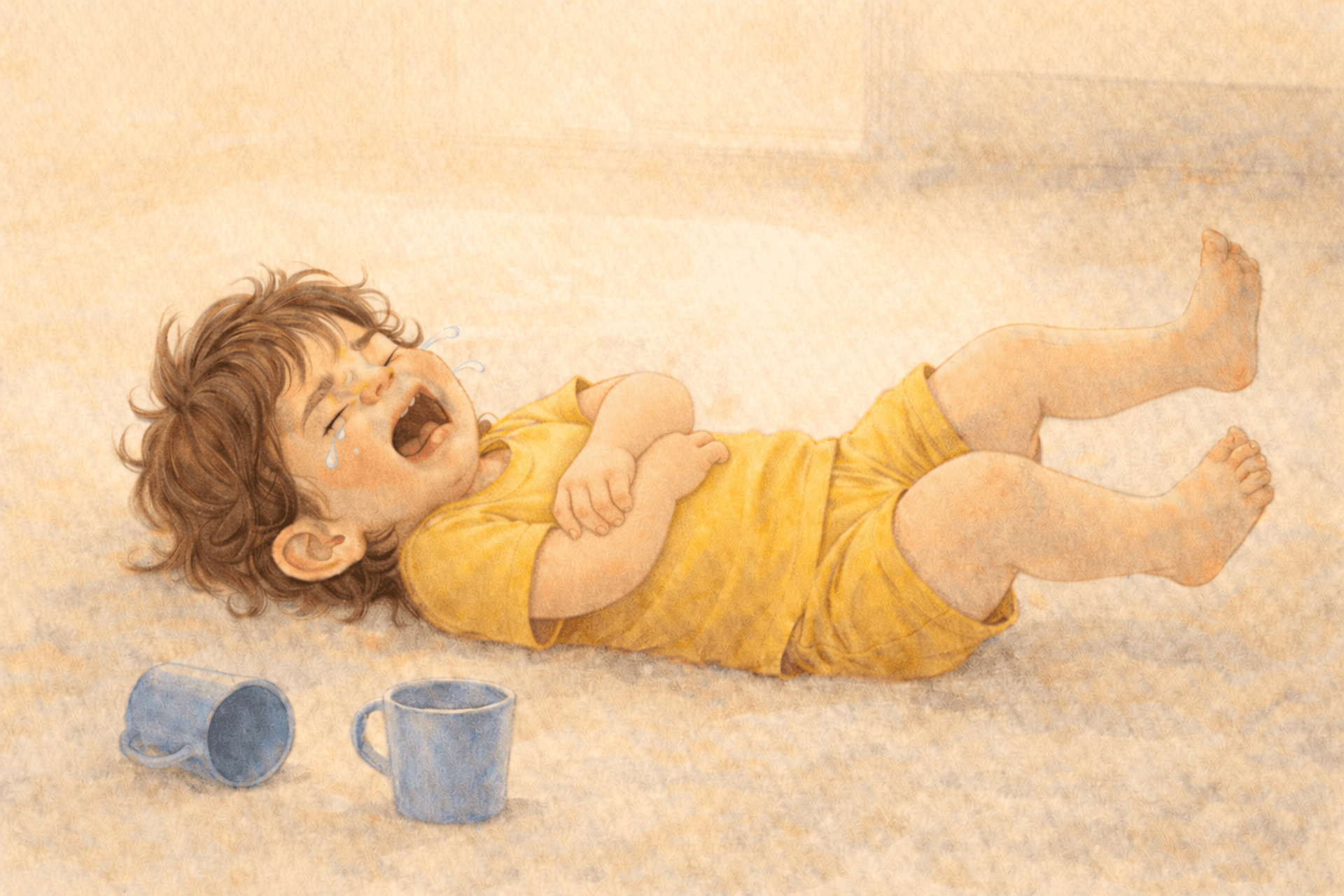
So when your toddler says "no" to the banana she asked for thirty seconds ago, she's not being manipulative. Her brain literally changed its mind between the asking and the receiving, and she has no internal filter to smooth that over. She wants what she wants — until she doesn't — and the transition between those two states happens without warning, without logic, and without a prefrontal cortex to referee.
It's Not Just "No" — It's "I Exist"
If you pay close attention, you'll notice that your toddler's "no" isn't always about the thing being offered. It's about the act of choosing. The banana isn't the point. The ability to reject the banana is the point.
Decades of psychology research point to the same conclusion: the need to feel some control over your own life is not a teenage thing. It's a human thing. It shows up in toddlerhood. Psychologists Edward Deci and Richard Ryan spent their careers studying this and found that autonomy — the feeling that you have a say in what happens to you — is one of three basic psychological needs every person has, starting very early in life. When a two-year-old insists on choosing which cup to drink from — not that blue cup, the OTHER blue cup — that child is exercising an emerging need to feel that some part of life is under personal control.
And here's what makes this phase feel so impossible for parents: a toddler's world is almost entirely controlled by other people. Someone else decides when to wake up, what to eat, when to leave the house, what to wear, when to nap. Every single day, dozens of decisions are made on behalf of a small person who is just beginning to realize that making decisions is a thing that exists. "No" is the one tool available that gives a toddler some power in a world where almost none belongs to them.
How to Handle a Toddler Who Says "No" (According to Research)
If "no" is a healthy developmental sign, should you just accept it and let your toddler run the household? Obviously not. Boundaries still matter. Safety still matters. But the way you respond to the "no" matters more than most parents realize.
Researchers followed families over time and found something striking: parents who offered choices, acknowledged their toddler's feelings, and explained reasons at age two had children who followed rules better at age three and a half. Not because those children were scared of consequences — but because they actually understood why the rules existed. The children whose parents relied on commands and control? Their cooperation got worse over time, not better.
Here's what autonomy-supportive parenting looks like in practice with a toddler who says "no" to everything:
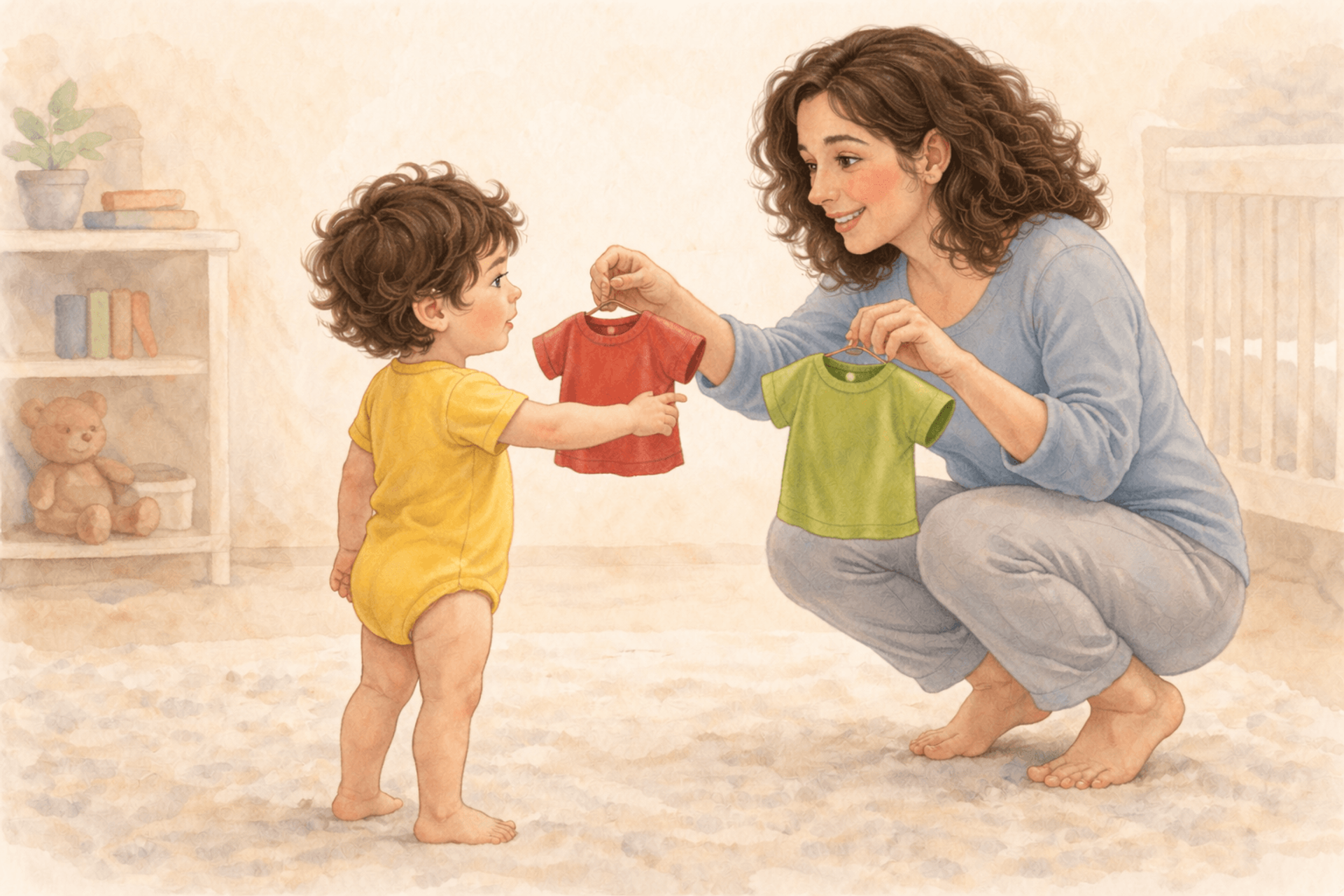
Offer two choices instead of one command. Instead of "Put on your shoes," try "Do you want the red shoes or the blue shoes?" The shoes are going on either way. But the child gets to feel like part of the decision. This is not a trick. This is meeting a developmental need.

Acknowledge the "no" before redirecting. "You don't want to leave the park. I hear you. The park is fun. We're going to come back tomorrow, and right now we need to go home for dinner." It takes five extra seconds. It changes the interaction from a power struggle into a conversation.
Give a reason, even when it feels pointless. "We need to brush teeth because food stays on teeth and can make them hurt." A two-year-old won't fully understand the reasoning. But research on autonomy support shows that explaining "why" — even to very young children — helps them gradually internalize rules rather than merely comply with them.
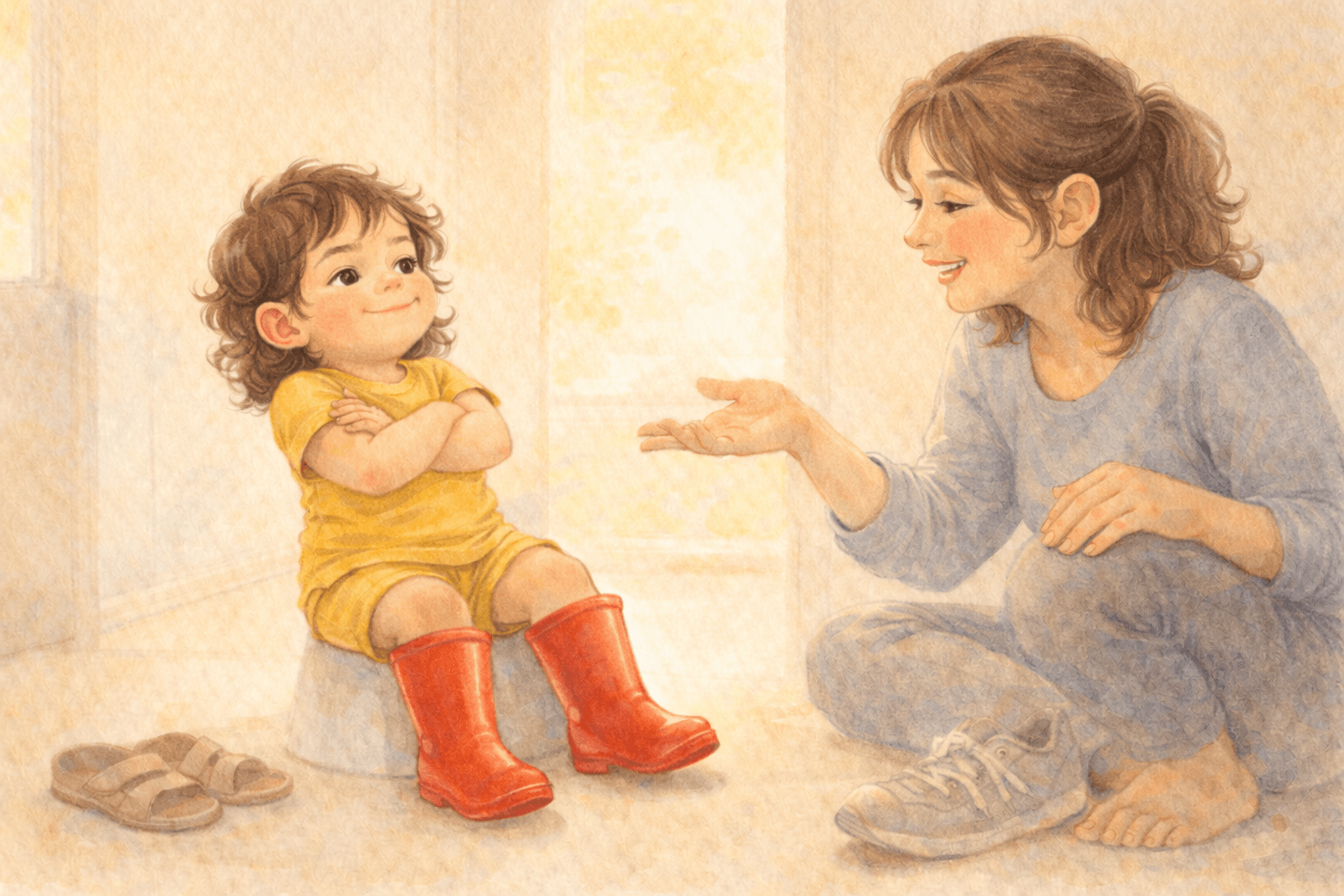
Let the small stuff go. If your toddler wants to wear rain boots on a sunny day, the developmental cost of that choice is zero and the developmental benefit is real. Save your non-negotiables for safety, health, and the things that genuinely matter. Everything else is practice ground for autonomy.
When "No" Isn't Just a Phase (And When It Is)
The period that many parents call the terrible twos — though it typically runs from about 18 months through age three — is one of the most intense phases of toddler behavior. Most toddlers go through the "no" stage somewhere in this window, and it peaks and gradually softens as language catches up with emotions and the prefrontal cortex begins to mature. By three and a half to four, many children shift from blanket refusal to more nuanced negotiation — "Can I do it after this show?" is a huge cognitive upgrade from "NO."
If you're wondering how to get your toddler to listen, the honest answer is: partly, you wait. Not passively — you keep offering choices, acknowledging feelings, holding boundaries. But you also accept that a developing brain on a 25-year maturation timeline will not respond to logic the way an adult brain does. Toddler tantrums and constant refusal are not a bug of your parenting. They are a feature of the age.
But there are moments worth paying closer attention to. If your child's refusals are accompanied by significant distress that doesn't resolve, if "no" extends to everything including activities that previously brought joy, if your toddler seems unable to say "yes" to anything at all over a period of weeks — it may be worth a conversation with your pediatrician. Not because something is necessarily wrong, but because a professional can help distinguish between a healthy autonomy push and something that needs a closer look.
For most families, though, the "no" stage is exactly what it sounds like: a stage. A loud, exhausting, coffee-requiring stage — but a stage nonetheless.
The Part Nobody Tells You
Here's the thing about this phase that doesn't show up in most developmental textbooks: it is also the beginning of your child's ability to set boundaries. A toddler who can say "no" to a parent is practicing the same skill that, fifteen years from now, will allow a teenager to say "no" to peer pressure. Twenty years from now, to a boss who asks for something unreasonable. Thirty years from now, to anything that doesn't serve who they've become.
That word that drives you up the wall at 9:17 in the morning is the foundation of self-advocacy. Your job isn't to eliminate it. Your job is to help your child learn when and how to use it — and that learning takes years, not days.
So the next time your toddler looks you dead in the eye, crosses both arms, and delivers a firm "No" to the lunch you spent twenty minutes preparing — remember this: you are watching a person become a person.
It's not fun. But it's working.
For more on supporting your toddler's development through everyday moments, explore our activity guides and printables — designed around published research, written in parent language.
If you're navigating the earlier months, our Sensory Play Cards 0–12 months give you one card, one activity, five minutes — with developmental science built into every prompt.
Frequently Asked Questions
Saying "no" is a normal and healthy part of development. Around age 2, children enter what psychologist Erik Erikson called the "autonomy vs. shame and doubt" stage. Refusing is how toddlers practice making decisions and asserting independence — a critical step in building self-confidence.
Offer two acceptable choices instead of open-ended commands. "Do you want the red cup or the blue cup?" gives the toddler a sense of control without sacrificing the boundary. Avoid power struggles over things that don't matter.
For educational and entertainment purposes only. Not a substitute for professional medical or psychological advice. If you have concerns about your child's development, consult your pediatrician.
- Erikson, E. H. (1950). Childhood and Society. W.W. Norton.
- Erikson, E. H. (1968). Identity: Youth and Crisis. W.W. Norton.
- Casey, B. J. et al. (2005). Trends in Cognitive Sciences, 9(3), 104–110.
- Deci, E. L. & Ryan, R. M. (2000). Psychological Inquiry, 11(4), 227–268.
- Ryan, R. M. & Deci, E. L. (2000). American Psychologist, 55(1), 68–78.
- Laurin, J. C. & Joussemet, M. (2017). Motivation and Emotion, 41(4), 562–575.
- Moriguchi, Y. & Hiraki, K. (2013). Frontiers in Human Neuroscience, 7, 867.
- Spencer-Smith, M. & Anderson, V. (2009). Developmental Neurorehabilitation, 12(5), 279–297.
Related Products

More Articles

Parallel Play in Toddlers: Why Side-by-Side Is the Social Work
Your toddler spent the entire playdate building separate towers, and nobody shared a single block. That counted — more than it looked. A 2025 longitudinal study found that playing beside a specific child consistently predicted later social play with that same child, but not the other way around. Here's what parallel play in toddlers actually is, why the science calls it strategic rather than passive, and what it means for how you run a playdate.

When Do Babies Point: Why It Matters for Language
Most milestone articles treat pointing as a box to check around 12 months. The research tells a different story — one that starts months earlier, runs through the infant brain, and traces back to how much the parent is pointing. Here's what the last fifteen years of research actually found, and what it means for everyday interactions.

When Do Babies Wave Bye-Bye: Why Your Baby Needs You to Wave First
Most baby milestones unfold on a biological schedule — waving isn't one of them. A 2023 study found that babies develop imitation ability because their caregivers imitate them first, and waving is named directly as a cultural gesture learned through that loop. Here's what the research says about the 9–12 month window, why the first wave looks nothing like a wave, and what helps it arrive.