Gentle Parenting: What the Research Says
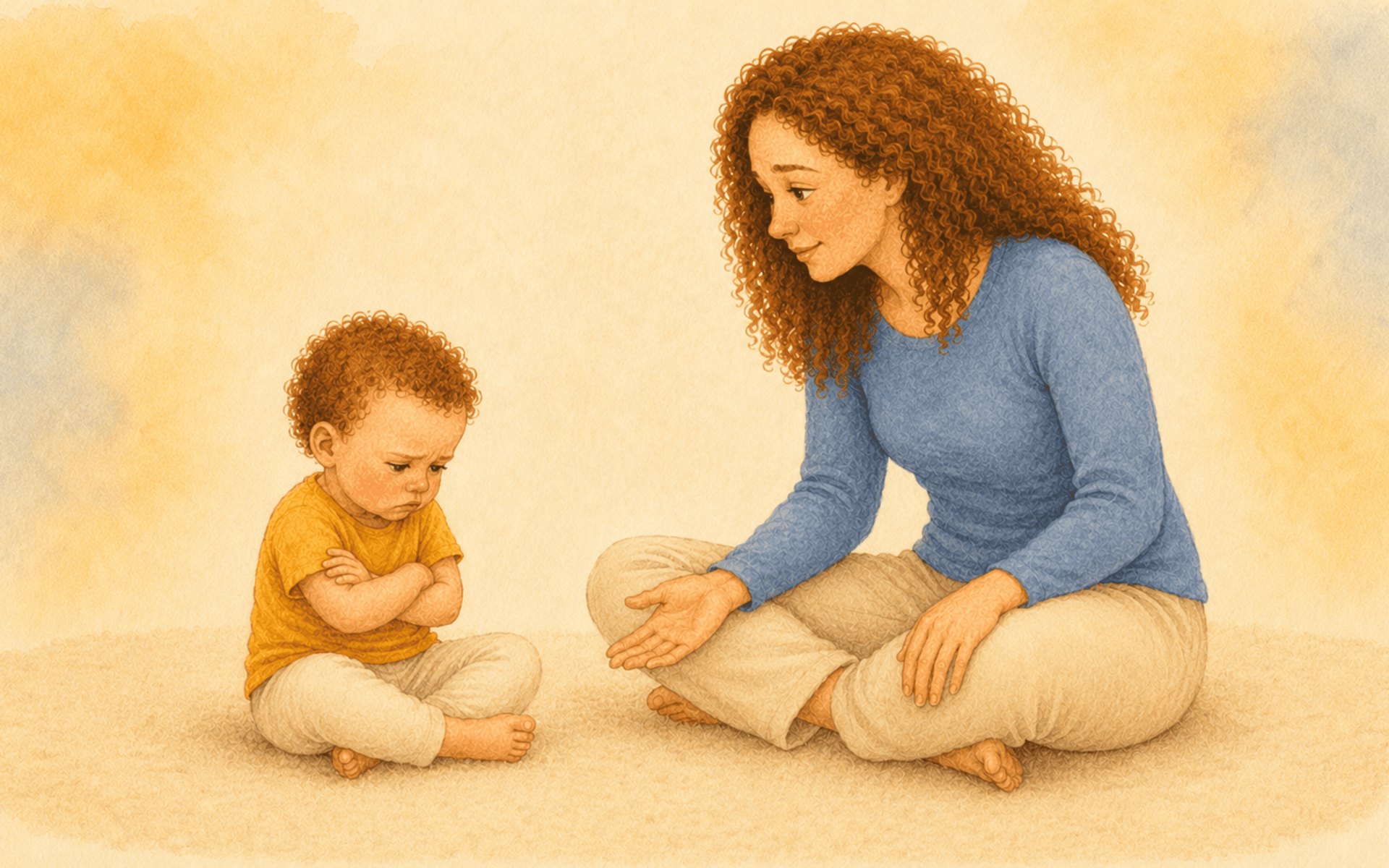
Everyone has read the headline. "Study finds gentle parents are more stressed." Shared everywhere, screenshot in every parenting group, cited with knowing nods or quiet panic depending on which side of the topic you land on. Before anything else in this article: that study never measured stress. Not once. The researchers who ran it have said so themselves. How a descriptive survey of 100 parents became definitive proof that gentle parenting backfires is its own story, and the more interesting one turns out to be what the science does and doesn't show.
- Why the label "gentle parenting" is newer than you'd think, and why researchers mostly use different words for the same ideas
- What the one published study on gentle parenting measured (it wasn't what you've been told)
- The four specific behaviors that have forty years of evidence behind them
- The single condition that separates responsive parenting from permissive parenting, and why most coverage skips it
- What the parental stress finding says, and why it changes the question rather than answering it
- How to use what works without the perfectionism that makes it harder
If the one-sentence answer is enough, you’ve got the gist. If you want the mechanism behind each piece, keep reading.
The term is new. The ideas behind it are not.
Gentle parenting as a named approach dates to Sarah Ockwell-Smith's 2016 book, which organized four principles (empathy, respect, understanding, and firm-but-kind limits) into a coherent philosophy. The phrase caught in parenting circles and exploded on social media. By the mid-2020s, it had accumulated everything a phrase accumulates when it goes viral: genuine practitioners, performative versions, backlash content, and a running debate about whether it produces entitled children.
What the phrase did not accumulate was its own research base. Developmental psychology had been studying the underlying behaviors for decades, just under different names. "Responsive caregiving" in attachment research. "Authoritative parenting" in Diana Baumrind's foundational work from the 1960s onward. "Emotion coaching" in John Gottman's lab. "Autonomy-supportive parenting" in self-determination theory. These bodies of work contain thousands of studies across dozens of countries and multiple generations. The label "gentle parenting" contains, at the time of writing, one peer-reviewed empirical paper.
That asymmetry matters enormously for how you read coverage of the topic.
What the one gentle-parenting study measured
The paper you've seen cited everywhere is a 2024 study by Pezalla and Davidson, published in PLOS ONE. The researchers recruited 100 parents of children aged two to seven, roughly half of whom identified as gentle parents, and asked them about their parenting experiences. That is the study. One hundred self-selected parents. One survey. No children assessed. No behavior observations. No cortisol samples. No school readiness data. No follow-up.
What Pezalla and Davidson did find was that about a third of the parents who identified as gentle parents described a self-critical streak in how they thought about their own parenting. The subset who reported higher self-criticism also reported lower confidence in their parenting. The authors noted this specifically, and called for future research on gentle parenting's "potential impact on child development," which is another way of saying child outcomes were outside the scope of the paper entirely.
The headline "gentle parents are more stressed" came from the self-critique theme. A coding category. In a survey. Of 49 self-identified gentle parents. What it captures is perfectionism about parenting practice, not stress in any clinical sense, and nothing that tells us how children in these families were doing.
Every major outlet that covered this topic cites Pezalla and Davidson as evidence for or against the approach. It is neither. It is a description of how some parents who use the label think about themselves. That is a legitimate thing to study. It just does not answer the question the headlines were written to answer.
The four behaviors that do have evidence
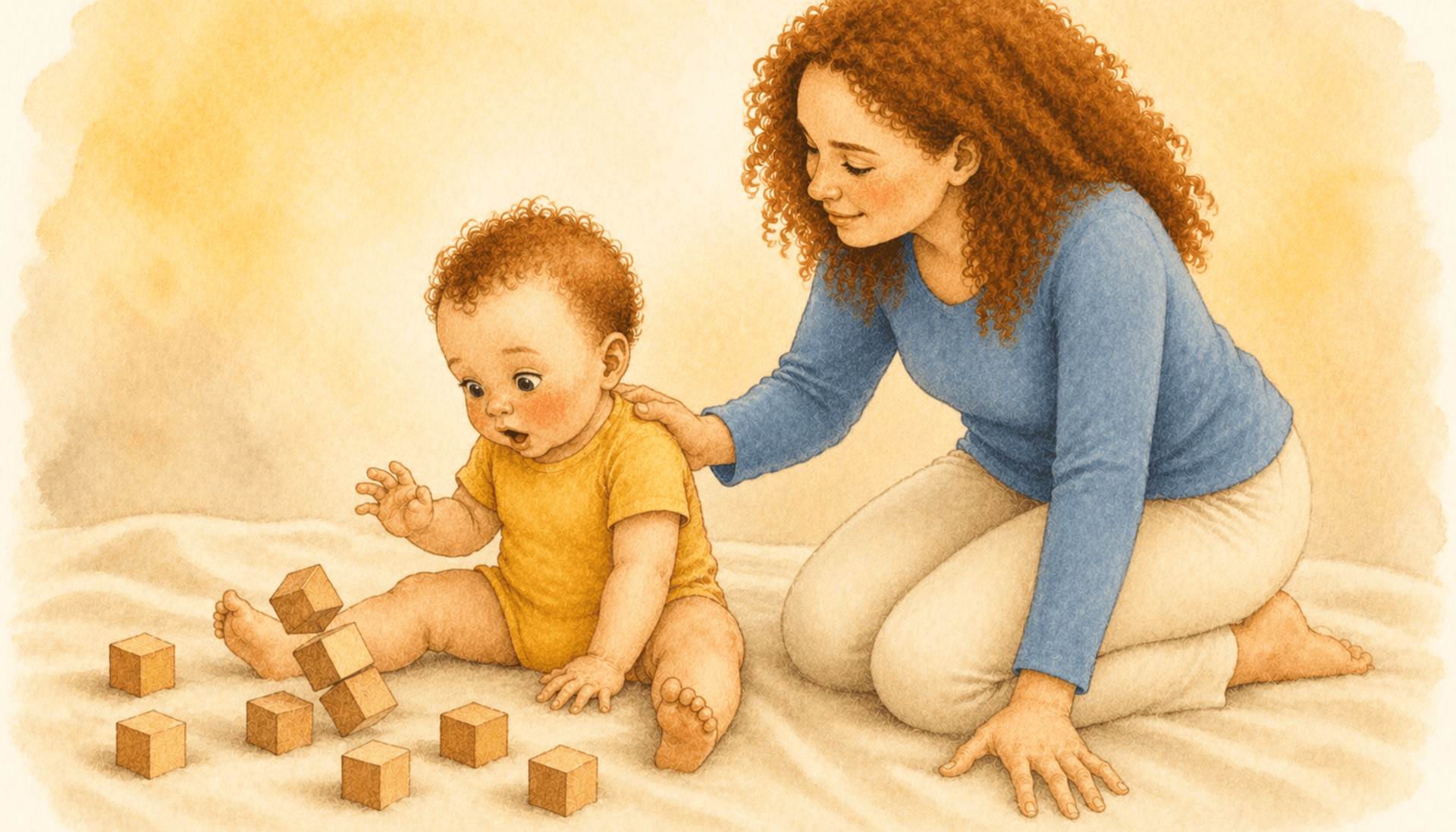
When researchers have studied what happens when parents respond to children's emotions with warmth, consistency, and structure, the findings hold up across meta-analyses. Modest in scale, but real and replicable.
Emotional responsiveness and secure attachment. A 2024 meta-analysis by Madigan and colleagues, pooling data from 174 studies and nearly 23,000 parent-child pairs, found that parents who were consistently sensitive and responsive tended to raise children with more secure attachment. Secure attachment, in turn, predicts better emotional regulation, fewer behavioral problems, and stronger friendships through childhood — so the downstream effects are real even if no single parenting moment determines them. Parental sensitivity is a meaningful factor, not the only one, and understanding how the early brain develops its capacity for connection and regulation helps explain the biology behind this.
Emotion coaching and emotional regulation. Gottman's original work in the 1990s identified emotion coaching (acknowledging feelings, labeling them, treating emotional moments as opportunities rather than inconveniences) as a distinct parenting behavior that predicted children's emotional adjustment, academic performance, and peer relationships. A 2023 systematic review by England-Mason and colleagues, covering randomized controlled trials of emotion coaching programs, found that children whose parents learned these skills showed improvements in emotional competence and fewer behavioral problems compared to control groups. The effects were consistent across different populations and age groups.
The most direct evidence comes from a 2022 randomized controlled trial called the Tuning in to Toddlers program, led by Havighurst and colleagues. Three hundred parents of 18-to-36-month-olds were randomly assigned to a six-session emotion coaching program or a control group. A year later, children in the program had lower cortisol — a physical stress hormone measured in hair samples — than children in the control group, alongside improvements in behavior rated by teachers and parents. Lower cortisol in a toddler means less physiological stress day-to-day: easier transitions, better sleep, fewer explosive reactions to minor frustrations. That is the kind of concrete outcome that gets claimed for "gentle parenting" broadly, but the study pinpoints it to emotion coaching specifically as a teachable, learnable skill.
Autonomy support. A 2022 study by Castelo and colleagues at the University of Minnesota followed 366 preschoolers and found that one specific parenting behavior predicted children's executive function (their ability to focus, follow rules, and manage impulses) more than warmth alone: offering real choices within consistent limits. Red cup or blue cup. Park or playground. You pick the book. Meaningful options within a frame the parent holds. This is the research base behind what looks like a small daily habit but turns out to matter for the prefrontal cortex development that shapes how toddlers handle 'no'.
Warmth paired with structure. Pinquart's 2017 meta-analysis of 1,435 studies on parenting style and child outcomes found that children raised with both warmth and consistent structure had fewer behavioral problems than children raised with either alone. Warmth without structure tips toward permissive; structure without warmth tips toward authoritarian. The combination is what researchers have called "authoritative parenting" since Baumrind named it in the 1960s, and it is also what the founders of gentle parenting described when they wrote about empathy paired with firm limits. Different name, same pattern.
The condition almost everyone leaves out
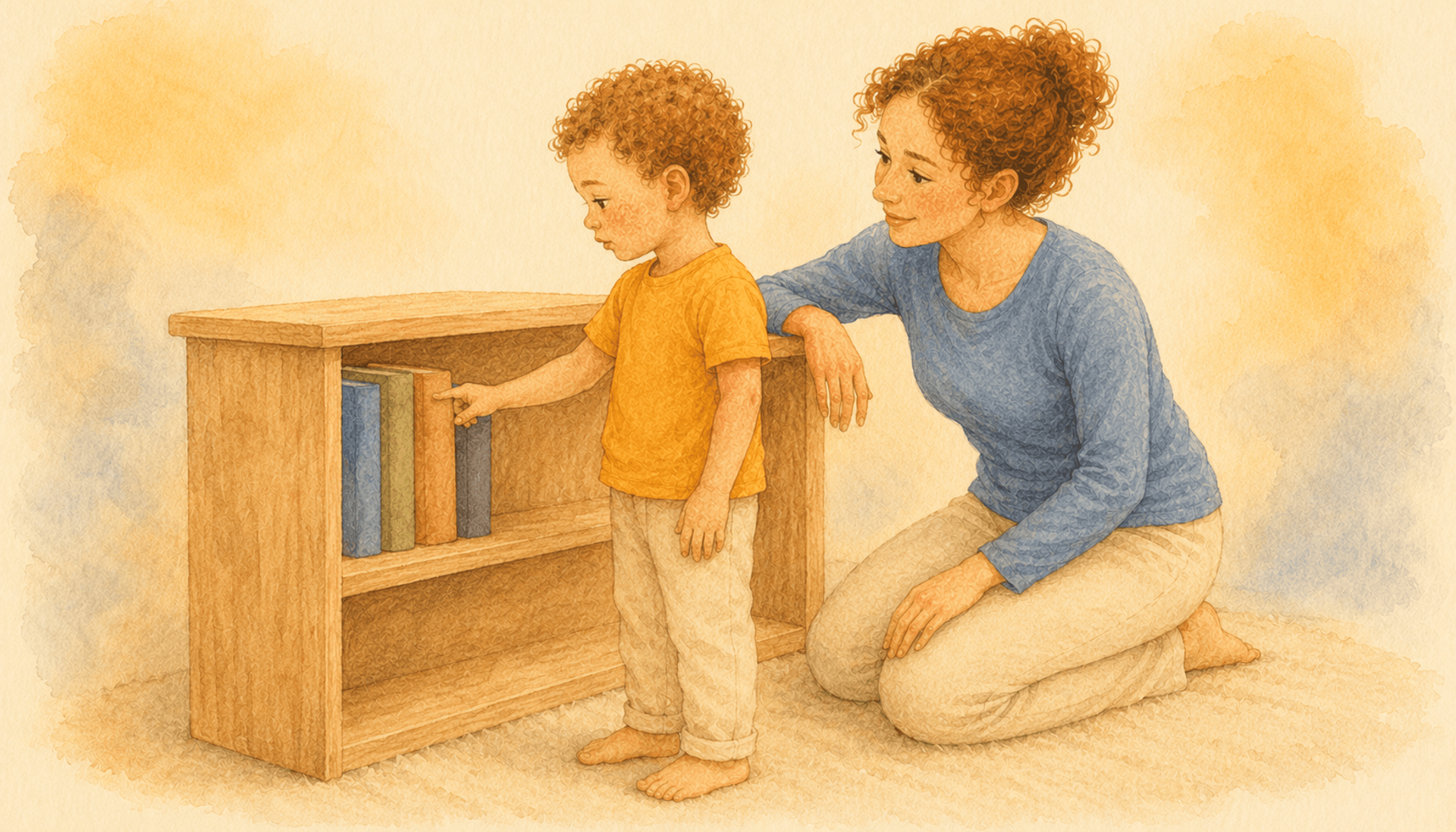
Here is the piece that almost no coverage of gentle parenting includes, and it is the one that explains most of the "is it too soft?" debate.
Emotional validation produces its documented effects when it is followed by a limit. When a toddler wants a third story and gets acknowledged — "you want to keep reading, that makes sense, books are great" — and then hears "it's still lights out," something specific happens in the sequence. The child's distress is registered. The rule holds. Over hundreds of repetitions, the child learns that feelings are acceptable and limits are real. Both things at once.
When validation happens without the limit following it, that sequence breaks. A 2019 study by Laurin and Joussemet found that parents who acknowledged feelings, explained reasons, and offered choices at age two had children who were more compliant with rules at three and a half, compared to families who skipped the acknowledgment. The mechanism is that being heard reduces resistance — but only when there is still something to comply with. The acknowledgment works because the limit stays. This is the distinction that separates what the research studies from the social media version of the approach, and it matters directly for how families handle tantrums, the "no to everything" phase, and biting.
What the parental stress finding means
Return to the Pezalla and Davidson study, because the finding about self-criticism in gentle parents is real even if it has been misreported.
Parents who identified as gentle parents and also described themselves as self-critical had measurably lower confidence in their parenting than those who used the label without the self-critical frame. That is a real difference. What it points to is something specific: a subset of parents who adopt this approach also absorb an unstated standard of constant calm, constant attunement, constant validation, and then measure every interaction against it. The ideology, interpreted as a performance requirement, creates its own pressure. A parent who believes she must respond perfectly to every emotional moment will find a hundred daily failures where another parent would find a manageable day.
Research on parental burnout is consistent here: perfectionism about parenting practice predicts exhaustion across all parenting styles, not just this one. The version of gentle parenting circulating on social media (curated, perfectly narrated, a warm measured response to every single feeling) is a performance standard, not a research recommendation. The studies show effects when these behaviors happen often enough, across the normal messiness of real family life. Parents dealing with the particular pressure that builds around separation and clinginess know this loop well: the harder you try to do it right, the less present you are.
What this looks like on a Tuesday
Forty years of research points to specific behaviors, not an identity. Respond to the feeling before addressing the behavior. Offer real choices within consistent limits. Keep the structure predictable so that your emotional energy goes where it is needed. Stay warm. Hold the line.
This does not require adopting a label or mastering a philosophy. The evidence for these behaviors holds in ordinary families with ordinary amounts of patience, across the normal variation in how any parent shows up on a given day. The My First Routine Cards work not because they replace attunement but because predictable structure handles the hundred small daily transitions without requiring a conscious parenting decision for each one — which is what leaves room for the real parenting moment when it actually arrives. For preschoolers managing longer days with more complex transitions, the Big Kid Routine Cards serve the same function: less resistance at each step, more capacity for the moments that matter.
The practical question is not "am I gentle parenting correctly." It is "does my child know what comes next, and do I acknowledge what they're feeling before I hold the rule." Those two things, consistently, are what the evidence describes.
Frequently Asked Questions
The specific behaviors associated with gentle parenting — responding to children's emotions, offering choices within limits, maintaining warmth alongside consistent structure — have decades of evidence behind them. Children raised with these behaviors tend to show better emotional regulation, more secure attachment, and fewer behavioral problems. What lacks a strong evidence base is "gentle parenting" as a named label: only one study has examined it directly, and that study looked at how parents describe themselves rather than how children in those families were doing
It depends on whether the validation is followed by a limit. When a parent acknowledges a child's feelings and then holds the rule anyway, research shows that sequence supports compliance, emotional regulation, and self-control. When validation happens without a limit following it, the pattern looks more like permissive parenting — characterized by warmth without structure — which has less favorable outcomes in behavior research. The deciding factor is the sequence: acknowledge, then hold.
The widely shared claim comes from a 2024 study (Pezalla & Davidson, PLOS ONE) that never measured stress. What the study found was that parents who identified as gentle parents and also described themselves as self-critical had lower confidence in their parenting. Perfectionism about parenting practice is a documented contributor to burnout regardless of which approach a parent follows. The approach itself is not the problem; the performance standard some attach to it can be.
In the research literature, very little. Authoritative parenting, defined by Baumrind in the 1960s as combining warmth, responsiveness, and firm consistent limits, describes the same pattern that gentle parenting advocates in contemporary language. The authoritative parenting literature spans thousands of studies across multiple decades and cultures. Gentle parenting as a named approach has one empirical study. The underlying idea (that warmth and limits work better together than either does alone) is the same in both.
The research on responsive caregiving, emotion coaching, and autonomy support shows meaningful effects across infancy through adolescence. The toddler years (roughly one to three) are particularly well-documented for emotion coaching outcomes: behavior, language development, and physical stress markers. The preschool years are when offering real choices within structure shows the strongest effects on executive function development. There is no age at which warmth combined with consistent limits has been shown to produce worse outcomes than the alternatives.
For educational and entertainment purposes only. Not a substitute for professional medical or developmental advice. If you have concerns about your child's behavior or development, please consult your pediatrician.
- Baumrind, D. (1966). Effects of authoritative parental control on child behavior. Child Development, 37(4), 887–907.
- Castelo, R. J. et al. (2022). Parent provision of choice is a key component of autonomy support in predicting child executive function skills. Frontiers in Psychology, 12, 773492.
- Chen, Y. et al. (2019). Positive parenting improves multiple aspects of health and well-being in young adulthood. Nature Human Behaviour, 3(7), 684–691.
- England-Mason, G. et al. (2023). Emotion socialization parenting interventions targeting emotional competence in young children: A systematic review and meta-analysis of RCTs. Clinical Psychology Review, 102, 102262.
- Gottman, J. M., Katz, L. F., & Hooven, C. (1996). Parental meta-emotion philosophy and the emotional life of families. Journal of Family Psychology, 10(3), 243–268.
- Havighurst, S. S. et al. (2022). A randomized controlled trial of an emotion socialization parenting program: Tuning in to Toddlers. Behaviour Research and Therapy, 149, 104016.
- Kuppens, S., & Ceulemans, E. (2019). Parenting styles: a closer look at a well-known concept. Journal of Child and Family Studies, 28(1), 168–181.
- Laurin, J. C., & Joussemet, M. (2017). Parental autonomy-supportive practices and toddlers' rule internalization. Motivation and Emotion, 41(5), 562–575.
- Madigan, S. et al. (2024). Maternal and paternal sensitivity: key determinants of child attachment security. Psychological Bulletin, 150(7), 839–872.
- Pezalla, A. E., & Davidson, A. J. (2024). "Trying to remain calm…": An exploration of the meaning of gentle parenting. PLOS ONE, 19(7), e0307492.
- Pinquart, M. (2017). Associations of parenting dimensions and styles with externalizing problems. Developmental Psychology, 53(5), 873–932.
- Pinquart, M., & Kauser, R. (2018). Do associations of parenting styles with behavior problems vary by culture? Cultural Diversity and Ethnic Minority Psychology, 24(1), 75–100.
- Wang, S., & Gai, X. (2024). Bidirectional relationship between positive parenting behavior and children's self-regulation. Behavioral Sciences, 14(1), 38.
More Articles

Parallel Play in Toddlers: Why Side-by-Side Is the Social Work
Your toddler spent the entire playdate building separate towers, and nobody shared a single block. That counted — more than it looked. A 2025 longitudinal study found that playing beside a specific child consistently predicted later social play with that same child, but not the other way around. Here's what parallel play in toddlers actually is, why the science calls it strategic rather than passive, and what it means for how you run a playdate.

When Do Babies Point: Why It Matters for Language
Most milestone articles treat pointing as a box to check around 12 months. The research tells a different story — one that starts months earlier, runs through the infant brain, and traces back to how much the parent is pointing. Here's what the last fifteen years of research actually found, and what it means for everyday interactions.

When Do Babies Wave Bye-Bye: Why Your Baby Needs You to Wave First
Most baby milestones unfold on a biological schedule — waving isn't one of them. A 2023 study found that babies develop imitation ability because their caregivers imitate them first, and waving is named directly as a cultural gesture learned through that loop. Here's what the research says about the 9–12 month window, why the first wave looks nothing like a wave, and what helps it arrive.