Toddler Meal Ideas: What Research Says About What Goes on the Plate
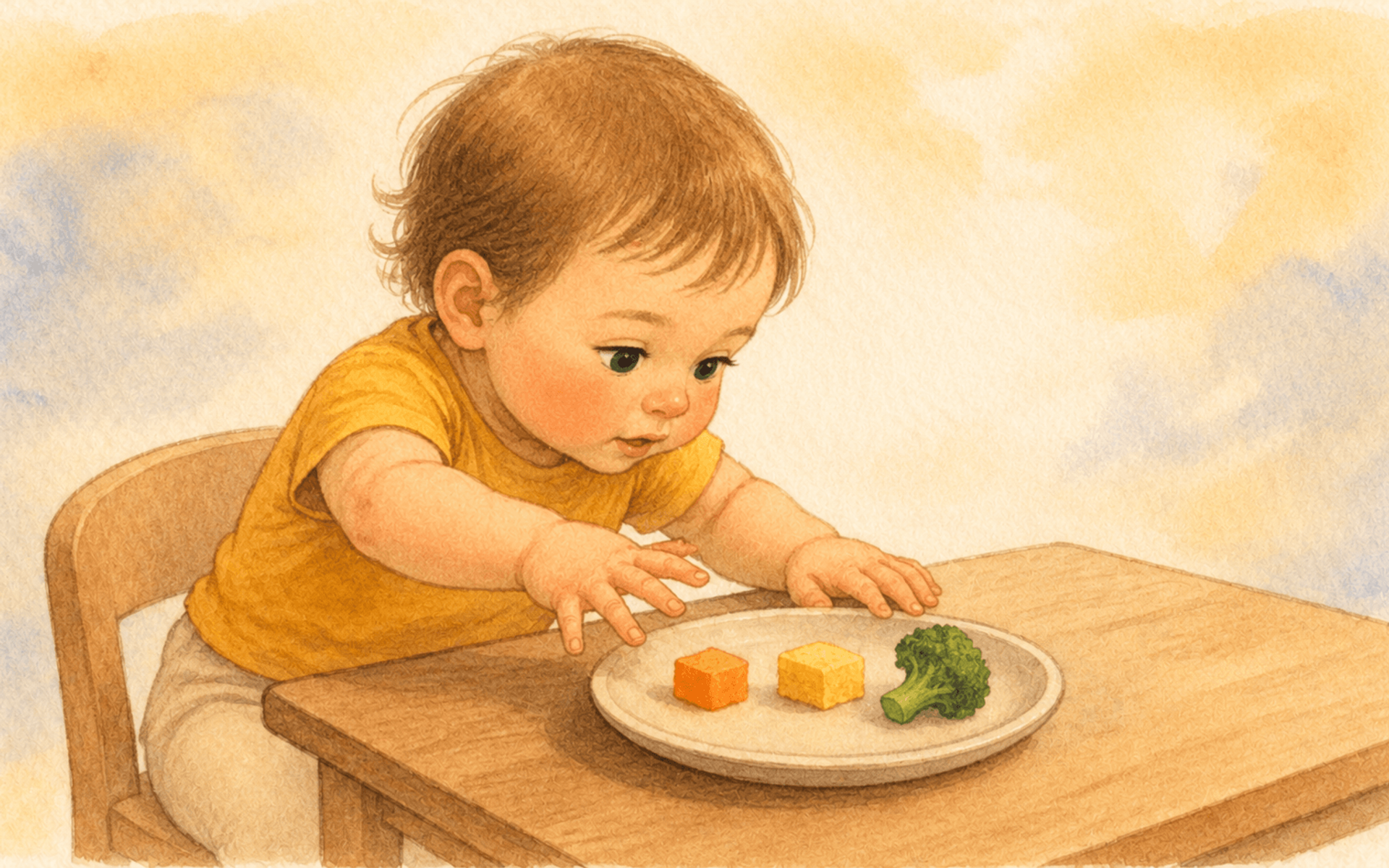
There is a specific kind of afternoon that ends with a plate on the floor and the quiet realization that you have now cooked the same thing three different ways this week and none of them were correct. Most parents assume the answer is a better recipe. The research suggests it was never really about the recipe.
- Twenty meal ideas organized by the nutritional principles that actually matter for ages 1–3
- Why toddler appetite fluctuates so wildly, and why that is not something you caused
- What a well-built plate looks like, with the actual nutritional priorities for this age
- The mealtime structure that research connects to less refusal — the part every recipe blog skips
- How texture fits in, and what to do if your toddler has strong opinions about it
- When the pattern is worth mentioning to a pediatrician
If the one-sentence answer is enough, you’ve got the gist. If you want the mechanism behind each piece, keep reading.
Twenty toddler meal ideas built on what the research actually prioritizes
These are not recipes with ingredient lists and cooking times. They are assembled meals — combinations of foods that meet the three nutritional priorities for ages 1–3 (iron, zinc, and dietary variety) and include a familiar anchor food alongside one target food. All assume toddler-appropriate texture: soft enough to squish between two fingers, cut to pieces no larger than a centimeter for children under two.
Breakfast
Whole-grain oatmeal with mashed banana and a spoonful of nut butter (if no allergy). Iron-fortified oats plus fat and protein; banana is the anchor for children who start from sweet familiarity.
Soft French toast with a side of soft fruit. Egg provides iron; the bread texture is the anchor; fruit introduces variety across the week.
Small whole-grain pancakes with yogurt and soft berries. Fortified grain adds some iron; yogurt is the anchor; berries introduce different colors and textures.
Ricotta cheese with soft fruit and a piece of toast. Quick, no cooking; ricotta provides zinc and calcium; toast is the anchor.
Smoothie with whole milk or full-fat yogurt, banana, and a small handful of spinach. A drinkable option for children going through a strong texture-refusal phase. This does not replace solid food long-term, but it keeps nutrition intact on difficult days.
Soft-cooked eggs with diced avocado and whole-grain toast with a thin spread of nut butter. High in iron, zinc, and healthy fat; toast is the reliable anchor.
Lunch
Soft-scrambled egg with strips of roasted sweet potato and a few cubes of avocado. Egg provides iron and zinc; sweet potato is a reliable anchor; avocado adds fat and a different texture.
Lentil soup with a small piece of soft bread and a strip of steamed broccoli on the side. Lentils are iron-dense; the bread is the anchor; the broccoli is the target food that can sit untouched without incident.
Short pasta tossed in olive oil and grated cheese, with soft-cooked peas mixed in. Pasta is the anchor; peas introduce a new color and mild flavor; cheese adds zinc and fat.
Hummus spread on soft pita with steamed carrot coins. Chickpeas provide iron and zinc; the bread texture is the anchor; carrots are sweet enough to make a reasonable first target food.
Soft-cooked salmon flaked into small pieces with mashed potato and steamed green beans. Salmon provides zinc and omega-3s; mashed potato is a near-universal anchor; green beans are a low-bitterness texture introduction.
Small chicken meatballs baked and pressed flat with rice and a spoonful of yogurt on the side. Chicken provides iron and zinc; rice is the anchor; yogurt adds probiotics and calcium.
Black bean quesadilla in a soft flour tortilla with melted cheese. Beans provide iron; the cheese-and-tortilla combination is the anchor; the slight variation in texture between bean and cheese is low-threat for most children.
Soft tofu cubes pan-cooked with a little butter, served with rice and thin strips of steamed zucchini. Tofu provides iron and zinc for families avoiding meat; rice is the anchor; zucchini is mild enough to be a reasonable early target.
Dinner
Ground beef or turkey cooked until soft, served over short pasta with a spoonful of tomato sauce. Ground meat is highly absorbable iron; pasta is the anchor; tomato provides vitamin C, which meaningfully improves iron absorption when eaten at the same meal.
Soft-cooked white fish with mashed sweet potato and a piece of steamed broccoli. Fish provides zinc; sweet potato is the anchor; broccoli is the target.
Lentil and vegetable stew with soft bread. A one-pot meal that covers iron, zinc, protein, and fiber, and is easy to adjust by adding or removing vegetables.
Chicken and vegetable congee (rice porridge cooked until very soft). The best option for children going through a texture-sensitive phase: everything is uniform, which lowers the sensory barrier to whatever vegetables are cooked in.
Soft-boiled egg halves with avocado smashed on toast and a few soft melon cubes. Egg provides iron and zinc; toast is the anchor; melon introduces a sweet, unfamiliar texture with no pressure attached.
Beef or chicken strips braised until very tender, with mashed potato and steamed carrots. Simple, high iron, reliable.
Why toddler appetite makes no predictable sense
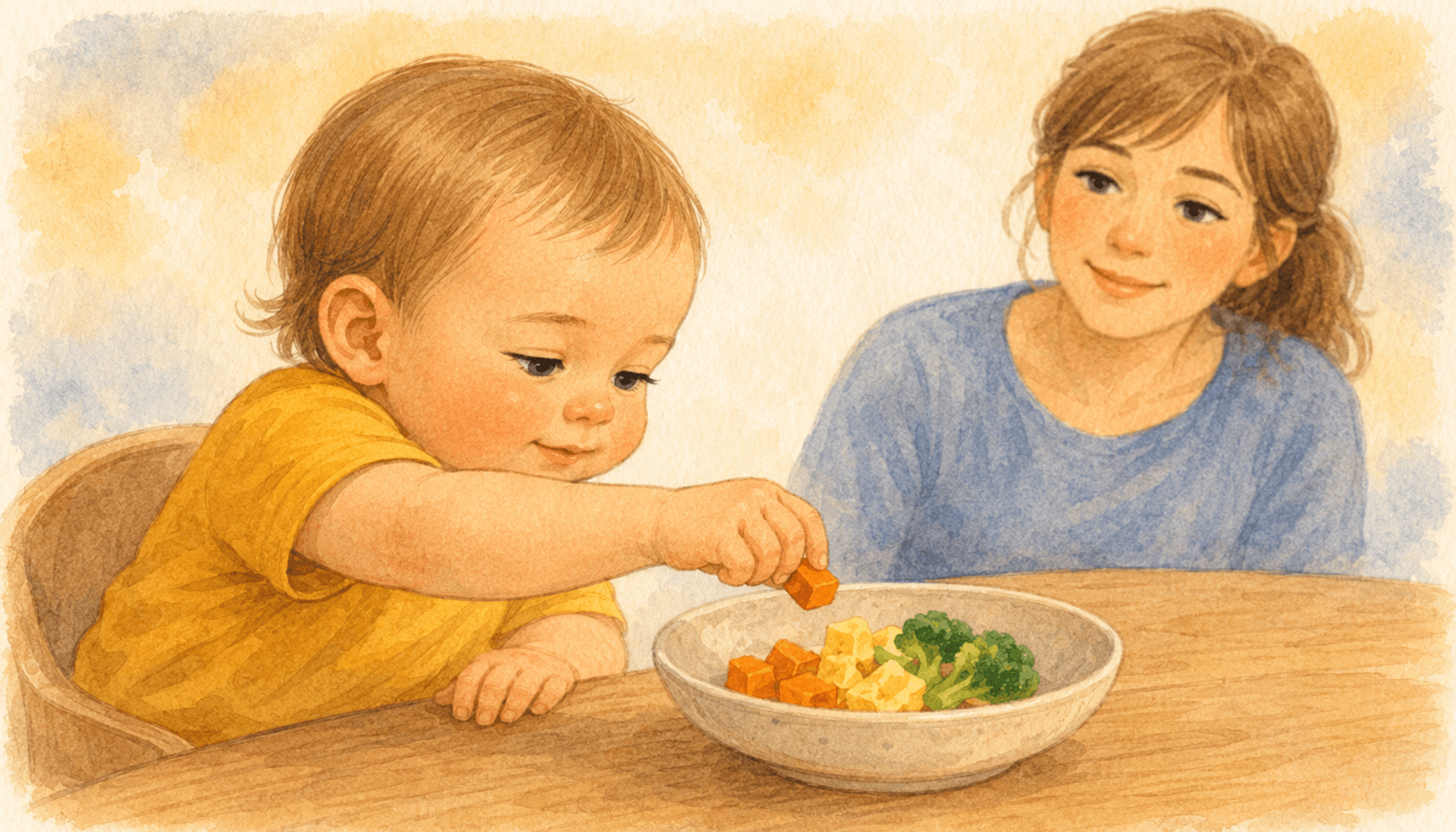
Appetite in the one-to-three age window drops significantly from infancy and varies more day to day than at almost any other point in childhood. Toddlers need between 1,000 and 1,400 calories a day depending on age, size, and activity level — substantially less per pound of body weight than in infancy, when growth is much faster. The American Academy of Pediatrics notes that a toddler portion is roughly one-quarter the size of an adult portion, and that one well-eaten meal a day is nutritionally common, especially for children who graze through snacks. If your child eats well at breakfast and picks at lunch and dinner, that is within the normal range for this developmental window.
Toddler hunger is regulated primarily through internal cues rather than external signals like time of day or portion size. A child who snacked heavily at 3:00 pm may arrive at dinner with genuinely no appetite — not stubbornness, but accurate self-regulation. Spacing snacks at least ninety minutes before a meal and keeping them to around one hundred calories gives hunger time to rebuild before the plate arrives. This single change makes a measurable difference to how dinnertime goes, and it requires no change to the menu at all.
There is also a pattern researchers call day-to-day variability that is developmentally normal. A food accepted on Monday and refused on Wednesday is not regression; it is a feature of how toddler food preferences are still forming. Acceptance across a week or a month is the more meaningful measure than acceptance at any single meal. The pasta that got rejected Thursday has a reasonable chance of being eaten again on Sunday, especially if it keeps appearing on the plate without drama.
What a well-built toddler plate actually looks like
Three nutritional priorities stand out for ages 1–3, because they are genuinely hard to hit without thinking about them.
Iron is the most common micronutrient deficiency in toddlers globally, according to a 2022 review in Current Opinion in Clinical Nutrition and Metabolic Care by Brotanek and colleagues. It is largely a consequence of transitioning away from iron-fortified formula or iron-rich breast milk without replacing that iron from food. The symptoms — fatigue, reduced appetite, poorer attention — are easy to attribute to other causes, which is why pediatricians screen for iron at around twelve months and again at twenty-four. Practically: at least one iron-containing food per day (soft-cooked meat, lentils, beans, tofu, or iron-fortified cereals), paired with a vitamin-C source at the same meal (tomato, citrus, or bell pepper) to improve absorption.
Zinc is less discussed but closely related. A 2014 randomized controlled trial by Kelishadi and colleagues found that zinc supplementation improved caloric intake and appetite-related scores in children with low baseline zinc — suggesting a reinforcing loop where limited food variety reduces zinc intake, and low zinc then further reduces appetite and dulls taste. Zinc shows up in meat, beans, pumpkin seeds, and whole grains. If those food groups are present across the week, deficiency is unlikely.
Dietary variety — rotating across different vegetables, grains, and protein sources — plays a central role in gut microbiome development during the complementary feeding window. A 2025 narrative review in Nutrients by Noles and colleagues, analyzing research from 2004 to 2024, found that the shift from an exclusive milk-based diet to solid foods drives significant changes in gut bacterial composition, and that the type and variety of complementary foods introduced shapes the microbiome's trajectory toward a mature, adult-like community. A varied diet across this window supports that process more than any single food does. For a fuller picture of which foods deliver the most nutritional value from the start of solids, the article on best first foods for baby covers the early food variety research in detail.
For plate structure, the practical framework with the most research support is: one familiar food the child reliably accepts, one target food that is new or being re-introduced, and a protein source. The familiar food is not a bribe or a reward — it is a safety anchor. Research on food acceptance consistently shows that the presence of a known food on the plate reduces the perceived threat of the new one. Pediatric dietitian Ellyn Satter's division of responsibility model — parents decide what is offered and when, children decide whether and how much to eat — has been widely adopted in clinical practice and is referenced in the AAP's feeding guidance. For families using a self-feeding approach from the start of solids, the baby led weaning guide covers how the same principles apply from the beginning.
If your toddler is still transitioning from purees, the article on when to start solid foods covers the move to table food in more detail.
The mealtime structure that research connects to less refusal
A 2017 study by Powell and colleagues published in Maternal and Child Nutrition observed seventy-five families during real home mealtimes. Children showed less food refusal in specific structural conditions: when a parent ate the same food at the same time, when there were no screens or distracting toys at the table, and when the child was allowed some input into how much food was placed on the plate. None of these required a different menu. The meals were the same. The context was different.
A 2020 observational study by Fries and colleagues published in Appetite filmed sixty families with toddlers aged twelve to thirty-six months across a full day of eating. Screen use occurred during approximately thirty-eight percent of breakfasts, thirty-nine percent of lunches, and thirty-three percent of dinners — and children in screen-present mealtimes had more interrupted, less responsive feeding interactions. A 2021 study by Vik and colleagues found that parental phone use during meals was associated with more pressure to eat and less modeling of food acceptance.
The practical translation is simple. Sit down and eat the same food as your toddler as often as is realistic. Turn the screen off for the duration of the meal. Let the child take some food from a shared dish rather than being served a fixed plate. None of this requires cooking different food — it requires a different setup for the meals you are already making.
Predictable timing reinforces all of this. A 2017 review by Finnane and colleagues in the Journal of Nutrition Education and Behavior found that consistent meal timing and family meals were associated with less food fussiness in toddlers. Children who knew roughly when food would arrive, and who arrived genuinely hungry, ate more variably and refused less. The My First Routine Cards include a visual meal and snack schedule that helps establish this predictable rhythm — which matters more for what happens at the table than most parents expect.
If you want to understand the brain science behind why your toddler refuses new foods in the first place — the evolutionary mechanism, taste sensitivity, and what the research says about repeated exposure — the article on why toddlers won't eat new foods covers that territory. This article is about what to put on the plate and how to set up the meal.
Texture: the part of fussiness that is not about taste
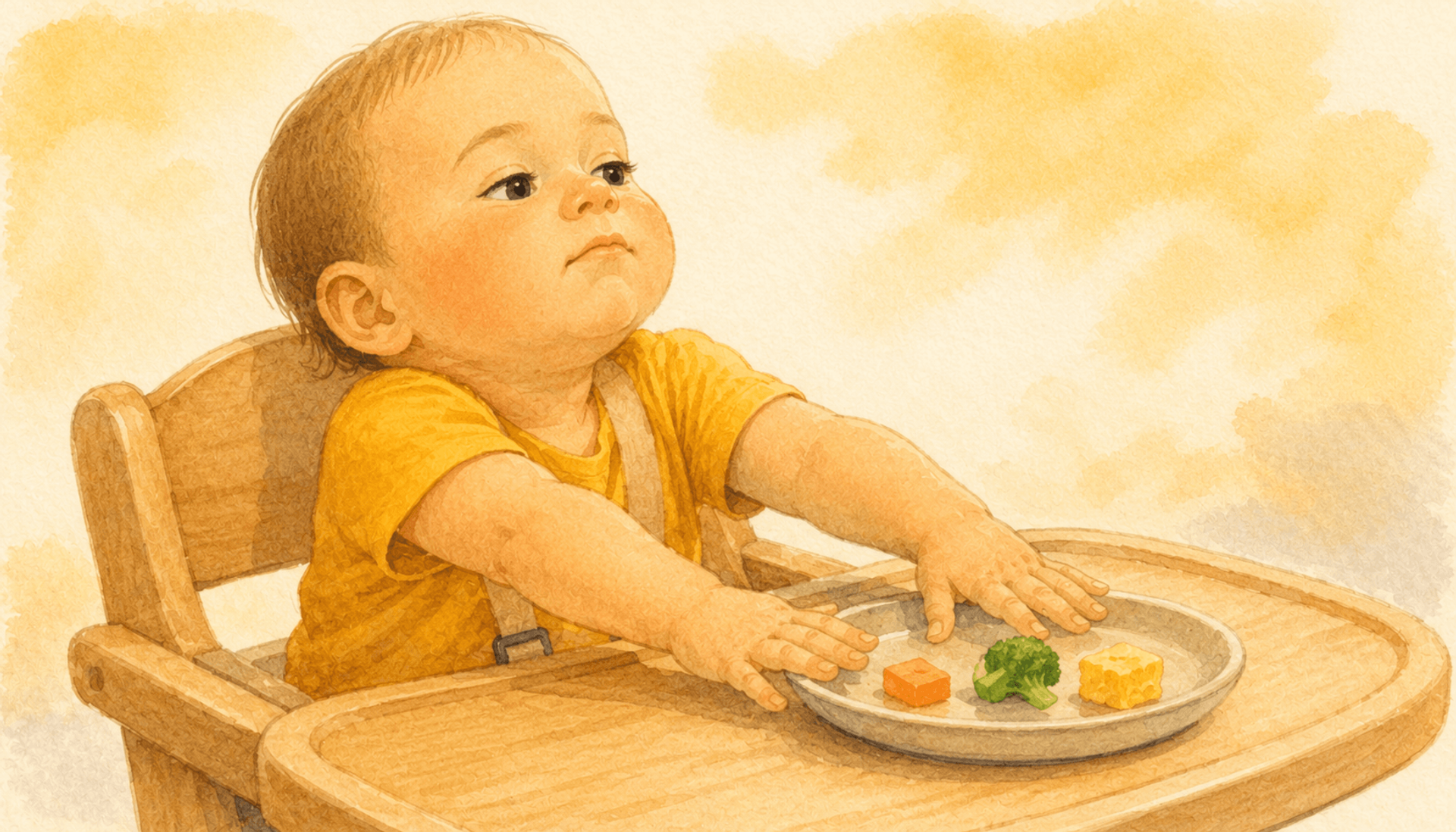
Food rejection in toddlers is often assumed to be about flavor. Research on feeding development suggests texture plays an equal or larger role, especially in children who had limited exposure to textured foods in the second half of infancy. A 2017 review by Harris and Mason in Current Nutrition Reports found evidence for a sensitive period for texture acceptance that runs roughly from six to ten months — when the oral-motor system is learning to handle lumps, soft pieces, and varied consistencies. Children introduced to textured foods after that window showed higher rates of texture refusal at later ages, according to a study by Coulthard and colleagues in Maternal and Child Nutrition.
For parents of toddlers already past that window: this is not a deadline missed, it is an explanation. A strongly texture-averse two-year-old likely encountered fewer textures during the sensitive period, and the pattern is more established than it would have been to address at eight months. It is still addressable. Texture progression works incrementally: from smooth to slightly lumpy, from soft to firmer, introducing new textures inside familiar flavors. The chicken meatball that a child resists whole may be accepted mashed into rice, and from there, less mashed, and eventually whole. This takes time and is not a sign of a permanent eating problem.
The meal ideas in the section above reflect this. Congee is listed specifically for texture-sensitive children. Smoothies appear as a temporary option for strong refusal phases. The principle is that texture is a variable you can adjust independently of flavor — removing one barrier at a time instead of asking the child to accept a new taste and a new texture simultaneously.
When to mention the pattern to your pediatrician
Most toddler fussiness is developmental and resolves with time and consistent, low-pressure exposure. A few patterns are worth raising at a routine visit.
A toddler who has lost significant weight, who is visibly fatigued, or whose growth has stalled for two or more consecutive months is worth a check-in. These may reflect normal variation, but they are patterns a pediatrician will want to look at, particularly given the iron screening timeline.
A child who accepts fewer than twenty different foods, who gags or vomits consistently on a particular texture, or whose food refusal causes significant distress at every meal — not occasional pushback, but genuine distress — is worth a mention. This pattern can overlap with sensory processing differences that a feeding therapist can help with, and early support tends to be more effective than waiting.
A toddler who has lost foods previously accepted, without explanation, is also worth flagging. Some regression is normal, but a significant narrowing of the diet within a short period is the kind of thing a pediatrician will want to document.
Frequently Asked Questions
Easy toddler meals for picky eaters work best when they include one completely familiar food alongside one target food, not two new items on the same plate. Combinations that tend to work across a range of toddler preferences include scrambled egg with toast, pasta with olive oil and cheese, lentil soup with bread, and soft-cooked fish with mashed potato. The key is keeping the familiar food present so the child has something safe to eat while the new food sits nearby without pressure. A 2017 study in Maternal and Child Nutrition found that children refused foods less often when they had some control over portioning and were not pressured to eat the new item.
Most toddlers aged one to three do well with three small meals and one to two snacks per day. The more important variable than frequency is spacing: snacks should be at least ninety minutes before a meal so that hunger has time to rebuild. Current pediatric nutrition guidance suggests keeping snacks to around one hundred calories. Toddlers regulate hunger primarily through internal cues, and arriving at the table genuinely hungry is one of the strongest predictors of whether a meal goes smoothly.
Yes, when possible, and the research supports this beyond convenience. A 2017 observational study by Powell and colleagues found that children showed less food refusal when a parent was eating the same food at the same time. Toddlers learn what is safe and worth eating partly by watching adults eat it. A child who sees a parent routinely eat something, without commentary or pressure, is more likely to try that food over repeated exposure. Making a completely separate toddler menu removes that modeling signal and can inadvertently reinforce the idea that adult food is different from toddler food.
Continue offering vegetables without making the refusal an event. Research on food acceptance consistently shows that repeated neutral exposure — the vegetable appearing on the plate regularly without pressure — is what builds familiarity over time, and familiarity is what eventually leads to acceptance. This process can take weeks or months. In the meantime, focus on the vegetables your toddler currently accepts and introduce new ones incrementally by shape, color, or preparation method. Roasted carrots and raw carrots are, in terms of texture and sweetness, significantly different foods — a child who rejects one may accept the other. For more on the brain science behind vegetable refusal, the article on why toddlers won't try new foods covers the mechanism in detail.
Repeating meals your toddler accepts is reasonable as long as the rotation covers the nutritional priorities — particularly iron and zinc. A limited rotation of five or six reliable meals that include protein, grains, and at least one vegetable will meet most nutritional needs. The area where repetition becomes a concern is gut microbiome diversity, where rotating across different vegetables, grains, and protein sources across the week matters more than variety within a single meal.
This article is for educational and informational purposes only and is not a substitute for professional medical or nutritional advice. If you have concerns about your toddler's growth, weight, or eating patterns, consult your pediatrician.
- Brotanek, J. M., et al. (2022). Iron deficiency in early childhood. Current Opinion in Clinical Nutrition and Metabolic Care, 25(3), 193–199.
- Coulthard, H., Harris, G., & Emmett, P. (2009). Delayed introduction of lumpy foods to children during the complementary feeding period affects child's food acceptance and feeding at 7 years of age. Maternal and Child Nutrition, 5(1), 75–85. PMID 19161546.
- Finnane, J. M., Jansen, E., Mallan, K. M., & Daniels, L. A. (2017). Mealtime structure and responsive feeding practices are associated with less food fussiness and more food enjoyment in children. Journal of Nutrition Education and Behavior, 49(1), 11–18. DOI 10.1016/j.jneb.2016.08.007.
- Fries, L. R., et al. (2020). Feeding practices demonstrated by parents of toddlers: An observational analysis of breakfast, lunch, dinner, and snacks. Appetite, 155, 104813. PMID 32777244.
- Harris, G., & Mason, S. (2017). Are there sensitive periods for food acceptance in infancy? Current Nutrition Reports, 6(2), 190–196. PMID 28596932. DOI 10.1007/s13668-017-0203-0.
- Kelishadi, R., et al. (2014). Effects of zinc supplementation on subscales of anorexia in children: A randomized controlled trial. Pakistan Journal of Medical Sciences, 30(6), 1213–1217. PMID 25674110. DOI 10.12669/pjms.306.6377.
- Noles, D. L., Matzeller, K. L., Frank, D. N., Krebs, N. F., & Tang, M. (2025). Complementary feeding and infant gut microbiota: A narrative review. Nutrients, 17(5), 743. PMID 40077613. DOI 10.3390/nu17050743.
- Northstone, K., Emmett, P., & Nethersole, F. (2001). The effect of age of introduction to lumpy solids on foods eaten and reported feeding difficulties at 6 and 15 months. Journal of Human Nutrition and Dietetics, 14(1), 43–54. PMID 11301932.
- Powell, F., Farrow, C., Meyer, C., & Haycraft, E. (2017). The importance of mealtime structure for reducing child food fussiness. Maternal and Child Nutrition, 13(2), e12296. PMID 27062194. DOI 10.1111/mcn.12296.
- Satter, E. (2000). Child of Mine: Feeding with Love and Good Sense (3rd ed.). Bull Publishing.
- Vik, F. N., et al. (2021). Parental phone use during mealtimes with toddlers and the associations with feeding practices and shared family meals. BMC Public Health, 21(1). DOI 10.1186/s12889-021-10757-1.
More Articles

Parallel Play in Toddlers: Why Side-by-Side Is the Social Work
Your toddler spent the entire playdate building separate towers, and nobody shared a single block. That counted — more than it looked. A 2025 longitudinal study found that playing beside a specific child consistently predicted later social play with that same child, but not the other way around. Here's what parallel play in toddlers actually is, why the science calls it strategic rather than passive, and what it means for how you run a playdate.

When Do Babies Point: Why It Matters for Language
Most milestone articles treat pointing as a box to check around 12 months. The research tells a different story — one that starts months earlier, runs through the infant brain, and traces back to how much the parent is pointing. Here's what the last fifteen years of research actually found, and what it means for everyday interactions.

When Do Babies Wave Bye-Bye: Why Your Baby Needs You to Wave First
Most baby milestones unfold on a biological schedule — waving isn't one of them. A 2023 study found that babies develop imitation ability because their caregivers imitate them first, and waving is named directly as a cultural gesture learned through that loop. Here's what the research says about the 9–12 month window, why the first wave looks nothing like a wave, and what helps it arrive.