Am I Doing Enough? A Realistic Guide to Baby Play

It's 2 AM. Your baby just fell back to sleep after another feeding, and instead of closing your eyes, you're lying in the dark scrolling through your phone, searching for some version of the same question: "Am I doing enough?"
Maybe you saw a post about a mom who does sensory bins and baby yoga and reads twelve books a day. Maybe your pediatrician mentioned "tummy time" at the last visit and you realized you keep forgetting. Maybe the day felt like an endless loop of feeding, changing, soothing, and staring at the ceiling together — and now you're wondering whether any of that counted as "stimulation."
Let's talk about what the research actually says. Because the answer might surprise you — and it will almost certainly make you feel better.
- What "serve and return" actually looks like in a normal day — and why you've been doing it without knowing
- Why "stimulation" doesn't mean constant input — and what overstimulation signals look like
- The myth of the perfect play schedule: what wake windows actually allow for
- The short list of things developmental research consistently shows actually matter in year one
- What genuinely doesn't matter as much as parenting culture suggests — and why the guilt costs more than the "failing"
If the one-sentence answer is enough, you’ve got the gist. If you want the mechanism behind each piece, keep reading.
The Question Behind the Question
When a new parent asks "am I doing enough?", the real question is usually something closer to: "Is my baby's brain developing the way it should, and is that my responsibility?"
The short answer is: yes, the early environment matters enormously for brain development. And also yes, you're almost certainly doing more than you think.
The longer answer requires understanding what "enough" actually looks like according to developmental science — and it looks nothing like the curated play setups you see on social media.
What Research Says "Enough" Actually Looks Like

In 2018, the American Academy of Pediatrics published a landmark clinical report on the role of play in child development. The key finding was clear: the type of play that matters most for brain development isn't structured or elaborate. It's what researchers call "serve and return" — the simple, everyday back-and-forth between a baby and a responsive adult.
A baby coos. You coo back. A baby looks at something. You name it. A baby fusses. You respond. That's it. That back-and-forth — repeated hundreds of times a day, often without you even noticing — is the primary mechanism through which the brain builds its architecture in the first year of life.
Harvard's Center on the Developing Child has been studying this process for decades, and their conclusion is consistent: what shapes the developing brain most powerfully isn't the number of toys in the room or the complexity of the activities you plan. It's the presence of a responsive, caring adult who notices what the baby is doing and responds to it.
That feeding you just finished — where you held your baby close and responded to every little sound? That was serve and return. The diaper change where you made eye contact and said "there we go, all clean"? Also serve and return. The moment you picked up a fussy baby and swayed by the window? Same thing.
You've been doing it all day. You just didn't know it had a name.
But What About "Stimulation"?
This is where things get tricky, because the word "stimulation" makes it sound like a baby's brain needs constant input, like a phone that needs to stay plugged in or the battery dies. That's not how it works.
A baby's brain does need sensory input to develop — we covered the science behind this in detail in our month-by-month sensory play guide. But the brain also needs downtime to process what it's already received. Overstimulation is a real thing, and the signs — turning away, fussing, glazed eyes, arched back — are a baby's way of saying "I've had enough input for now."
The AAP's guidance on play specifically emphasizes following the baby's lead: stop when interest fades, resume when it returns. There is no minimum number of minutes of "stimulation" per day because the brain doesn't work on a timer. It works on a cycle of engagement and rest, and a baby who is allowed to move between those states naturally — with a responsive adult nearby — is getting exactly what the developing brain needs.
The Myth of the Perfect Play Schedule
Somewhere along the way, parenting culture developed this idea that every wake window needs to be filled with purposeful, developmental activity. Tummy time at 8:15. Sensory play at 8:30. Reading at 8:45. Flash cards at 9:00.
Here's what the research actually supports: for a newborn with wake windows of 45–60 minutes, the vast majority of that time is spent feeding, being changed, and transitioning between states. There might be five to ten minutes of calm alertness in that entire window — and even then, just looking at your face from 8 inches away is a complete visual development session.
For an older baby — say, 6 to 9 months — the wake windows stretch to 2–3 hours, but the principle is the same. A mix of floor time, being carried, some interaction with objects, a little talking and singing, maybe a walk outside. That's a full sensory diet. Nobody needs to fill three hours with structured activities, and trying to do so will exhaust both of you.
If you find yourself with a few minutes of calm, alert time and you're not sure what to do — talk. Narrate what you see, what you're doing, what your baby is looking at. Language exposure is one of the most powerful developmental inputs available to you, and it costs nothing, requires no setup, and works whether you're folding laundry or walking through a grocery store.
What Actually Matters (According to Science)
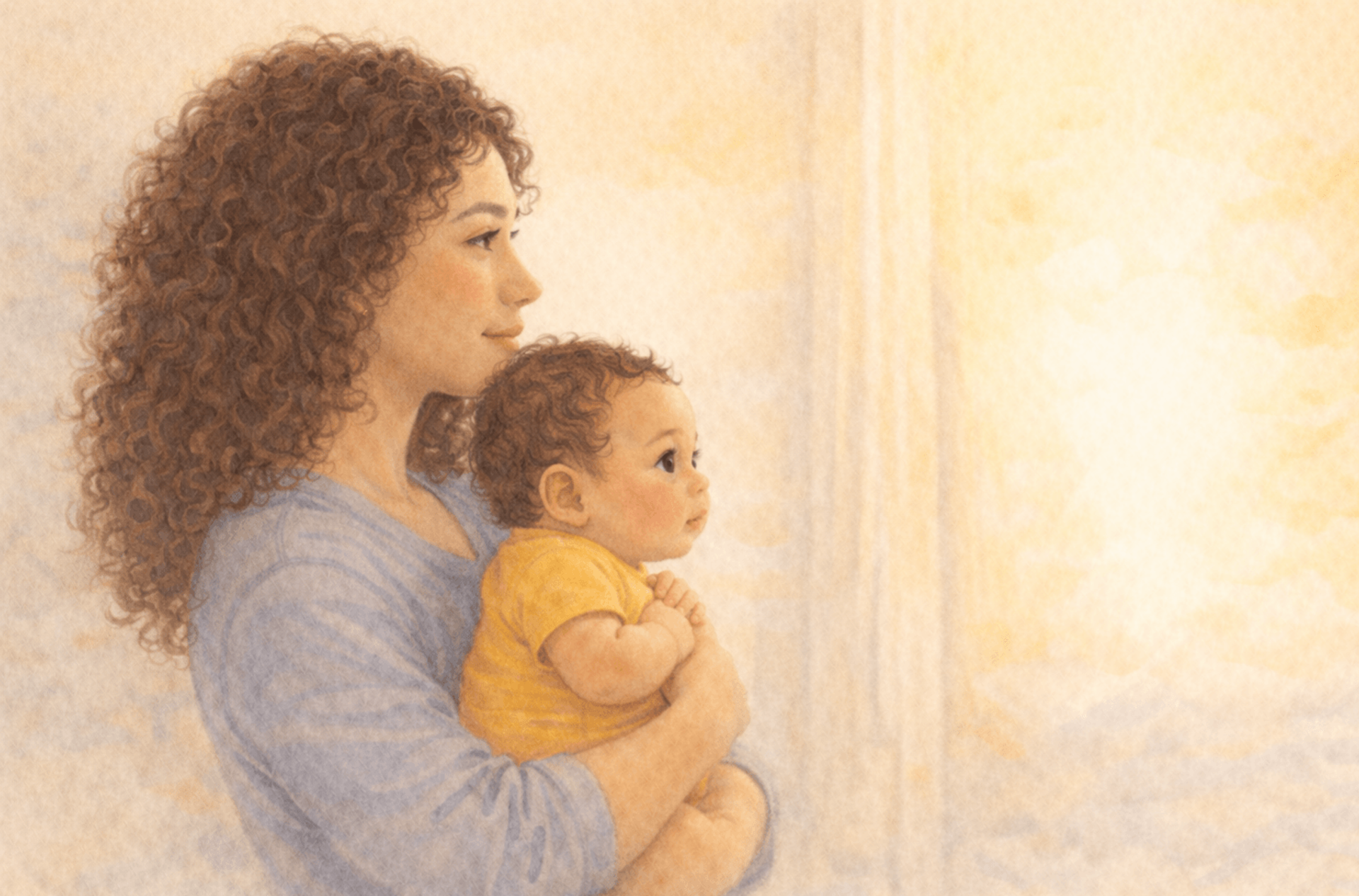
Decades of developmental research keep pointing to the same short list of things that genuinely support a baby's brain in the first year:
Responsive caregiving. Noticing what your baby needs and responding — not perfectly, not instantly, but consistently enough that the brain learns: "when I signal, someone answers." This is the foundation of secure attachment, which in turn supports everything from emotional regulation to language development.
Face-to-face interaction. A baby's brain is hardwired to prioritize faces above all other visual input. When you look at your baby and your baby looks back, both brains are synchronized in a way that no toy or screen can replicate. This doesn't require special effort — it happens naturally during feeding, holding, and playing.
Varied sensory experiences. Not a curated sensory station — just the natural variety of an ordinary day. The feel of different fabrics during a diaper change, the sound of water running in the kitchen, the visual contrast of light and shadow on the ceiling. A baby who is awake and near a responsive adult in a normal home environment is already receiving a rich sensory diet.
Language. Talking, singing, narrating. The quantity of words a baby hears in the first year is strongly correlated with language outcomes later. But this doesn't mean you need to talk nonstop — it means conversational, responsive talking (there's that serve and return again) where you respond to what the baby does with words that describe it.
Play. Not flashcard drills or structured lessons — just play. Peek-a-boo, tickle games, funny faces, shaking a rattle, crumpling paper. The AAP report specifically notes that play enhances brain structure and function, promotes executive function, and builds the social-emotional skills that underlie everything else. And the most effective play, according to the research, is the kind that's guided by the baby's own interest and curiosity.
The Things That Don't Matter (as Much as You Think)
Buying the "right" toys. Having a dedicated play area. Hitting every milestone at the exact median age. Doing tummy time for precisely 15 minutes three times a day. Owning a library of board books before your baby can sit up.
None of these are bad things. But none of them are requirements for healthy development, and the guilt that comes from falling short of these arbitrary benchmarks is often more harmful to the parent-child relationship than the "failing" itself.
If tummy time is a daily struggle, there are gentler ways to approach it that still give the brain and body what they need. If you don't have a shelf of toys, your kitchen has more interesting sensory objects than most play stores. If some days the most enriching thing you did was hold your baby and hum a song — that was a good day.
A Note About the Days That Feel Like Nothing
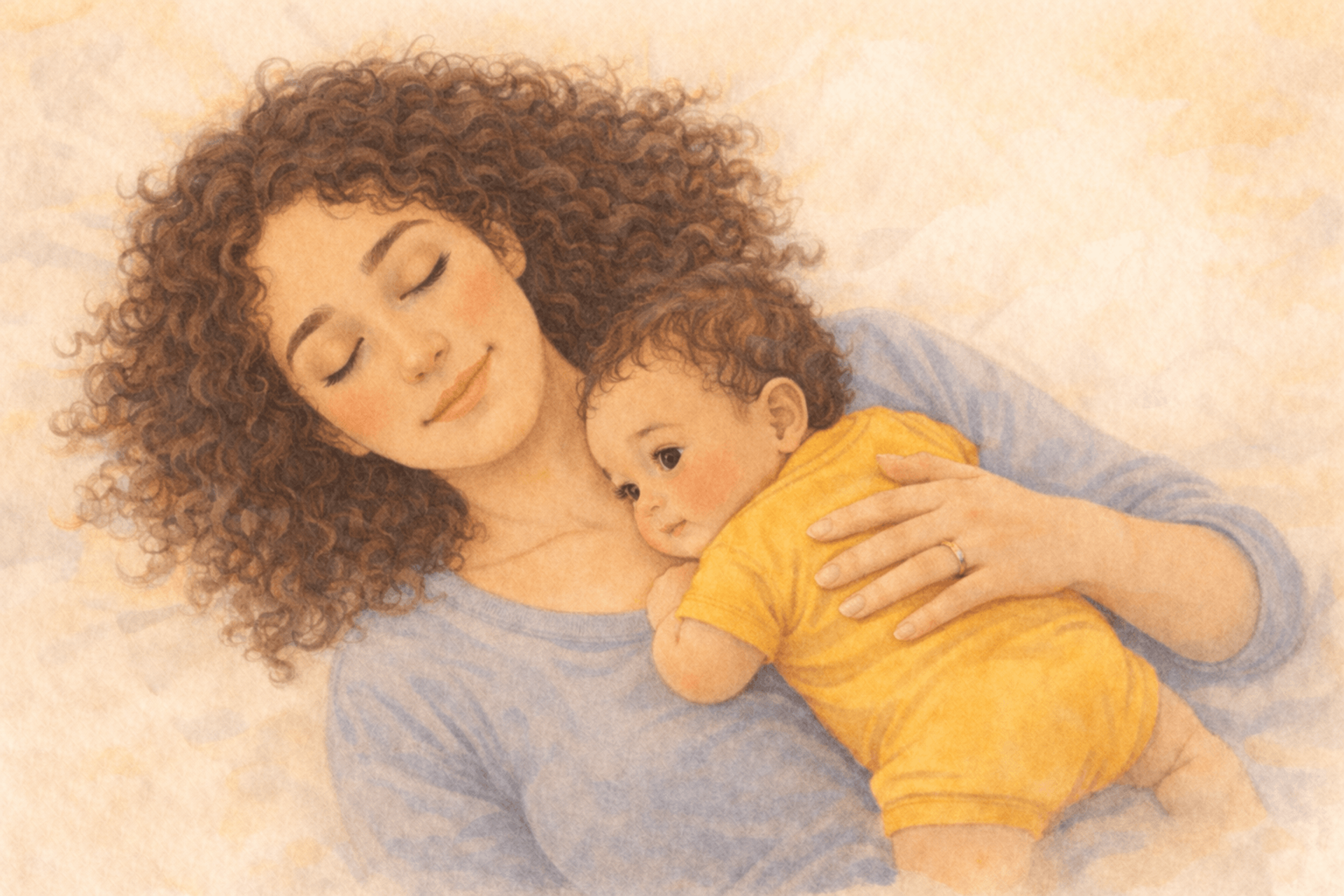
There will be days — maybe a lot of them in the beginning — where it feels like you did nothing. Fed the baby. Changed the baby. Held the baby. Stared at the baby. Stared at the ceiling. Fed the baby again.
On those days, you provided warmth, nutrition, safety, and the steady presence of a responsive human who showed up every time. From a developmental neuroscience perspective, that's not "nothing." That's the foundation on which every future skill — language, movement, problem-solving, emotional regulation, social connection — will be built.
You are not falling behind. You are not failing to stimulate. You are doing the single most important thing a baby's brain needs in the first year of life: being there, and being responsive.
And on the days when you have a little extra energy and want to do something intentional with that calm, alert five minutes — we've built some tools to make that easier. But the tool is never the point. You are.
Frequently Asked Questions
If your baby is alert during wake windows, making eye contact, responding to your voice, and reaching for objects, development is on track. Everyday interactions — diaper changes, feeding, talking — count as stimulation. You don't need structured activities for every minute.
Yes. Independent play is an important part of development. Babies learn to focus, explore objects, and self-regulate during supervised solo play. A few minutes of independent exploration is healthy and age-appropriate.
This article is for educational and informational purposes only and is not a substitute for professional medical, developmental, or therapeutic advice. If you have concerns about your child's development, please consult your pediatrician or a qualified specialist.
- Harvard Center on the Developing Child. (2007). "The Science of Early Childhood Development." National Scientific Council on the Developing Child.
- Harvard Center on the Developing Child. "Serve and Return." https://developingchild.harvard.edu/science/key-concepts/serve-and-return/
- Yogman, M., Garner, A., Hutchinson, J., Hirsh-Pasek, K., & Golinkoff, R. M. (2018). "The Power of Play: A Pediatric Role in Enhancing Development in Young Children." Pediatrics, 142(3), e20182058.
- National Scientific Council on the Developing Child. (2012). "The Science of Neglect: The Persistent Absence of Responsive Care Disrupts the Developing Brain." Working Paper 12.
- Hart, B., & Risley, T. R. (1995). Meaningful Differences in the Everyday Experience of Young American Children. Paul H. Brookes Publishing.
Related Products
More Articles

Parallel Play in Toddlers: Why Side-by-Side Is the Social Work
Your toddler spent the entire playdate building separate towers, and nobody shared a single block. That counted — more than it looked. A 2025 longitudinal study found that playing beside a specific child consistently predicted later social play with that same child, but not the other way around. Here's what parallel play in toddlers actually is, why the science calls it strategic rather than passive, and what it means for how you run a playdate.

When Do Babies Point: Why It Matters for Language
Most milestone articles treat pointing as a box to check around 12 months. The research tells a different story — one that starts months earlier, runs through the infant brain, and traces back to how much the parent is pointing. Here's what the last fifteen years of research actually found, and what it means for everyday interactions.

When Do Babies Wave Bye-Bye: Why Your Baby Needs You to Wave First
Most baby milestones unfold on a biological schedule — waving isn't one of them. A 2023 study found that babies develop imitation ability because their caregivers imitate them first, and waving is named directly as a cultural gesture learned through that loop. Here's what the research says about the 9–12 month window, why the first wave looks nothing like a wave, and what helps it arrive.