Does Baby Sign Language Help Speech? Here's the Research

Somewhere around the ten-month mark, communication breaks down in a very specific way. The wants are genuinely complex now — there's a preferred cup, an opinion about the snack, a specific toy visible on the shelf — but the words haven't arrived yet. The result is a small person standing at the kitchen cabinet, vibrating with intention, making the kind of sound that carries through walls and into neighboring apartments.
Baby sign language promises to bridge that gap. A set of gestures. The reassuring claim that babies who sign also talk sooner, score higher on IQ tests, have fewer meltdowns. Here's what the research actually says about whether any of that is true.
- What "baby sign language" actually is, and why the name slightly overpromises
- What the largest study in this field, published in 2026, found that most signing resources won't tell you
- The genuine benefits the research does support, and why the timing matters
- When to start, what to expect, and why early results take longer than it feels like they should
- The seven signs most useful for daily life, with how to teach each one
- How signing connects to spoken language, and what helps the transition when words arrive
If the one-sentence answer is enough, you’ve got the gist. If you want the mechanism behind each piece, keep reading.
Baby sign language is a set of gestures, not a language
The name is a little misleading, and it's worth clearing up. Baby signing isn't a language — it's a set of simple hand gestures, usually ten to thirty of them, that parents teach alongside spoken words. The whole point is to give a baby a way to communicate before the mouth is ready to do the job.
And the mouth isn't ready for a while. Speech is remarkably complex: it requires coordinating the lips, tongue, jaw, and breath in precise sequences, everything firing together at the right moment. Babies get there, but it takes time. The hands, on the other hand, are capable of a lot earlier. Waving, clapping, pressing palms together — those movements show up months before reliable speech sounds do. The sign for more is essentially two hands pressing together, which a nine-month-old can absolutely do.
Baby signing borrows signs from American Sign Language (ASL), but it isn't ASL. ASL is a complete natural language with its own grammar and syntax, used by a community of native speakers. Baby signing programs take a handful of vocabulary items from ASL (or invent their own variations), pair them with spoken words, and leave all the grammar behind. That's simply what the practice is.
A 2022 study from Northwestern University found that hearing babies as young as 4 months already attend to sign-language input as if it were a communicative signal, well before they could produce any hand movement themselves (Novack, Chan, and Waxman, Frontiers in Psychology). The eyes are in before the hands. And both are in before the voice. This is part of why language development starts well before a first word. The foundations are being laid much earlier than the milestones suggest.
The question everyone asks is the wrong one
Most baby sign language resources spend most of their energy reassuring parents that signing won't delay speech. That's worth knowing — but the more interesting question is whether signing actually speeds up speech, which is what most programs promise.
In 2026, a team of researchers in France published the largest study ever done on this. They compared 723 babies who had been exposed to baby sign at home with 625 who hadn't, across 1,348 children total, aged 10 to 28 months, and accounted for family income and the full range of activities both groups engaged in. Their conclusion: "weak to no effect of baby sign on vocabulary development or caregiver behavior" (Bertussi, Ravanas, and Dautriche, First Language). Signing didn't set babies back. It also didn't push them ahead.
This matched what other researchers had been finding for years. A 2014 review by Fitzpatrick and colleagues looked at everything published on baby sign in hearing children up to age 3 and concluded the evidence for speech benefits was "unclear" — partly because many of the studies claiming big effects had real problems: tiny samples, no control groups, parents reporting on their own babies. The early NIH-funded research that started the whole baby signing movement, Acredolo and Goodwyn's work from 1988, was built on 16 babies and retrospective maternal recall. When later researchers ran more rigorous studies, the long-term language and IQ benefits didn't replicate.
So: signing doesn't delay speech, and the research on that is clear. The vocabulary acceleration that many programs advertise isn't well-supported by the evidence. What the research does show is more nuanced, and genuinely useful to know.
What signing actually does during this window
Here's where the research gets interesting.
Between about 8 and 14 months, a baby has real things to communicate (preferences, needs, strong opinions about the snack) but the mouth hasn't caught up yet. This gap is where most of the frustration lives, for everyone involved. A 2018 study by Konishi and colleagues (Infant Mental Health Journal) followed toddlers aged 11 to 28 months over several months in a signing childcare. They found that during stressful moments (end of meals, transitions, and separations), toddlers reached for gesture more often than speech, and that having a gestural vocabulary gave them more ways to manage those moments. It makes sense: a hand movement is easier to produce when upset than a word is, because it doesn't demand the same precise motor coordination.
The most rigorous study of baby sign in hearing babies is a 2013 randomized controlled trial by Kirk, Howlett, Pine, and Fletcher in Child Development, which followed families from when babies were 8 months to 20 months old. Language outcomes were the same across signing and non-signing babies. But something else turned up: mothers who had been taught to use symbolic gestures were noticeably better at tuning in to what their babies were communicating non-verbally. Researchers called this "mind-mindedness" — paying attention to what's going on inside the baby, not just reacting to surface behavior. Those mothers responded more specifically to what they read in the baby's signals.
That's not a small thing. The research on early language development keeps returning to the same finding: the most powerful ingredient is responsive back-and-forth between baby and adult. When a baby sends a signal and an adult notices and responds, that's what builds language circuitry over time. Signing gives babies more legible signals to send, and gives adults more concrete things to respond to. For more on how early communication builds from the ground up, the five senses development guide walks through what's happening in those first months before any gestures appear.
When to start and what to realistically expect

The sweet spot for starting is somewhere between 6 and 8 months. Before that, a parent ends up doing a lot of solo performance — the baby is watching, but production won't happen for months regardless. After that, it can feel like a race to get signs established before speech arrives and takes over. Starting at 6 months means there's enough runway to reach the first actual sign around 8 to 10 months, when intentional communication is really kicking in.
The part that surprises most people: most babies need about three to four months of consistent modeling before producing a sign back. Three to four months of making the sign for more at every single meal before anything appears. The Kirk and colleagues study documented this arc well, tracking babies from 8 to 20 months. Babies who started exposure earlier generally produced their first sign in the 8-to-10-month range; those who started later often hit signing and early spoken words at roughly the same time.
A few things that help to know in advance: babies tend to understand a sign for weeks before they produce it, so the modeling isn't going nowhere just because nothing is coming back yet. Early versions of signs look nothing like the adult version; pressing fists together instead of fingertips still counts as "more." And most babies drop signs fairly abruptly once the spoken word is ready to take over, which isn't a failure at all — that's exactly what's supposed to happen. The activities guide for 9-month-olds covers what else is happening developmentally during this window.
The first signs to teach: a practical baby sign language chart
The most useful starting point isn't the most technically accurate chart but the one that covers the situations where not being able to communicate hurts most. Seven signs cover most of the terrain.
More is made by pressing the fingertips of both hands together twice, like tapping them against each other in front of the chest. This is the sign most babies learn first, and it's worth the investment: mealtimes go noticeably smoother when a baby can say "keep going" without screaming. Early versions look like pressing fists together rather than fingertips, and that absolutely counts.
All done is made by holding both hands up with palms facing away, then rotating them toward you. It shows up most at the end of meals or activities, ideally before the meltdown that would otherwise announce the same news.
Milk is made by opening and closing one hand like squeezing something. A favorite to teach early because the gesture actually looks like what it means (milking a cow), which makes it a little easier for babies to catch on to, according to research on how hearing children acquire signs (Caselli and Pyers, Journal of Experimental Psychology, 2020).
Eat is made by bringing the fingertips of one hand to the lips twice, like eating from your hand. It pairs naturally with introducing solid foods.
Help is made by resting a thumbs-up hand on the open palm of the other, then lifting both hands together. One of the most versatile signs across many different situations.
Water is made by extending three fingers (index, middle, ring) into a "W" shape and tapping the index finger to the chin twice.
Please is made by rubbing an open palm in a circle on the chest. Last on the functional list, but high on the "parents want it early" list.
The key to all of them is consistency. Saying the word and making the sign together, every single time: that pairing is what lets both channels reinforce each other. Three signs used reliably every day work better than twenty signs used whenever anyone remembers.
When signs give way to words, and what helps that transition
Most babies who learn to sign start dropping individual signs as spoken words arrive, somewhere between 12 and 18 months. Once the mouth can produce a word reliably, the hand version becomes redundant. The spoken word travels further and works from across the room, which is a real advantage. So the hand version tends to quietly retire.
It happens one sign at a time, not all at once. A baby might stop signing milk weeks before more disappears, depending on which spoken word clicks into place first. There's often an overlap period where both the sign and the word show up together, the brain not having fully made the switch yet, so both versions are still active. That's not confusion; that's just the transition.
What helps is the same thing that helped the signs arrive: responding when a baby communicates and naming what's happening. When a baby signs cow at a picture, saying "cow — yes, that's the cow" builds the bridge between the gestural version they already know and the spoken word that's coming. The research on what actually drives language development keeps pointing here: it's the exchange that builds the wiring, not the vocabulary list.
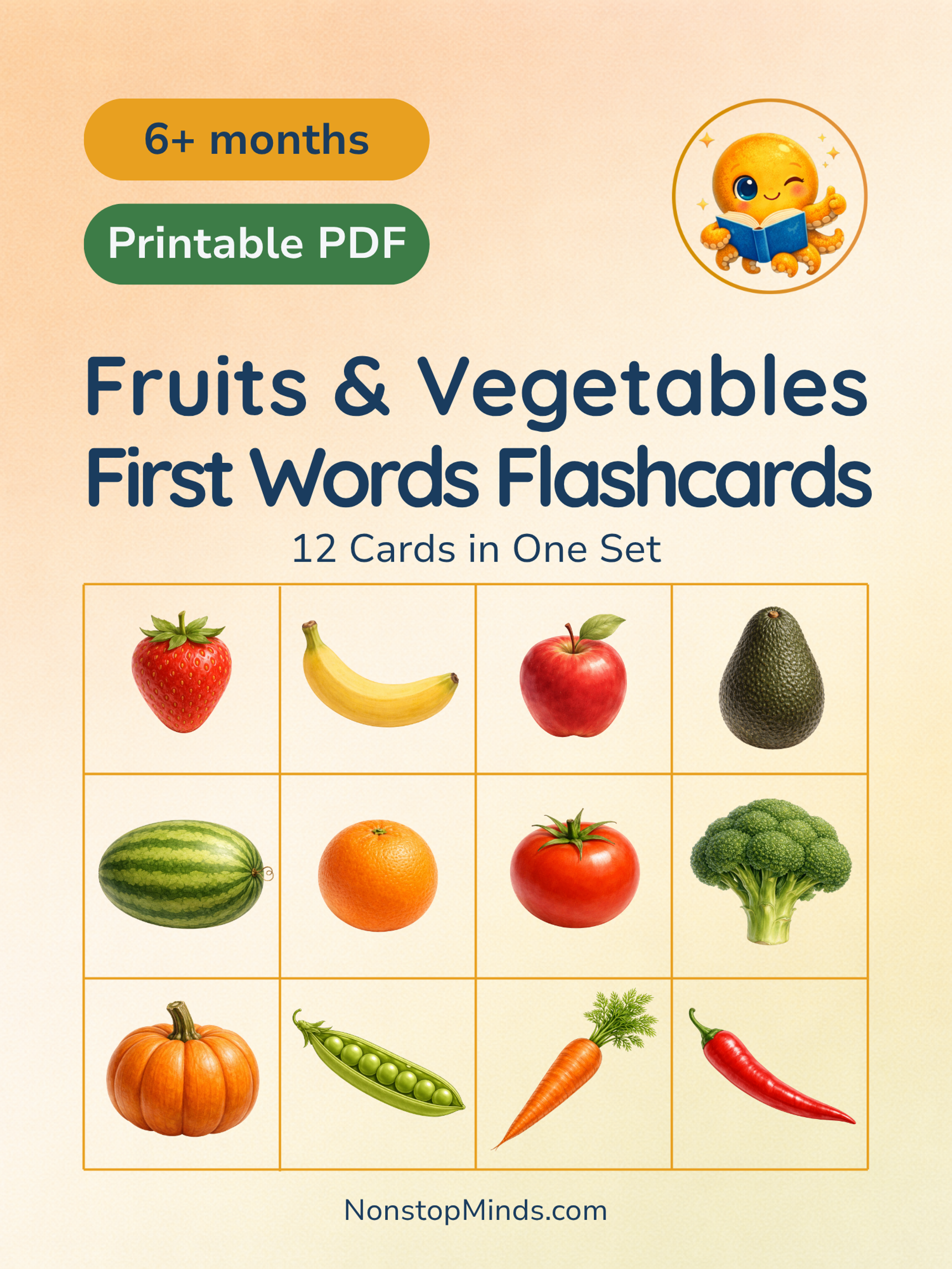
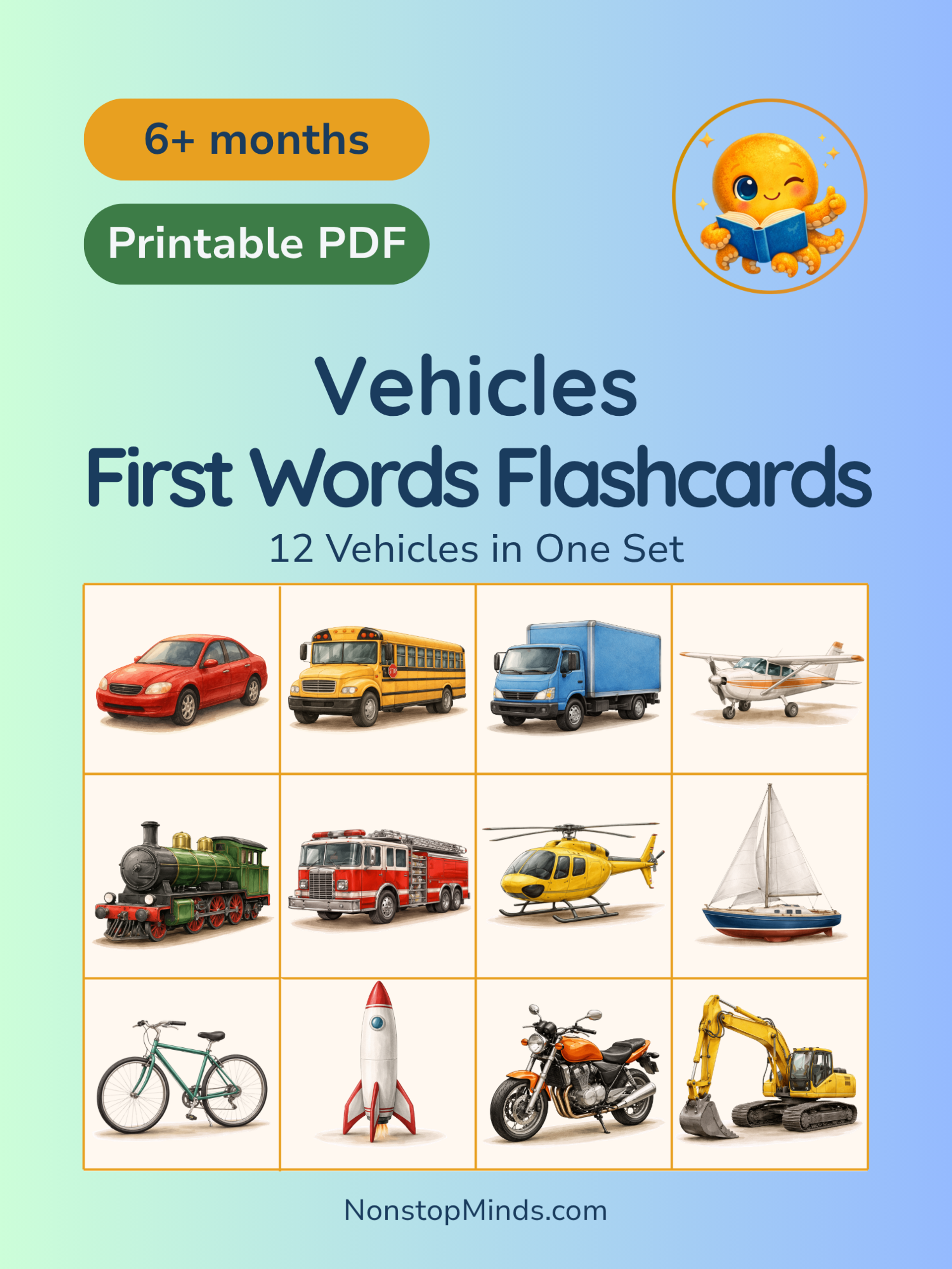
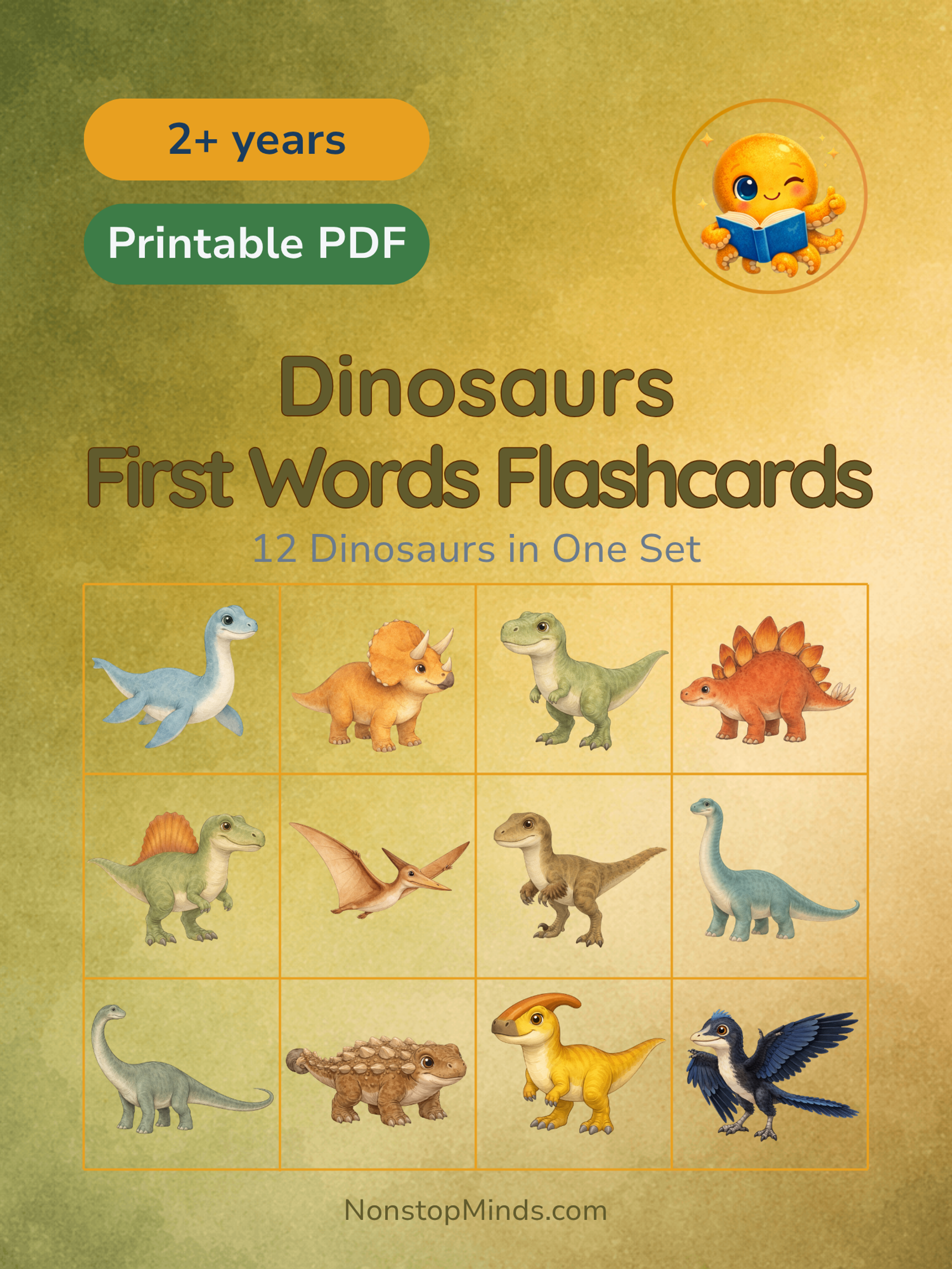
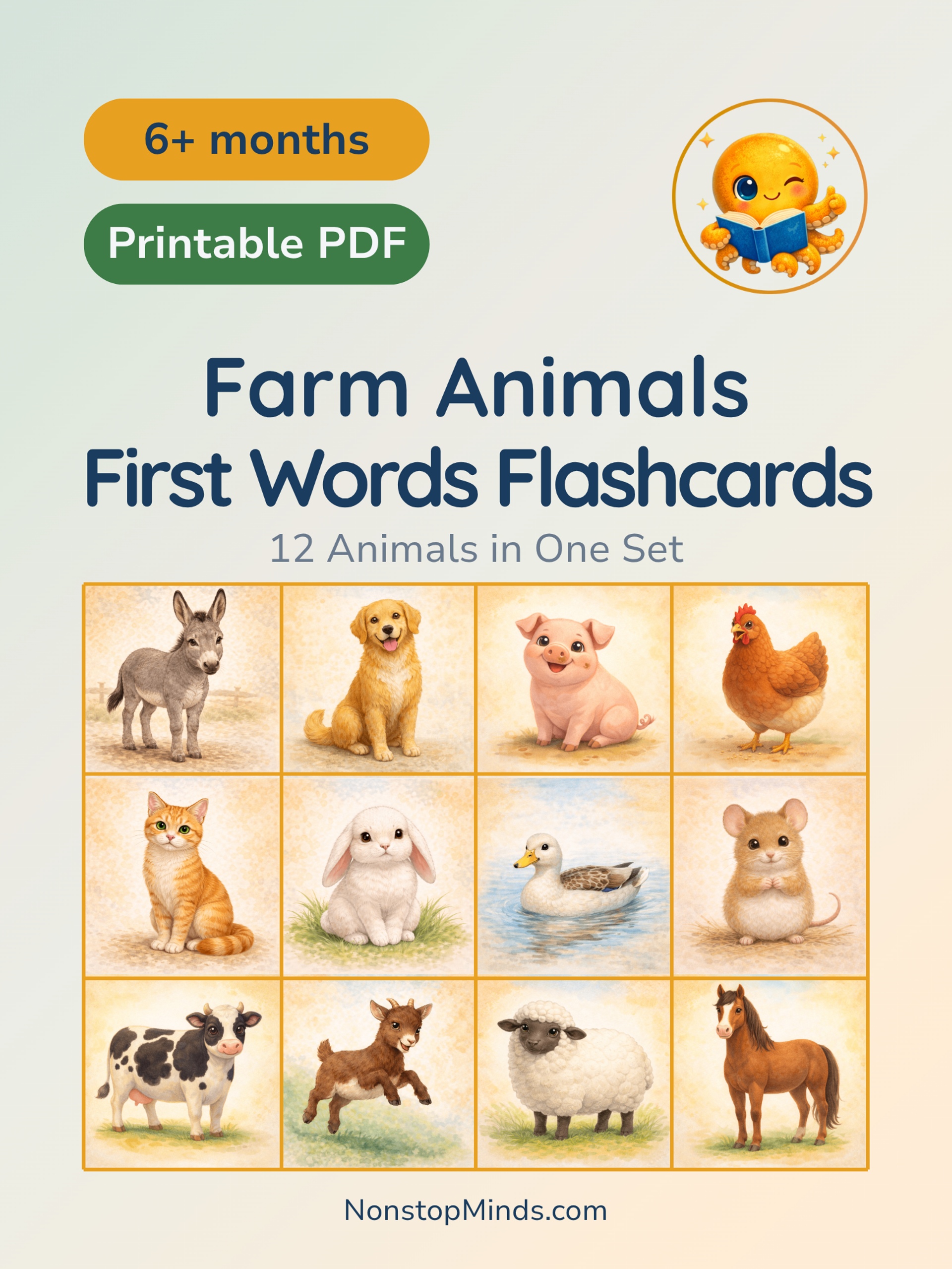
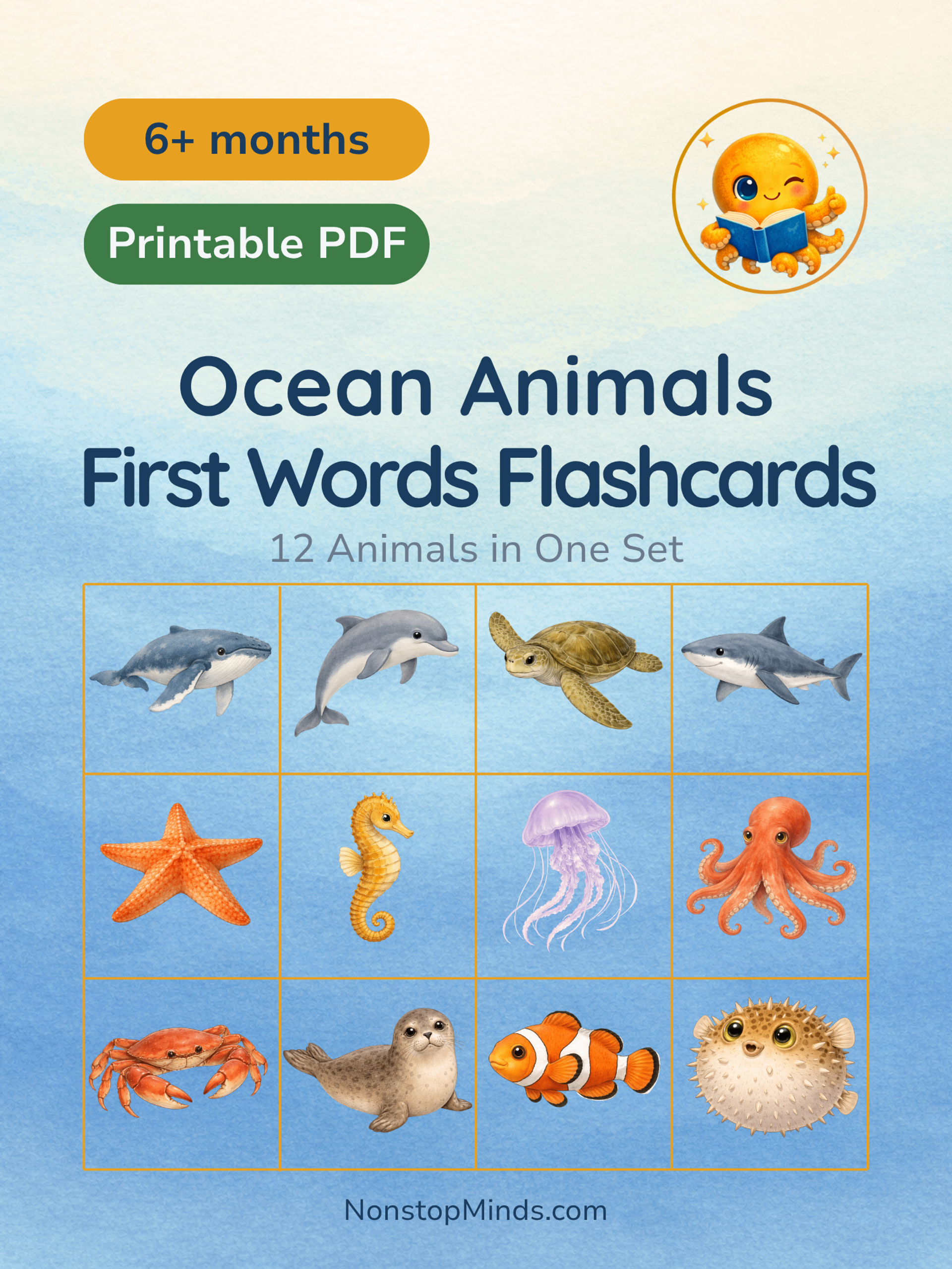
For naming practice during this transition, our First Words flashcard sets cover five vocabulary categories (farm animals, ocean animals, dinosaurs, fruits and vegetables, and vehicles) built around exactly this kind of point-name-respond interaction. They fit well in the overlap period when signs and emerging words are both in play, because each card gives a natural naming target for the exchange.
The overlap doesn't last long. By 18 months, most signing has faded into spoken words. The habit of paying attention and responding tends to stick around, though.
When signing patterns are worth mentioning to a pediatrician
For the vast majority of babies, signing is a normal part of communication development that comes and goes. A few patterns are worth bringing up at a well-child visit.
If a baby reaches 12 months without pointing, waving, or any gestural communication at all — signing included — that's worth raising with a pediatrician. The CDC tracks pointing and showing as milestones at 12 months, and a baby who isn't doing either is worth a closer look, regardless of whether signing is part of the picture. This is different from a baby who is learning signs but not yet pointing spontaneously at interesting things — those two situations are distinct.
If signs disappear alongside other skills the baby had already developed (sounds, words, or other gestures), that kind of regression across several areas at once is a reason to check in. It's the kind of observation a pediatrician will want to hear about.
And for parents worried their baby is "behind" on signing specifically: there's no milestone for it. The timeline varies widely, and a baby who never takes to signing and moves straight to spoken words is developing exactly as expected. For the speech development timeline and what to watch for, the guide to when babies start talking has the full picture.
Signing is a tool. For some families and some babies, it makes a genuinely frustrating stretch a bit easier. For others, the window closes before the tool gets much use. Either is completely fine.
Frequently Asked Questions
Most guidance recommends starting baby sign language between 6 and 8 months, when intentional communication is emerging. Starting before 8 months is worthwhile mainly for exposure time: babies need roughly three to four months of consistent modeled signs before producing one back. A 2022 study from Northwestern University found that hearing infants as young as 4 months attend to sign language as a communicative signal (Frontiers in Psychology), but production usually begins no earlier than 8 to 10 months regardless of when modeling starts. Starting at 6 months is a reasonable balance.
No. Multiple studies have examined this directly, and none have found that signing delays spoken language. The largest to date (a 2026 study of 1,348 children published in First Language) found that babies exposed to baby sign at home reached the same vocabulary milestones as those who were not. A 2013 randomized controlled trial published in Child Development found the same result. Signing doesn't take the place of speech; it coexists with emerging spoken language and is typically dropped naturally as words arrive.
The most practical first signs cover the highest-frustration situations: more (press fingertips together), all done (palms rotate outward then inward), milk (squeeze hand open and closed), eat (fingertips to lips), and help (thumb on open palm, lift both hands). These cover mealtimes and transitions, where not being able to communicate tends to create the most friction. Consistency matters more than quantity — three signs used reliably every day teach faster than fifteen used occasionally.
On average, three to four months of consistent modeling before a baby produces a recognizable sign, based on a 2013 randomized controlled trial in Child Development that tracked babies from 8 to 20 months. Individual variation is significant; some babies produce a first sign at 8 months, others not until 12 to 14 months. Babies often understand a sign for several weeks before producing it; recognition comes before production, which means the modeling is working even when nothing is coming back yet.
The sign for more is made by pressing the fingertips of both hands together twice in front of the body, like tapping the fingers of one hand against the other. It's the most commonly taught baby sign and usually the first one babies produce. Early versions look quite different from the adult form; pressing fists together or tapping one hand to the wrist of the other both count. What makes it a sign is consistent use to express the same intent, not anatomical precision.
For educational and informational purposes only. Not a substitute for professional medical or developmental advice. If you have concerns about your child's communication development, consult your pediatrician or a licensed speech-language pathologist.
- Acredolo, L. P., & Goodwyn, S. W. (1988). Symbolic gesturing in normal infants. Child Development, 59(2), 450–466.
- Bertussi, V., Ravanas, M.-J., & Dautriche, I. (2026). The impact of baby sign on vocabulary development. First Language. Advance online publication.
- Caselli, N. K., & Pyers, J. E. (2020). Degree and not type of iconicity affects sign language vocabulary acquisition. Journal of Experimental Psychology: Learning, Memory, and Cognition, 46(1), 127–139.
- Fitzpatrick, E. M., Thibert, J., Grandpierre, V., & Johnston, J. C. (2014). How HANDy are baby signs? A systematic review of the impact of gestural communication on typically developing, hearing infants under the age of 36 months. First Language, 34(6), 486–509.
- Kirk, E., Howlett, N., Pine, K. J., & Fletcher, B. C. (2013). To sign or not to sign? The impact of encouraging infants to gesture on infant language and maternal mind-mindedness. Child Development, 84(2), 574–590.
- Konishi, H., Karsten, A., & Vallotton, C. D. (2018). Toddlers' use of gesture and speech in service of emotion regulation during distressing routines. Infant Mental Health Journal, 39(6), 730–750.
- National Scientific Council on the Developing Child (2004). Young children develop in an environment of relationships. Working Paper No. 1. Harvard University, Center on the Developing Child.
- Nelson, L. H., White, K. R., & Grewe, J. (2012). Evidence for website claims about the benefits of teaching sign language to infants and toddlers with normal hearing. Infant and Child Development, 21(5), 474–502.
- Novack, M. A., Chan, D., & Waxman, S. (2022). I see what you are saying: Hearing infants' visual attention and social engagement in response to spoken and sign language. Frontiers in Psychology, 13, 896049.
- Pontecorvo, E., Higgins, M., Mora, J., Lieberman, A. M., Pyers, J., & Caselli, N. K. (2023). Learning a sign language does not hinder acquisition of a spoken language. Journal of Speech, Language, and Hearing Research, 66(4), 1291–1308.
- Romeo, R. R., Leonard, J. A., Robinson, S. T., West, M. R., Mackey, A. P., Rowe, M. L., & Gabrieli, J. D. E. (2018). Beyond the 30-million-word gap: Children's conversational exposure is associated with language-related brain function. Psychological Science, 29(5), 700–710.
- Vallotton, C. (2012). Infant signs as intervention? Promoting symbolic gestures for preverbal children in low-income families supports responsive parent–child relationships. Early Childhood Research Quarterly, 27(3), 401–415.
More Articles
Parallel Play in Toddlers: Why Side-by-Side Is the Social Work
Your toddler spent the entire playdate building separate towers, and nobody shared a single block. That counted — more than it looked. A 2025 longitudinal study found that playing beside a specific child consistently predicted later social play with that same child, but not the other way around. Here's what parallel play in toddlers actually is, why the science calls it strategic rather than passive, and what it means for how you run a playdate.
When Do Babies Point: Why It Matters for Language
Most milestone articles treat pointing as a box to check around 12 months. The research tells a different story — one that starts months earlier, runs through the infant brain, and traces back to how much the parent is pointing. Here's what the last fifteen years of research actually found, and what it means for everyday interactions.
When Do Babies Wave Bye-Bye: Why Your Baby Needs You to Wave First
Most baby milestones unfold on a biological schedule — waving isn't one of them. A 2023 study found that babies develop imitation ability because their caregivers imitate them first, and waving is named directly as a cultural gesture learned through that loop. Here's what the research says about the 9–12 month window, why the first wave looks nothing like a wave, and what helps it arrive.