5 Senses and Your Baby: What Develops When and How to Help
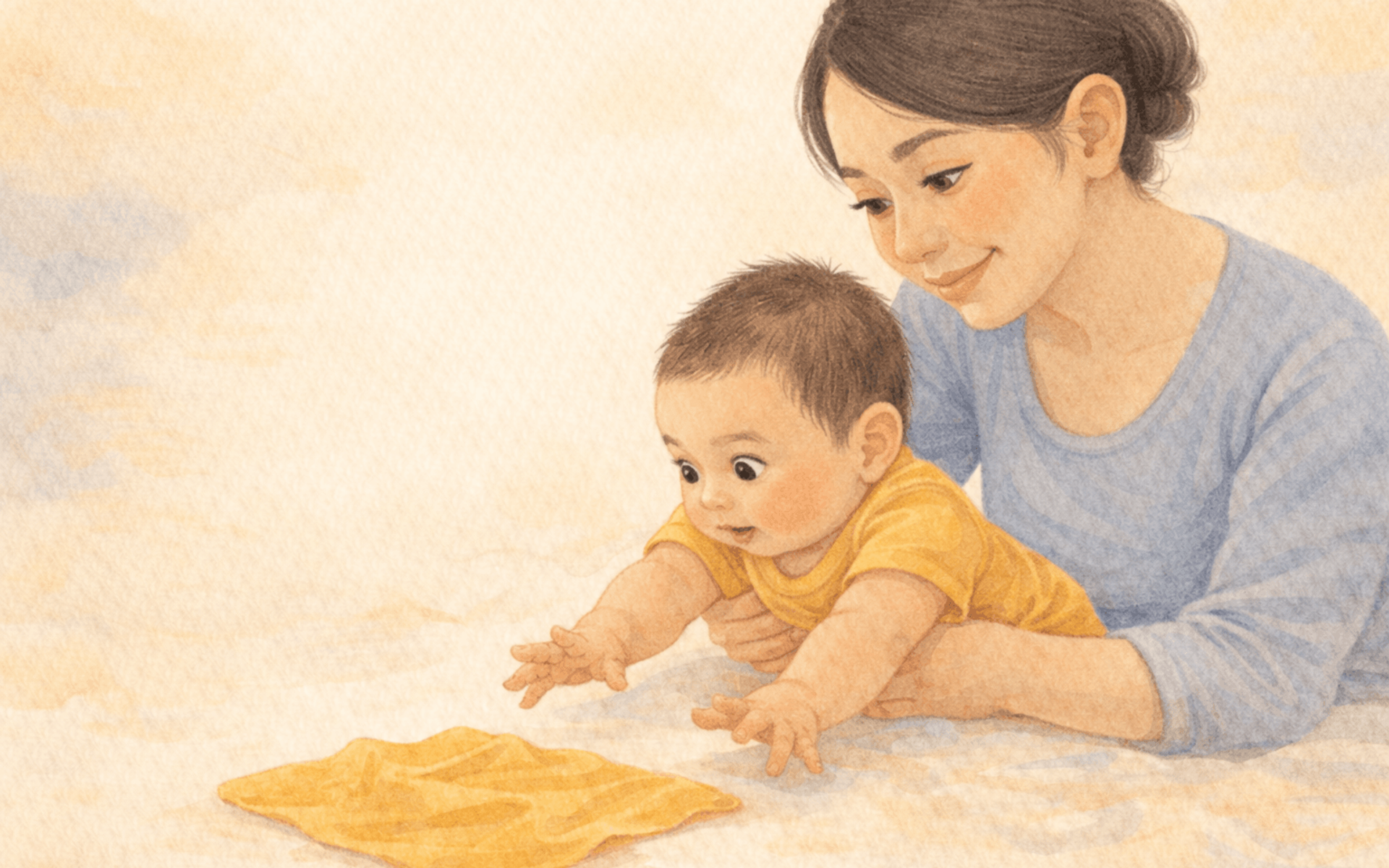
A baby arrives into the world with all five senses already working. Sight, sound, touch, smell, taste — and two more you probably haven't heard of. But the brain behind those senses is still figuring out how to process the flood of information coming in through all of them at once, and the first twelve months are when that sorting happens fastest.
Over the first year, each of the five senses develops on its own timeline, with its own milestones and its own particular needs. Understanding which sense is "in the spotlight" at any given stage can help you offer the right kind of sensory stimulation at the right time — without overcomplicating things or turning every wake window into a curriculum.
- Vision: why it's the slowest sense to develop — and what the sequence from contrast to color to depth perception actually looks like
- Hearing: why it arrives mostly ready — and how the brain shifts from detecting speech to mapping sound to meaning
- Touch: from passive safety signal at birth to active exploration tool by 6 months
- The two hidden senses (vestibular and proprioceptive) and why carrying and tummy time are actually sensory development
- Smell and taste: how prenatal flavor exposure and early solid foods shape long-term food acceptance
- How the senses integrate — and why knowing which one is leading helps you choose the right activity
If the one-sentence answer is enough, you’ve got the gist. If you want the mechanism behind each piece, keep reading.
Sight: The Slowest Starter, the Fastest Learner
Vision is the least developed sense at birth and the one that changes the most dramatically over the first twelve months — making visual sensory stimulation one of the most impactful things you can offer early on. A newborn's visual acuity is roughly 20/400 — enough to see a face at feeding distance, but not much beyond that. By the first birthday, it's close to adult levels.
The development follows a clear sequence. In the first weeks, bold contrast is everything — the retina is immature and high-contrast patterns (black and white, bold shapes) produce the strongest signal the visual cortex can process. Between 6 and 8 weeks, most babies begin tracking moving objects with both eyes, a milestone called smooth pursuit. By 3 to 5 months, color vision matures and the brain starts distinguishing objects from backgrounds — what researchers call figure-ground separation.
What this means in practice: a newborn staring at a black-and-white pattern isn't "just looking." The brain is actively wiring the neural pathways that will eventually support reading, spatial awareness, and face recognition. We covered the full week-by-week timeline in our guide to what newborns actually see, and the color vision progression in when babies start seeing color.
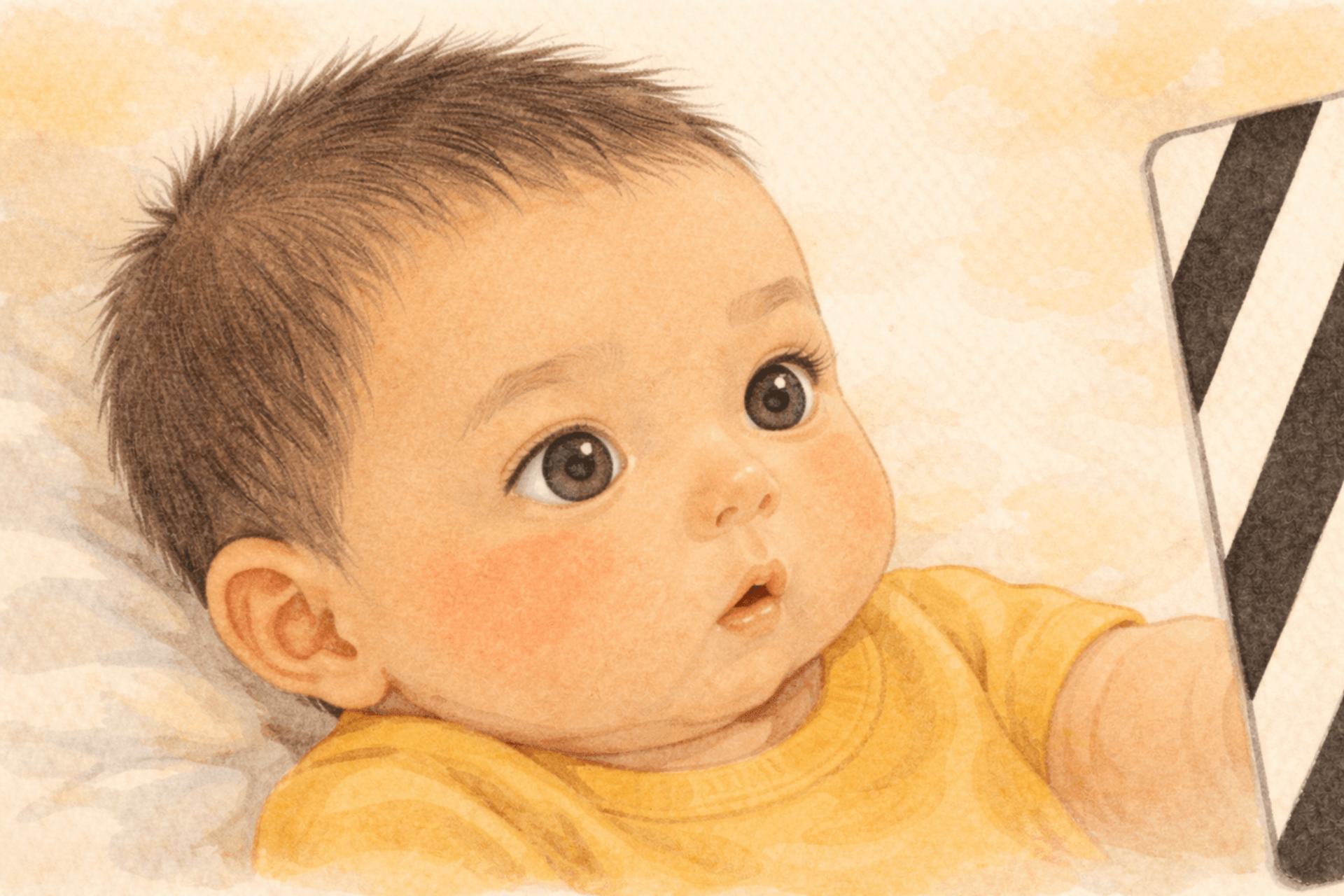
What supports visual development: High-contrast images in the first 8 weeks, held at 8–12 inches. Slow-moving objects for tracking practice. Colorful toys against simple backgrounds from 3 months onward. Your face — still the most captivating visual stimulus a baby has at any age.
Hearing: Online from Day One (Actually, from Before Day One)
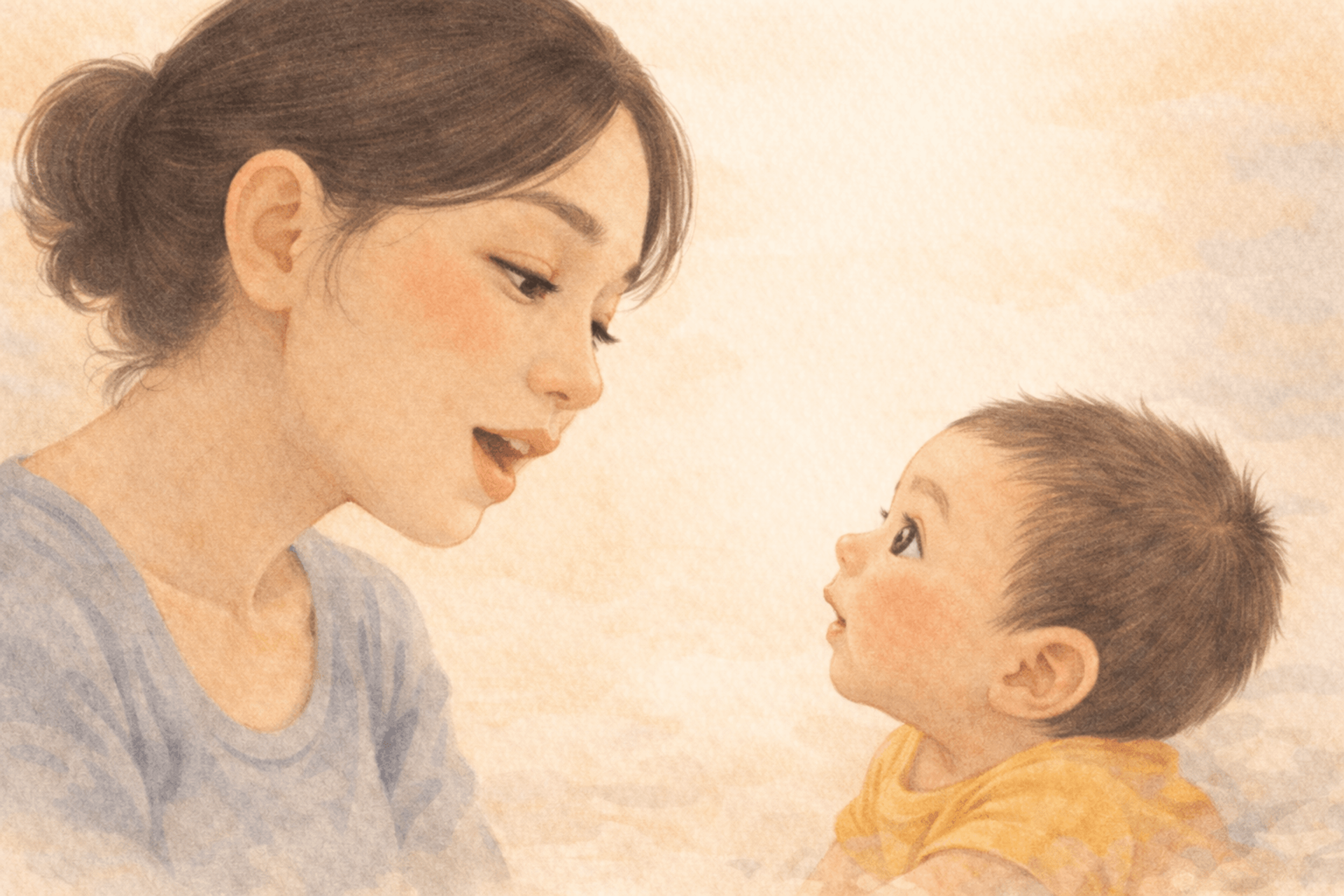
Hearing is one of the most mature senses at birth. By the third trimester, a fetus can already hear and recognize the mother's voice, which is why newborns consistently prefer it over unfamiliar voices within hours of being born. The auditory system doesn't need to "wake up" the way vision does — it arrives ready to work.
What does change over the first year is how the brain processes sound. In the early weeks, a baby can distinguish speech from non-speech sounds and shows a clear preference for higher-pitched voices (which is why adults instinctively switch to a higher register when talking to babies — that's not silly, that's biologically appropriate). By 4 to 6 months, babies begin recognizing familiar words — not producing them, but turning toward "mama" or their own name. By 9 to 12 months, comprehension is far ahead of production, and the brain is rapidly mapping sounds to meaning.
What supports auditory development: Your voice — narrating, singing, responding to coos. Environmental sounds (rain, birds, kitchen noises) give the brain variety to process. Rattles and crinkle toys introduce cause and effect — "I did something, and a sound happened." And the back-and-forth of conversation, even with a baby who can only babble, builds the auditory-language loop that speech will depend on.
Touch: The First Language
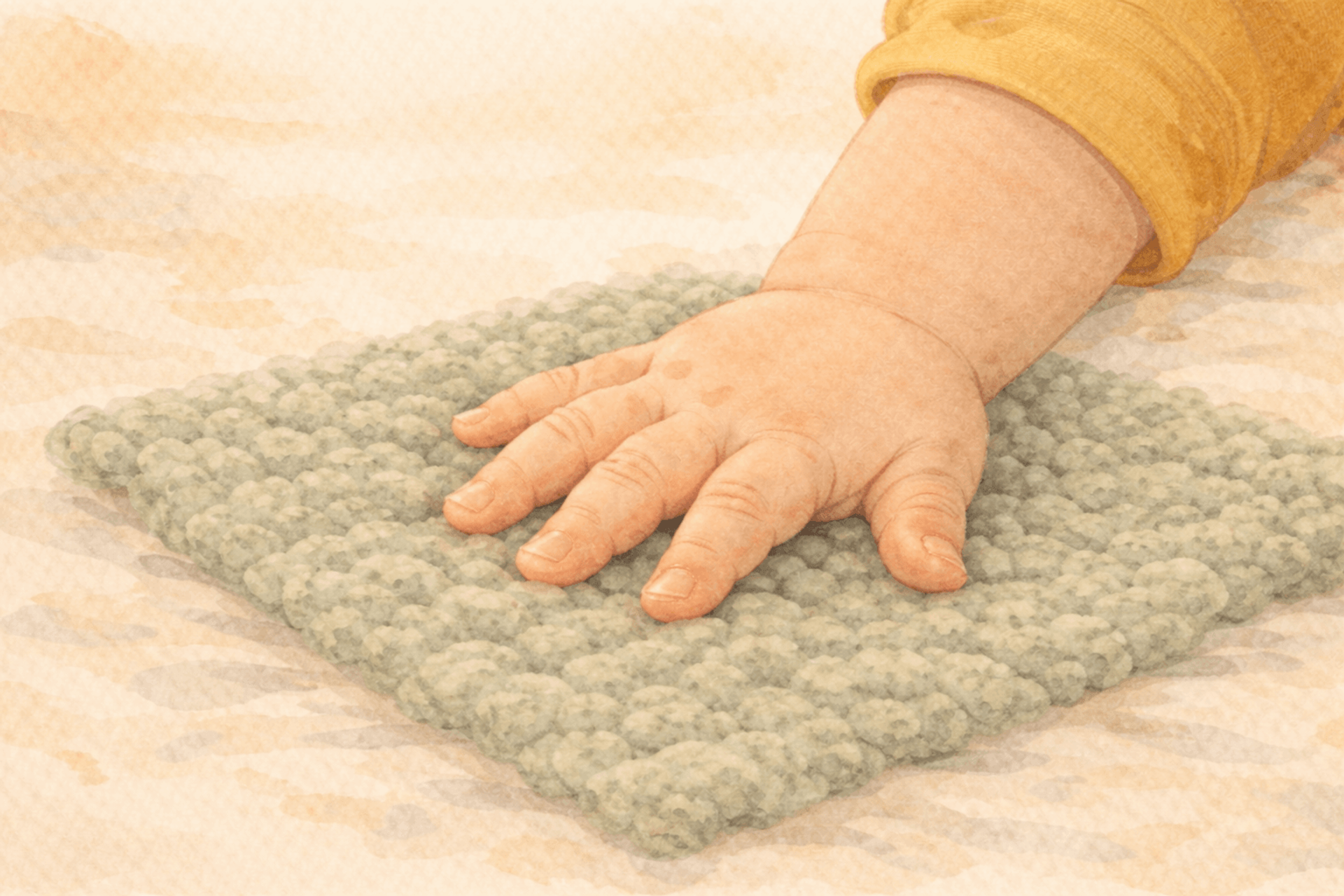
Touch is the most developed sense at birth, and for good reason — it's been the primary source of information throughout the entire pregnancy. The somatosensory cortex (the part of the brain that processes touch) is one of the first brain regions to become functional, and it remains the dominant channel for baby sensory development in the first several weeks of life.
For a newborn, touch is how safety gets communicated. Skin-to-skin contact regulates heart rate, breathing, temperature, and cortisol levels — not as a nice bonus, but as a physiological necessity. Research on kangaroo care consistently shows that sustained skin-to-skin contact in the first weeks produces measurable improvements in weight gain, sleep patterns, and stress regulation.
As a baby grows, touch shifts from passive (being touched) to active (touching things on purpose). By 3 to 4 months, the palmar grasp reflex fades and intentional reaching begins. By 6 months, everything goes into the mouth — because the lips and tongue have more nerve endings per square centimeter than the fingertips, making mouthing one of the most efficient tactile exploration strategies available.
What supports tactile development: Skin-to-skin contact, especially in the first weeks. Varied textures during daily routines — a soft washcloth during bath time, a cool teether, a crinkly fabric square. From 6 months on, supervised messy play (food textures, water play, sand) introduces entirely new tactile categories that the hands and mouth can explore together.
Movement: Two Hidden Senses Working Together
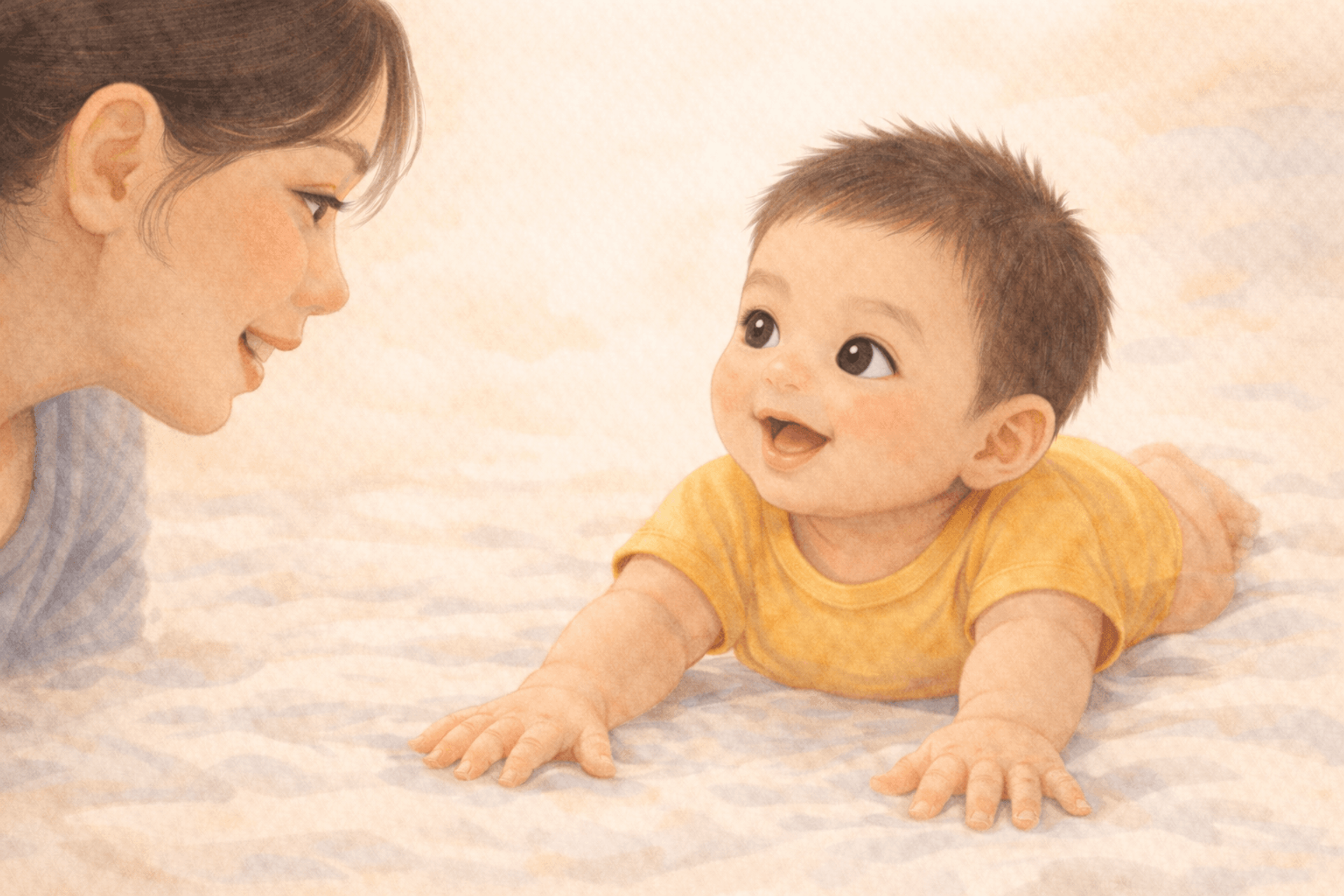
When people talk about the five senses, they usually mean sight, hearing, touch, smell, and taste. But developmental scientists count at least two more that are essential for how a baby learns to move through the world: the vestibular sense (balance and spatial orientation) and proprioception (body awareness — knowing where your limbs are without looking). Both are critical parts of sensory development that often get overlooked.
The vestibular system lives in the inner ear and responds to changes in head position and movement. Every time a baby is rocked, carried, tilted, or rolled over, the vestibular system gets a data point that helps calibrate balance. This is why babies love gentle motion and why being carried in a variety of positions — upright, on the shoulder, facing out, facing in — is genuine developmental input, not just a way to get from room to room.
Proprioception develops through movement against resistance. When a baby pushes up during tummy time, bangs a toy on the floor, or squeezes a soft ball, the muscles and joints send feedback to the brain about how much force was used and where the body is in space. This feedback loop is what eventually makes it possible to sit, crawl, stand, and walk with control. If tummy time has been a struggle, these alternative positions give the proprioceptive system the same input in a gentler way.
What supports vestibular and proprioceptive development: Being carried in different positions. Gentle rocking, bouncing, and swaying. Tummy time in any form — on the chest, on a lap, on the floor. Floor time to roll, reach, and push. From 6 months on: crawling, pulling up, cruising, and climbing on safe surfaces. The best equipment for these two senses is you and a living room floor.
Smell and Taste: The Quiet Powerhouses
Smell and taste tend to get less attention in baby development conversations, but they're doing important work from the very beginning. A newborn can recognize the mother's scent within hours of birth and will turn toward a breast pad with familiar milk over an unfamiliar one. This is pure survival wiring — smell helps a baby locate food and identify the person who provides safety.
Taste buds are functional before birth (the fetus swallows amniotic fluid, which carries flavor compounds from the mother's diet), and newborns already show preferences for sweet over bitter — another survival adaptation, since breast milk is naturally sweet.
From a developmental standpoint, smell and taste become most interesting when solid foods enter the picture around 6 months. Every new food is a multisensory event: temperature, texture, smell, flavor, and the fine motor challenge of getting it from tray to mouth. The repeated exposure to varied flavors in the first year is strongly associated with food acceptance later — which is one reason pediatricians encourage offering a wide variety of tastes early, even if the first reaction is a face that says "what have you done to me."
What supports smell and taste development: Breastfeeding or formula feeding (both provide rich sensory input). From 6 months: introducing a variety of flavors and textures at mealtimes. Allowing messy, self-directed eating — the sensory experience of smearing, tasting, and spitting out is part of the process. Cooking with aromatic ingredients while a baby is nearby (the smell of garlic, cinnamon, or fresh bread is free sensory stimulation).
How It All Comes Together
The senses don't develop in isolation — they work together, and the brain spends the first year learning how to integrate them. When a baby hears a rattle, sees it move, reaches out and grabs it, feels its texture, and shakes it to hear the sound again, all five senses are firing simultaneously, and the brain is mapping the connections between them. That single moment of sensory play is building pathways for coordination, cause-and-effect reasoning, spatial awareness, and language — all at once.
This is why understanding each sense individually matters so much — not to isolate them during play, but to recognize which one is leading at any given moment. A baby reaching for a crinkly toy is working on touch, vision, proprioception, and hearing all at once, but knowing that tactile exploration is peaking at 6 months helps you choose the right kind of toy. The brain does the integrating. Your job is to provide the variety and follow the lead.
That's the thinking behind our Sensory Play Cards for 0–12 Months — each card is organized by a primary sense and developmental stage, so you always know what to offer and why, while the activity itself naturally engages multiple senses at once. For a fuller picture of how sensory development evolves month by month, our sensory play guide covers the complete first-year timeline.
Frequently Asked Questions
All five senses begin developing before birth. Touch is the first (around 8 weeks gestation), followed by taste and smell. Hearing becomes functional around 25 weeks, and vision — the last to mature — continues developing through the first year of life. Each sense develops on its own timeline.
Touch and hearing are the most developed senses at birth. Newborns respond to gentle touch, recognize their mother's voice, and are calmed by familiar sounds heard in the womb. Vision is the least developed sense, with newborns seeing clearly only at 8–12 inches.
This article is for educational and informational purposes only and is not a substitute for professional medical, developmental, or therapeutic advice. If you have concerns about your child's development, please consult your pediatrician or a qualified specialist.
- Atkinson, J. (2000). The Developing Visual Brain. Oxford University Press.
- Feldman, R., Rosenthal, Z., & Eidelman, A. I. (2014). "Maternal-Preterm Skin-to-Skin Contact Enhances Child Physiologic Organization and Cognitive Control Across the First 10 Years of Life." Biological Psychiatry, 75(1), 56–64
- Moon, C., Cooper, R. P., & Fifer, W. P. (1993). "Two-Day-Olds Prefer Their Native Language." Infant Behavior and Development, 16(4), 495–500.
- Mennella, J. A., Jagnow, C. P., & Beauchamp, G. K. (2001). "Prenatal and Postnatal Flavor Learning by Human Infants." Pediatrics, 107(6), e88.
- Teller, D. Y. (1997). "First Glances: The Vision of Infants." Investigative Ophthalmology & Visual Science, 38(11), 2183–2203.
- Yogman, M., Garner, A., Hutchinson, J., Hirsh-Pasek, K., & Golinkoff, R. M. (2018). "The Power of Play: A Pediatric Role in Enhancing Development in Young Children." Pediatrics, 142(3), e20182058.
More Articles
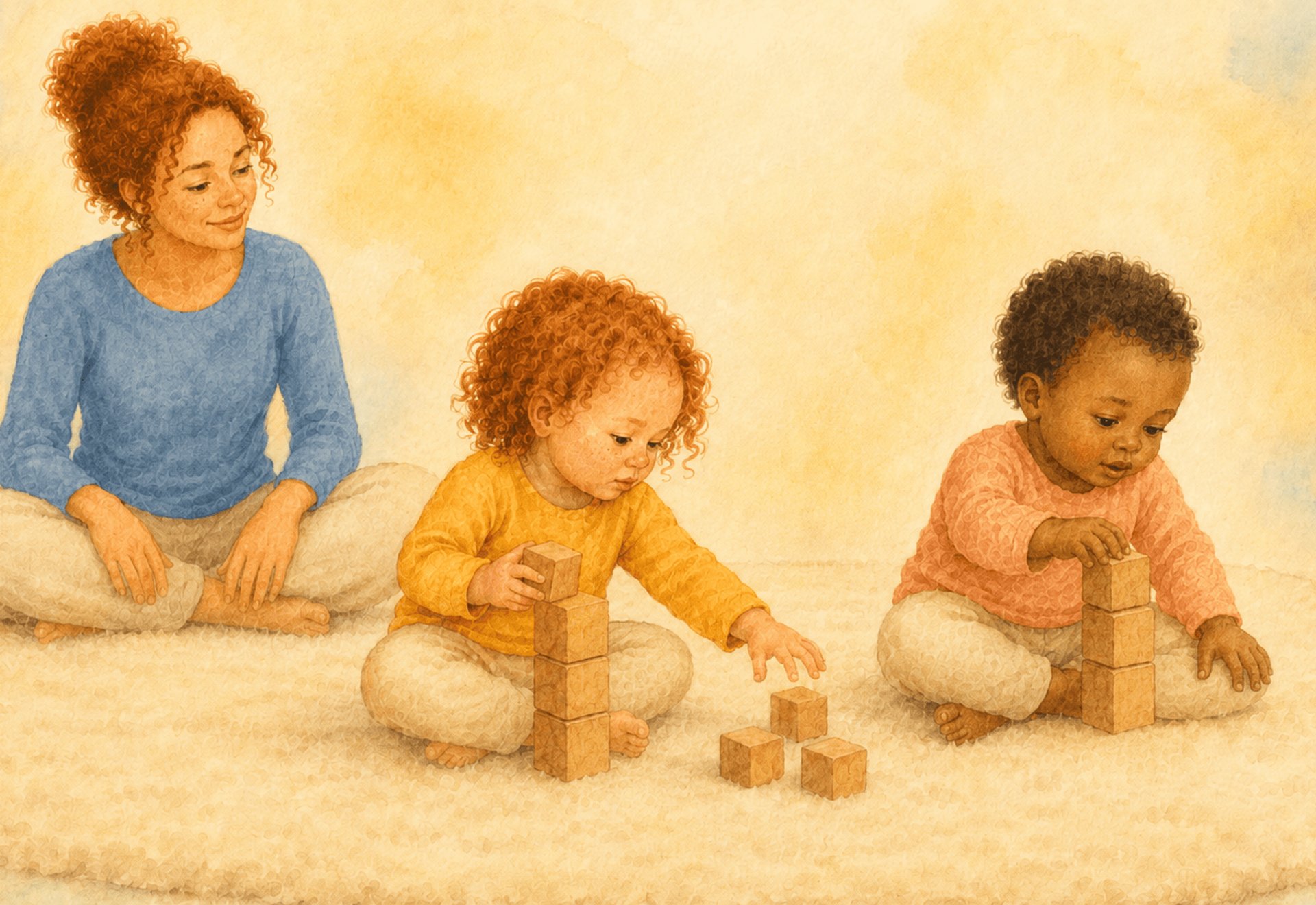
Parallel Play in Toddlers: Why Side-by-Side Is the Social Work
Your toddler spent the entire playdate building separate towers, and nobody shared a single block. That counted — more than it looked. A 2025 longitudinal study found that playing beside a specific child consistently predicted later social play with that same child, but not the other way around. Here's what parallel play in toddlers actually is, why the science calls it strategic rather than passive, and what it means for how you run a playdate.
When Do Babies Point: Why It Matters for Language
Most milestone articles treat pointing as a box to check around 12 months. The research tells a different story — one that starts months earlier, runs through the infant brain, and traces back to how much the parent is pointing. Here's what the last fifteen years of research actually found, and what it means for everyday interactions.
When Do Babies Wave Bye-Bye: Why Your Baby Needs You to Wave First
Most baby milestones unfold on a biological schedule — waving isn't one of them. A 2023 study found that babies develop imitation ability because their caregivers imitate them first, and waving is named directly as a cultural gesture learned through that loop. Here's what the research says about the 9–12 month window, why the first wave looks nothing like a wave, and what helps it arrive.