Toddler Not Eating? What's Normal and What Actually Helps
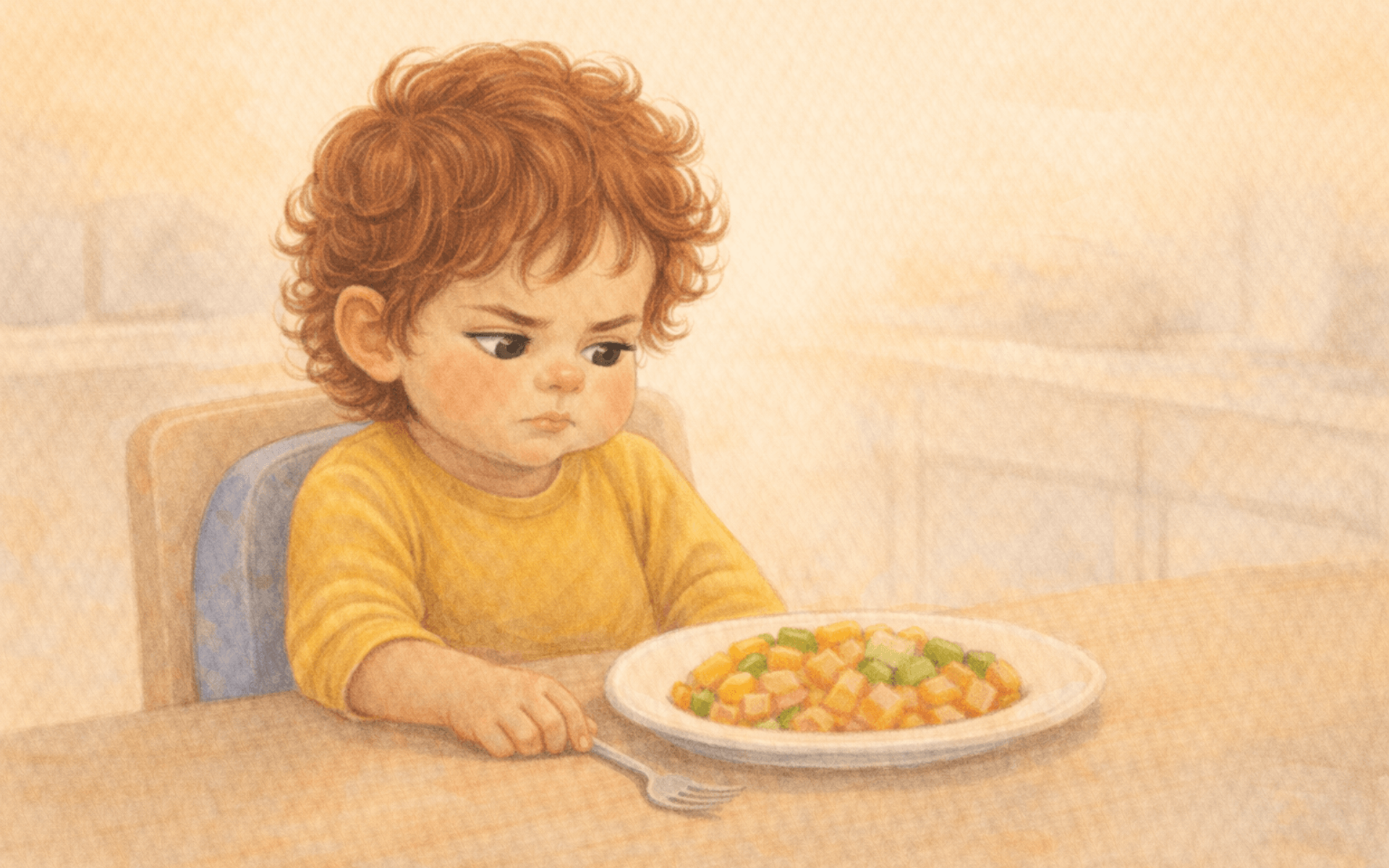
Your two-year-old ate an entire sweet potato last Tuesday — loved it, asked for more, ate the leftovers off your plate. Today you made the exact same sweet potato, same plate, same fork, and your child is staring at it like you've served a live spider. The sweet potato has not changed. Your toddler has decided it has, and no amount of airplane-spoon energy is going to fix this.
If your toddler is not eating the way you expected, you are not alone and you are not doing anything wrong. Somewhere between 25 and 50 percent of toddlers get described as picky eaters by their parents, depending on how the question is asked, and the behavior has a biological explanation that predates your kitchen by about forty thousand years.
- What food neophobia is — and the evolutionary reason it shows up at exactly toddler age
- Why appetite drops after 12 months — and why measuring intake over days, not meals, changes the picture
- Supertasters, genetics, and early flavor exposure: why some toddlers experience food more intensely
- The one feeding strategy that consistently makes picky eating worse — and the division of responsibility model that works
- What research shows actually helps: repeated neutral exposure, modeling, food prep involvement, and sensory bridging
- When picky eating warrants a pediatrician conversation vs. when to wait it out
If the one-sentence answer is enough, you’ve got the gist. If you want the mechanism behind each piece, keep reading.
What's Behind a Toddler Not Eating New Foods
Food neophobia — the instinctive wariness toward unfamiliar foods — is an evolutionary adaptation that shows up at almost exactly the age when toddlers gain enough mobility to wander away from a caregiver and put random objects in their mouths, but lack the knowledge to tell a blueberry from a poisonous berry. A built-in suspicion toward unfamiliar bitter and sour tastes kept human toddlers alive for millennia before anyone invented the produce aisle, and that wiring hasn't caught up to the fact that you bought the spinach at Whole Foods and washed it twice.
A review in Frontiers in Pediatrics found that 25 to 35 percent of toddlers and preschoolers are consistently described as picky by their caregivers, with the behavior typically emerging around 18 months and peaking somewhere between ages three and four. When researchers frame the question more broadly — does your child show any picky tendencies — the number climbs above 50 percent, which means the parent who feels like mealtime is a negotiation they keep losing is statistically in the majority, not the exception.
Why Your Toddler's Appetite Dropped After the First Birthday
During year one, a baby typically triples birth weight — a rate the body will never come close to repeating. After that first birthday, growth slows dramatically, and most toddlers gain only about four to five pounds per year between ages one and five. The math is straightforward: less growth means less caloric demand, and the body adjusts accordingly.
A toddler who ate everything with enthusiasm at ten months and now picks at meals at fifteen months hasn't developed a feeding disorder — the body is recalibrating fuel needs to match a slower growth curve. Pediatric dietitian Sarah Reinier at University Hospitals puts it bluntly: parents consistently mistake this completely normal appetite decrease for a sign that something is wrong, when in reality it's the body doing exactly what it should.
The practical result is maddening but completely typical. Your toddler may eat a full breakfast, ignore lunch entirely, and then demand crackers at 4 PM with the urgency of someone who has never been offered food in their life. When researchers measure intake over the span of several days rather than at a single meal, most picky eater toddlers are still meeting their caloric and nutritional needs — the issue is that parents are watching the snapshot, not the full picture.
Why Some Toddlers Experience Food Differently
About 25 percent of people have significantly more taste buds packed onto a smaller tongue area than average — researchers call them supertasters. For children in this group, bitter vegetables like broccoli and Brussels sprouts produce a genuinely more intense taste signal than they do for the rest of us, which means a child who gags on kale may be experiencing something closer to chewing an aspirin while you, sitting across the table with fewer taste receptors, are tasting a mildly bitter green and wondering what the fuss is about.
Research also shows a genetic component — parents who were picky eaters themselves are more likely to have children with similar patterns, because taste sensitivity runs in families the same way eye color and hair texture do.
One finding that surprises many parents: breastfed infants show significantly less food neophobia in early childhood, likely because breast milk transmits flavor compounds directly from the mother's diet. A mother who eats garlic, carrot, vanilla, or mint passes traces of those flavors through breast milk, giving the infant early exposure to taste variety weeks or months before solid foods begin. If you read our article on things your baby can do in the womb, you already know that flavor learning starts before birth — the amniotic fluid carries dietary flavors too. This doesn't mean formula-fed children are destined for picky eating, but it does mean the window for flavor familiarization opens far earlier than most parents realize.
The One Strategy That Consistently Makes Picky Eating Worse
The single most well-documented factor that deepens picky eating is pressure at the table. Forcing, bribing, and using food as a reward all backfire in controlled studies — a 2023 scoping review of picky eating interventions found that coercive feeding practices create negative associations with the pressured food, making the child less willing to eat it next time, not more.
Three more bites and you can have dessert. The logic feels airtight to the adult brain. But what the toddler brain actually learns from that sentence is that vegetables are the unpleasant obstacle standing between now and ice cream, and each time the pattern repeats, that association gets a little deeper and a little harder to undo.
The feeding approach most pediatric dietitians recommend draws a clean line between parent territory and child territory: the parent decides what food is offered, when meals happen, and where the family eats, while the child decides whether to eat and how much from what's available. It sounds terrifying the first time you hear it — especially on a night when your child eats nothing but a bread roll — but families who follow this approach consistently report better long-term food acceptance and far fewer power struggles at the table.
Other patterns worth watching for: grazing on small snacks throughout the day, which kills appetite before meals actually arrive; no consistent meal or snack schedule; and cooking a separate backup dinner every time the child refuses what's served. Reinier suggests keeping snacks around 100 calories and spacing them at least 90 minutes before a meal, so your toddler arrives at the table with real hunger rather than just enough fullness to be uninterested.
What Research Shows Actually Helps When a Toddler Won't Eat
Repeated exposure is the strongest and most replicated finding in the picky eating literature, and it's also the one parents abandon too early. Studies consistently show that children need somewhere between 8 and 15 neutral presentations of a new food before they accept it — and a neutral presentation just means the food shows up on the plate in a low-pressure environment. The child doesn't need to eat it, lick it, or even acknowledge it. Seeing it there repeatedly, without anyone making a production out of it, reduces the novelty that's driving the rejection in the first place.
Most parents try a food three to five times, meet resistance, and decide their child genuinely hates it. But the research suggests they're stopping about halfway through the exposure window that would have led to acceptance, which is a little like quitting a road trip in Kansas and concluding that California doesn't exist.
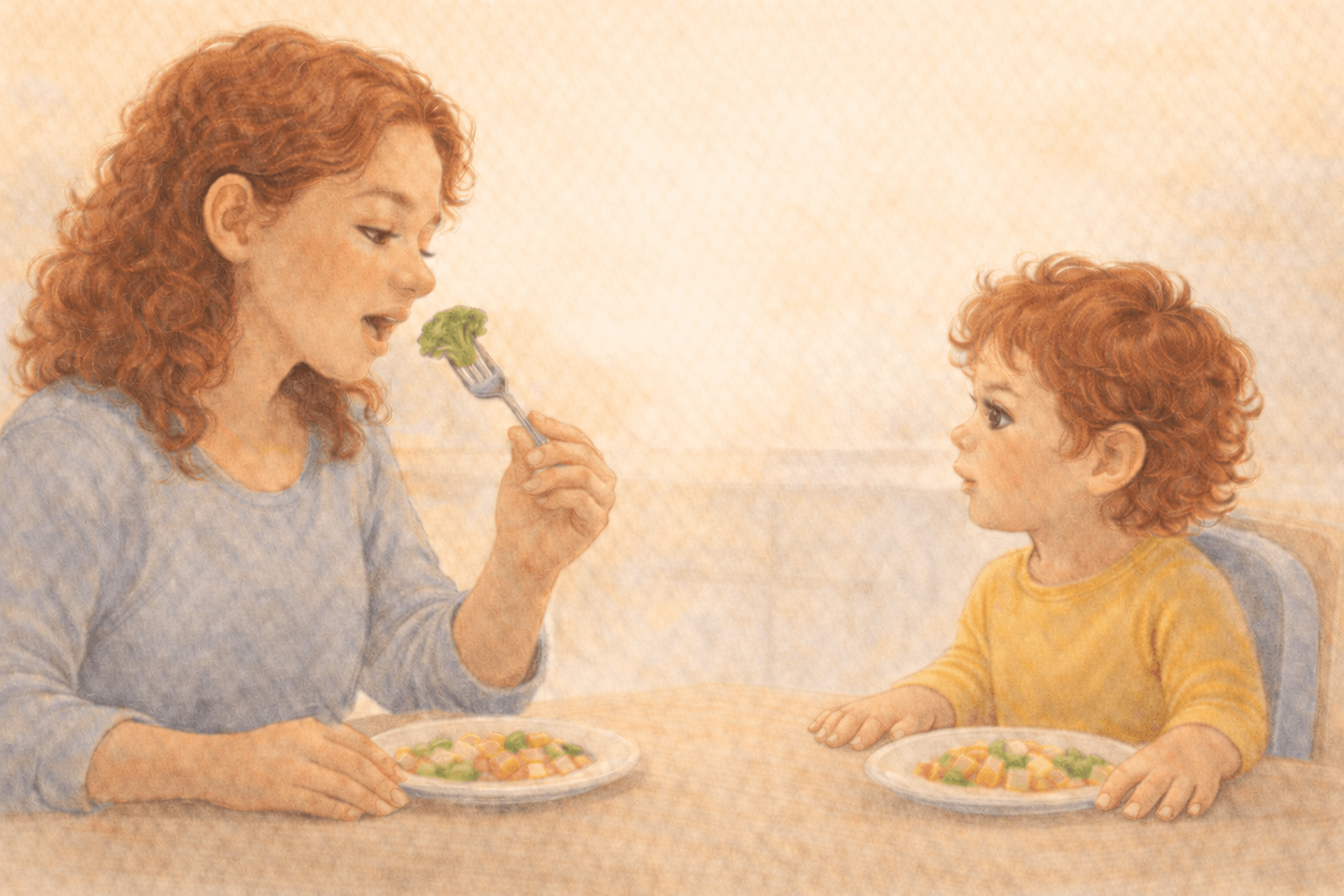
Modeling — eating the same food at the same table without commentary or negotiation — is the second most consistent finding. A study at Colorado State found that when parents created a positive mealtime environment with shared foods and zero pressure, children's willingness to try new items increased significantly. Children are wired to learn what's safe to eat by watching the adults around them eat it, and the key word is watching, not being told. A parent who eats broccoli at dinner like it's a normal part of the meal is doing more for a child's future vegetable acceptance than a parent who delivers a five-minute monologue about vitamins.
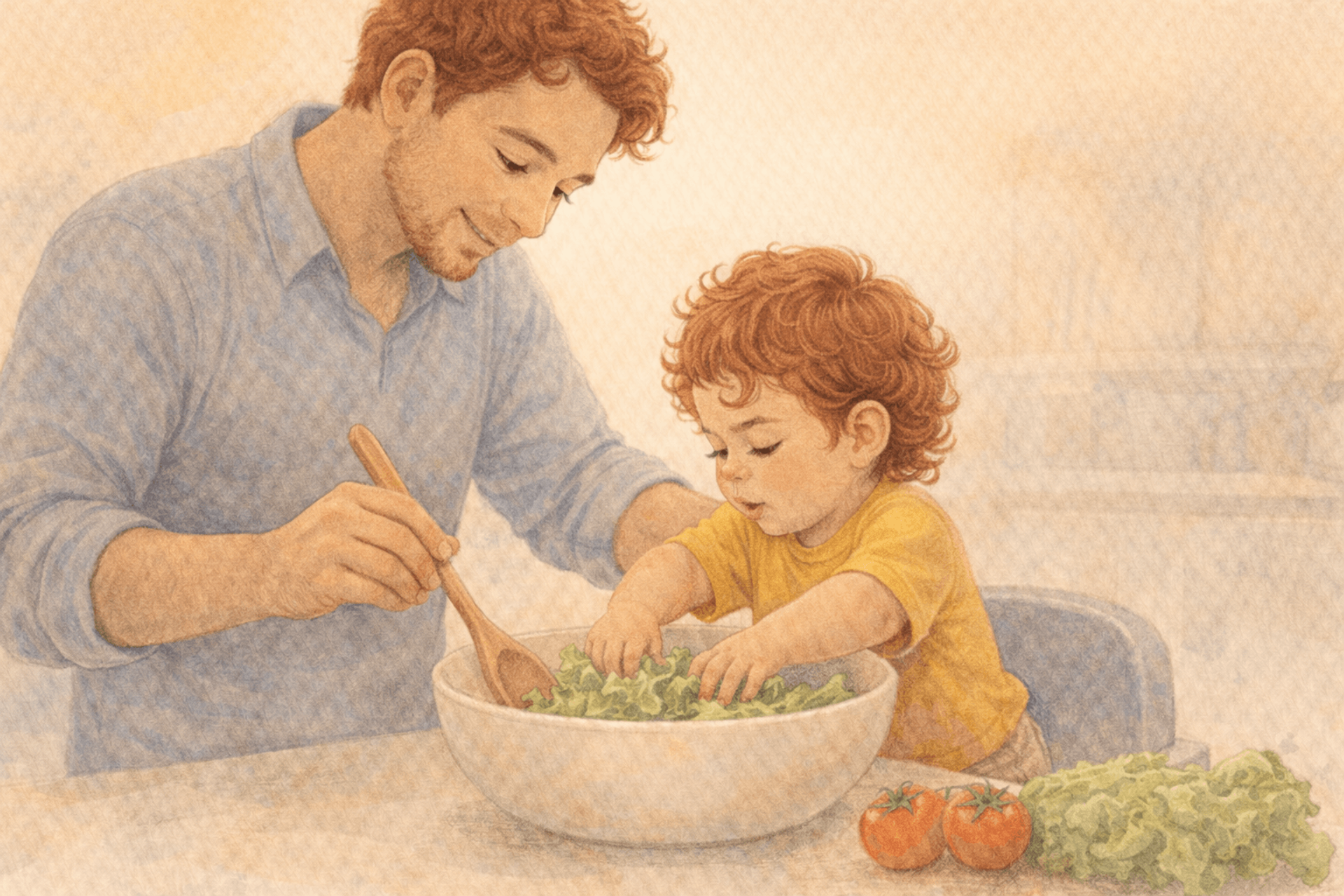
Getting your toddler involved in food preparation also makes a measurable difference. A child who washes the tomatoes, tears the lettuce leaves, or stirs something in a pot develops familiarity with the food before it ever shows up on a plate — and that familiarity counts as a form of exposure. The brain has already started processing this food as something known and handled, which lowers the bar for trying it when it appears at dinner.
There's also a strategy called sensory bridging that deserves more attention than it usually gets. The idea is to introduce new foods that share characteristics with foods the child already accepts, so instead of asking the brain to evaluate something completely unknown, you're building a short bridge from a food that's already filed under "safe." If your toddler eats sweet potato fries, roasted carrot sticks share a similar shape, sweetness, and texture — and that overlap gives the brain a head start on the evaluation process.
When to Talk to Your Pediatrician About Picky Eating
Most picky eating resolves on its own through early and middle childhood, and a 2025 systematic review confirmed that food neophobia typically decreases as children grow, especially in families where meals stay low-pressure and food variety stays available. But a few patterns are worth bringing to your child's doctor — not because they always mean something serious, but because a professional can help you sort out whether you're looking at standard toddler stubbornness or something that would benefit from more targeted support.
Signs that justify a conversation: your child is losing weight or not gaining over several months; the total number of accepted foods is below 20 and continues to shrink rather than expand; meals consistently involve intense distress — gagging, vomiting, or real panic — at the sight or smell of most foods; or entire food groups have disappeared with nothing replacing them.
These patterns can sometimes point to avoidant/restrictive food intake disorder, or to sensory processing differences that respond well to the combined work of an occupational therapist and a feeding specialist. This is a very different picture from the toddler who won't eat broccoli but happily cycles through fifteen other foods — that child is on a completely normal developmental track.
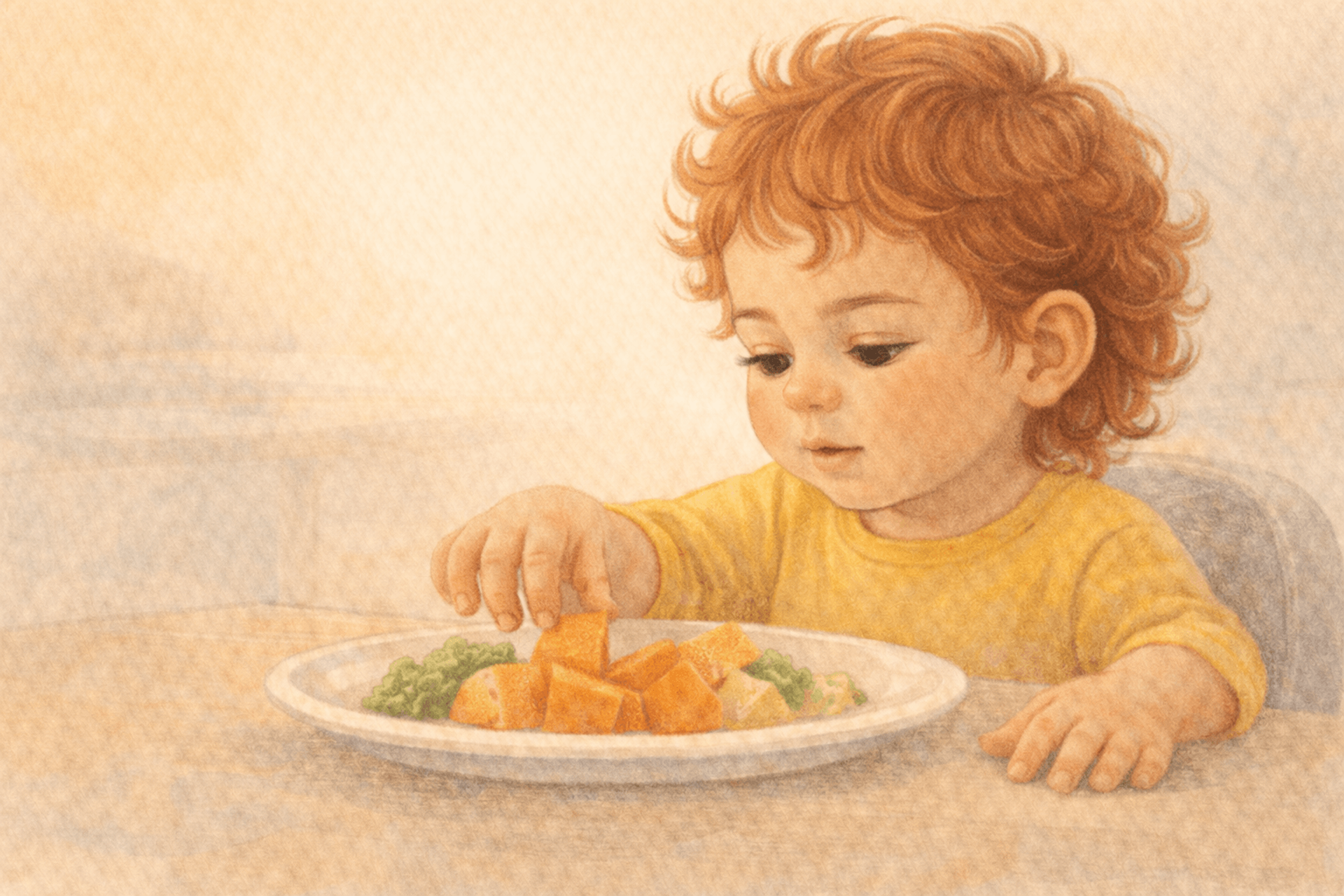
For the vast majority of families dealing with a picky eater toddler, the evidence keeps pointing to the same handful of things: keep showing up with varied food, eat it yourself at the same table, remove the pressure and the performance, and give the biology time. The sweet potato will probably come back around — most likely on a random Wednesday, for no discernible reason, and your toddler will eat it like it was never a problem.
If your family is working on building more structure around meals and transitions, our article on why daily routines reduce toddler tantrums covers the research behind predictable sequences and why they help toddlers feel safer — even at the dinner table.
Frequently Asked Questions
Food neophobia typically peaks between ages two and four and then gradually decreases through middle childhood, with most children naturally expanding their food preferences by school age. Low-pressure mealtime environments and regular exposure to varied foods consistently accelerate this process in the research.
Most pediatric dietitians recommend offering one family meal that includes at least one component your child usually accepts, then letting the child decide what and how much to eat from what's available. Preparing an alternative dinner each time a child refuses teaches the child that rejection reliably produces something better — which makes the pattern harder to change, not easier.
When intake is measured over several days rather than at a single meal, most picky eaters are getting what they need nutritionally. A daily multivitamin can serve as a useful safety net during phases of very limited eating, but it's worth discussing with your pediatrician before starting one, because supplementation needs vary by child and diet.
Extremely restricted eating can sometimes occur alongside autism spectrum disorder or sensory processing differences, but the everyday picky eating that most toddlers go through is common, well-documented, and not a diagnostic indicator on its own. If food refusal comes together with other concerns — restricted interests, repetitive behaviors, or differences in social communication — it's worth bringing up with your pediatrician for a fuller picture.
For educational and informational purposes only. Not a substitute for professional medical or nutritional advice. If you have concerns about your child's eating or growth, consult your pediatrician or a registered dietitian.
- Lam, J. (2015). Picky Eating in Children. Frontiers in Pediatrics, 3, 41.
- Kerzner, B., Milano, K., MacLean, W. C., Berall, G., Stuart, S., & Chatoor, I. (2015). A Practical Approach to Classifying and Managing Feeding Difficulties in Young Children. Pediatrics, 135(2), 344–353.
- Nekitsing, C., Hetherington, M. M., & Blundell-Birtill, P. (2025). Risk Factors and Consequences of Food Neophobia in Children — A Systematic Review. Nutrients.
- Cardona Cano, S. et al. (2023). Interventions for Picky Eaters — A Scoping Review. Nutrients.
- Walton, K. & Haines, J. (2025). Five Science-Backed Tips for Picky Eaters. Today's Parent.
- Johnson, S. L., et al. (2019). Colorado LEAP Study: Positive Food Environments and Willingness to Try. BMC Public Health.
- Reinier, S. (2025). Picky Eating in Toddlers: Tips from a Pediatric Dietitian. University Hospitals.
- Center for Nutrition Studies. (2025). Early Food Exposure and Acceptance in Young Children.
- Mennella, J. A., Jagnow, C. P., & Beauchamp, G. K. (2001). Prenatal and postnatal flavor learning by human infants. Pediatrics, 107(6), e88.
- Bartoshuk, L. M., Duffy, V. B., & Miller, I. J. (1994). PTC/PROP tasting: Anatomy, psychophysics, and sex effects. Physiology & Behavior, 56(6), 1165–1171.
- Zucker, N., et al. (2015). Psychological and psychosocial impairment in preschoolers with selective eating. Pediatrics, 136(3), e582–e590.

More Articles

Parallel Play in Toddlers: Why Side-by-Side Is the Social Work
Your toddler spent the entire playdate building separate towers, and nobody shared a single block. That counted — more than it looked. A 2025 longitudinal study found that playing beside a specific child consistently predicted later social play with that same child, but not the other way around. Here's what parallel play in toddlers actually is, why the science calls it strategic rather than passive, and what it means for how you run a playdate.

When Do Babies Point: Why It Matters for Language
Most milestone articles treat pointing as a box to check around 12 months. The research tells a different story — one that starts months earlier, runs through the infant brain, and traces back to how much the parent is pointing. Here's what the last fifteen years of research actually found, and what it means for everyday interactions.

When Do Babies Wave Bye-Bye: Why Your Baby Needs You to Wave First
Most baby milestones unfold on a biological schedule — waving isn't one of them. A 2023 study found that babies develop imitation ability because their caregivers imitate them first, and waving is named directly as a cultural gesture learned through that loop. Here's what the research says about the 9–12 month window, why the first wave looks nothing like a wave, and what helps it arrive.