Activities for a 5 Year Old: Kindergarten Prep Starts in the Kitchen
Your five-year-old spent twenty minutes this morning refusing to put on shoes, then another ten negotiating the terms of breakfast. The activities for a 5 year old you've been researching are considerably more structured than any of that. But a 2019 study that followed nearly ten thousand American kindergartners found that the daily activity most reliably linked to academic confidence, better friendships, and life satisfaction in third grade was one that most kindergarten-prep guides leave off the list entirely. It turns out the best prep for school might already be happening in your kitchen.
- What shifts in the five-year-old brain that makes this year different from four, and why the timing matters for which activities land
- The study that followed nearly ten thousand kindergartners and found that chores predicted academic success more reliably than academic drills
- Why the medium your child uses to practice letters matters more than the number of letters practiced
- The math-readiness activity that looks like playing with blocks, because it is
- What happens when you stop reading to your child and ask your child to tell you the story instead
- The brainstem connection between keeping a beat and learning to read, plus what the evidence on sleep and screens says
If the one-sentence answer is enough, you’ve got the gist. If you want the mechanism behind each piece, keep reading.
Five is not just older four — the brain is doing something genuinely new
The cognitive shift that happens between four and five is quieter than the leap from two to three, but it is real, and it changes which activities reach the brain. By age 5, most children can follow three-step instructions, sustain focused attention on a chosen task for roughly 10 to 15 minutes, and begin to understand that their own knowledge can be incomplete, meaning there are things they don't know yet. That last part, called metacognitive awareness in the research, is new territory. The child who asks "how do I spell that?" or "wait, is that right?" is not just learning but monitoring the learning itself, and that capacity opens up a different kind of practice session entirely.
According to the 2022 CDC developmental milestones update by Zubler and colleagues, most 5-year-olds can draw a person with at least six distinct body parts, tell a simple story with a beginning, middle, and end, and name letters of the alphabet on sight. But there is a meaningful gap between knowing those milestones and knowing which activities move the needle on them. The difference matters more at 5 than it did at 4, because this is the year when kindergarten transitions from an abstract future event to something that is actually happening in a few months.
What is different from four specifically? At four, the executive function work is primarily about inhibitory control: stopping yourself from grabbing the toy, waiting your turn, playing Red Light Green Light without breaking too early. As we covered in our activities for a 4 year old piece, those capacities are the real engine of academic readiness, and they develop through rule-based games and structured pretend play. At five, that engine has more fuel. The child can now hold a more complex goal in mind, revise a plan when it isn't working, and tolerate a longer gap between effort and result. The question is what to run it on.
What 9,971 kindergartners taught us about the best preparation for school

In 2019, researchers White, DeBoer, and Scharf published a study in the Journal of Developmental and Behavioral Pediatrics drawing on the Early Childhood Longitudinal Study, a nationally representative US cohort of 9,971 children who entered kindergarten in 2010 and 2011. The researchers asked one focused question: does the frequency of household chores during kindergarten predict any outcomes three years later?
It does, across multiple dimensions. Children who were given regular household responsibilities in kindergarten scored significantly higher in third grade on their own sense of academic competence, on peer relationship quality, and on general life satisfaction. These associations held after controlling for family income, sex, and parent education. The chores themselves were ordinary: setting the table, putting laundry away, taking out trash, caring for a pet.
The mechanism is not about the task itself but about what the task teaches. A child who sets the table learns that effort produces a real and visible outcome, that the household depends on that contribution, and that being asked to do something is a form of trust rather than an imposition. These are precisely the dispositions that kindergarten teachers point to when asked what distinguishes children who settle in quickly from those who struggle, a topic covered in depth in our piece on what school ready actually means. The academic competence piece is especially worth noting: a child who knows from experience that hard things are possible does not crumble at an unfamiliar worksheet. A child who has only ever been taught things has had fewer reps at figuring things out alone.
For parents who want to make this practical without turning it into an elaborate system, the simplest approach is one age-appropriate task, every day, that contributes to the household. Our Big Kid Routine Cards include a card for setting the table, which sounds minimal but is genuinely the format the research supports: a real task, a real result, done consistently. The routine cards cover the 3–5 age range specifically, which puts them squarely in the window the study examined.
Why a pencil beats a tablet for reading prep
In 2012, researchers James and Engelhardt at Indiana University ran an experiment with preliterate 4- and 5-year-olds. Children were divided into three groups: one practiced letters by printing them freehand on paper, one typed them on a keyboard, and one traced them on a screen. Afterward, each child was placed in a brain scanner (a functional MRI, which measures blood flow by region to show which areas are active) and shown images of the practiced letters while their brain activity was recorded.
The printing group activated a set of interconnected brain regions (the fusiform gyrus, the inferior frontal gyrus, and a region involved in spatial processing of letterforms) that researchers recognize collectively as the reading network, the circuitry underlying successful letter recognition and early decoding. The typing group and the tracing group did not. The reading circuit was recruited only after handwriting, not after either of the other two conditions.
A 2021 study by Vinci-Booher and James, also at Indiana University, extended this finding to 5-to-8-year-olds and measured brain activation during handwriting directly. Children whose motor regions showed stronger engagement during letter formation had better literacy outcomes; the handwriting-literacy link was functionally meaningful, not just structural.
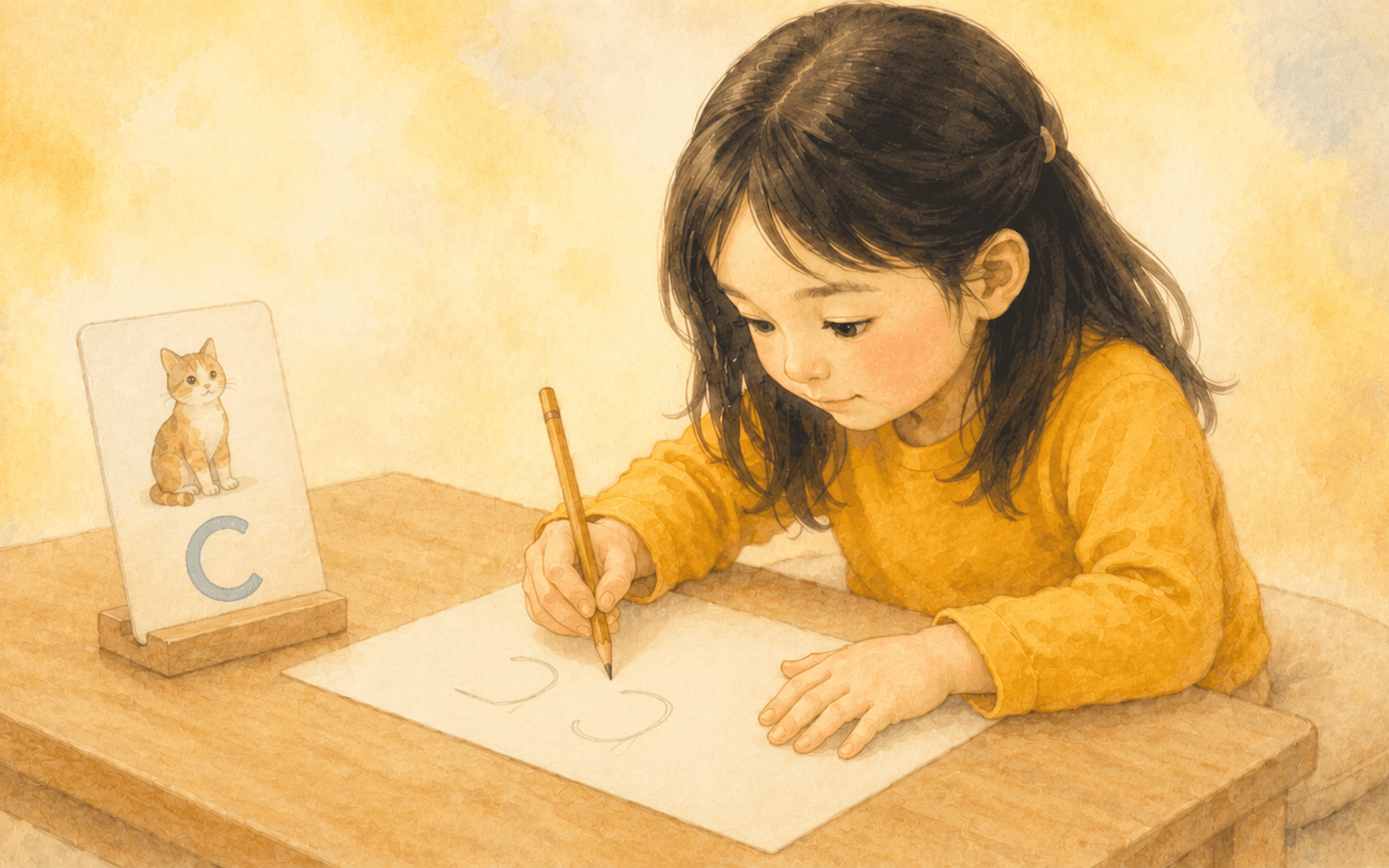
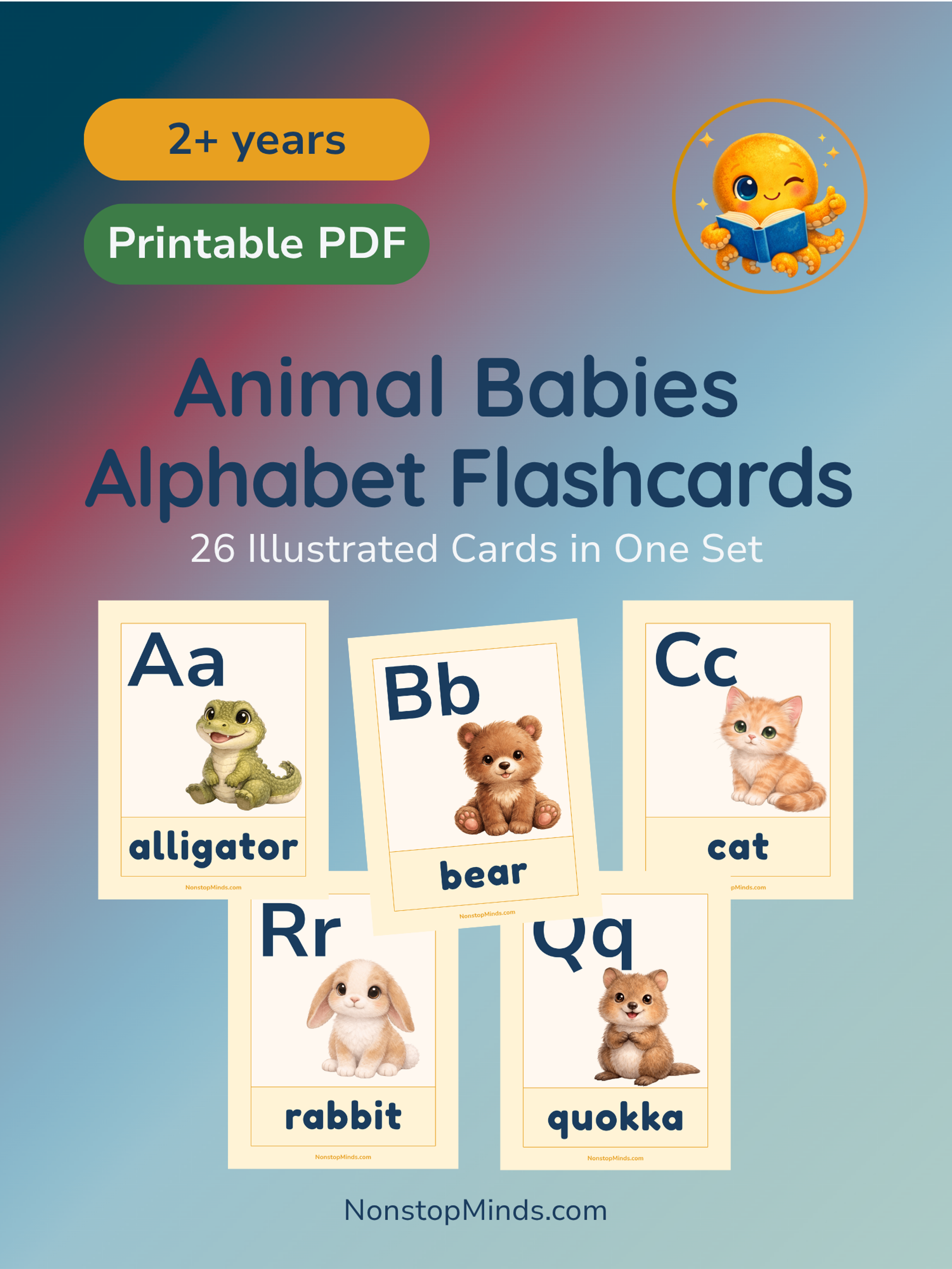
What this means practically is that when a 5-year-old practices letters with a pencil or crayon on paper, they are doing something different for the brain than practicing the same letters on a tablet. Both feel like letter practice. Only one recruits the reading circuit. Using physical flashcards like our Animal Babies Alphabet Flashcards as a prompt, look at the card, name the animal, write the first letter, bringing the tactile component into alphabet practice in exactly the way the neuroscience supports. The goal is not to avoid tablets. It is to make sure the pencil gets time too.
Blocks, puzzles, and the math connection most prep programs miss
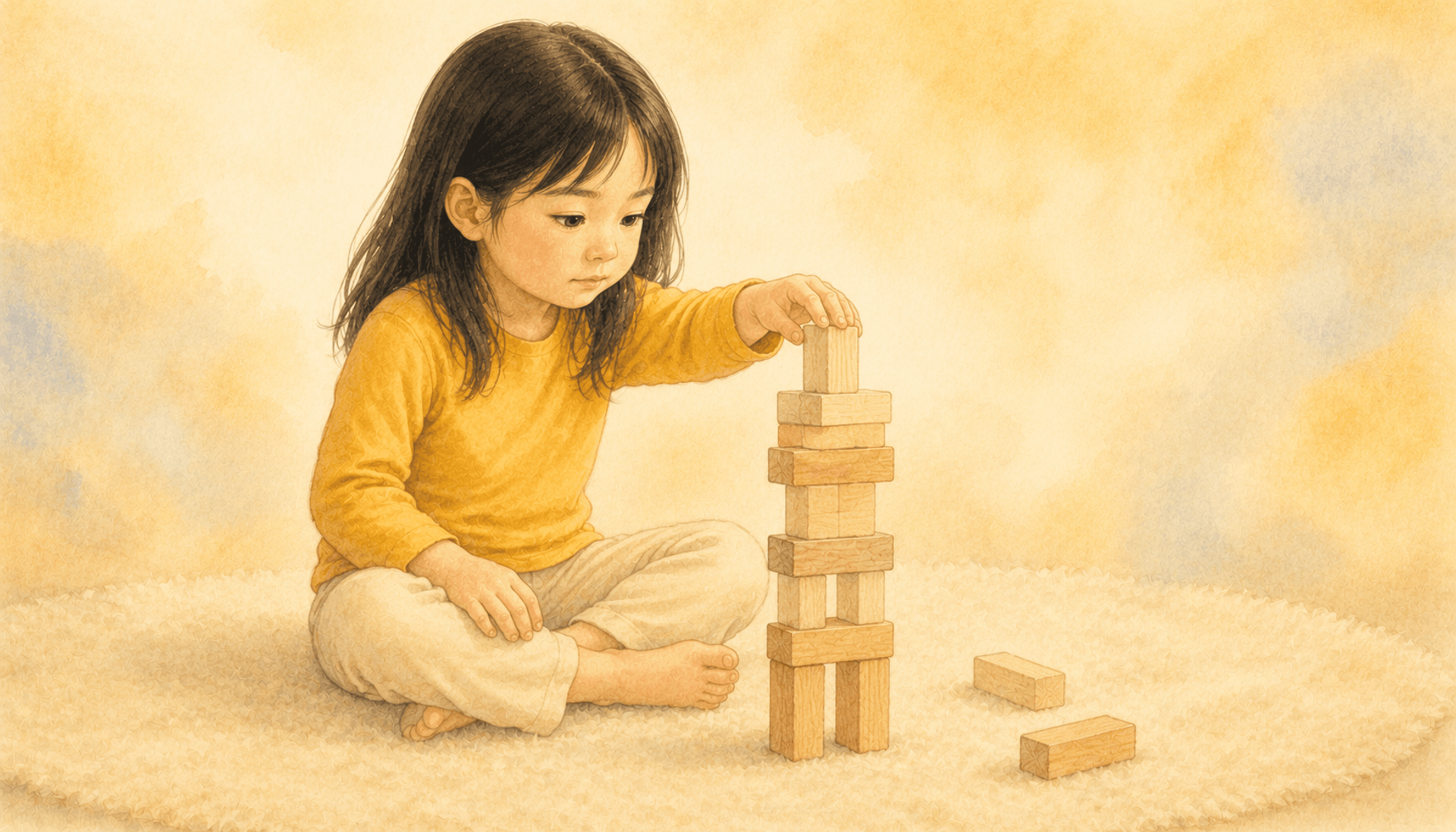
The conventional approach to math readiness at 5 is number-focused: counting to 20, recognizing written numerals, beginning to add small quantities. None of that is wrong. But a study of 12,099 children in the UK Millennium Cohort by Gilligan, Flouri, and Farran, published in the Journal of Experimental Child Psychology in 2017, found that spatial skill at age 5 explained 8.8 percent of the variation in math achievement at age 7, even after controlling for gender, socioeconomic status, ethnicity, and verbal ability.
The spatial task in that study was not abstract. It was pattern construction, reproducing a block arrangement from a model, the kind of thing a child does naturally with Magna-Tiles, LEGO, or jigsaw puzzles. This kind of hands-on spatial work, not counting practice or number recognition drills, was one of the strongest longitudinal predictors of later math performance in the sample.
A 2022 meta-analysis by Hawes, Gilligan-Lee, and Mix in Developmental Psychology confirmed the causal direction. Across 89 controlled training studies involving nearly 3,800 children, spatial practice produced meaningful improvements in math performance. The effect was not limited to geometry; it transferred to number sense, early arithmetic, and mathematical reasoning more broadly.
The reason is that spatial reasoning and mathematical thinking share cognitive infrastructure. Understanding that this piece is larger than that piece, that the block pattern has a left-right symmetry, that the puzzle edge belongs here and not there. All of this trains the same mental system that will later process quantity, magnitude, and number relationships. A child working through a 24-piece puzzle or building an elaborate structure out of unit blocks is doing math preparation that a number worksheet cannot replicate. For the full picture of how hands-on spatial work scaffolds learning in earlier years as well, our activities for a 3 year old piece covers the foundations.
Stop reading to them — ask them to tell you the story

Most parents know that reading aloud supports literacy development. What the research on 5-year-olds specifically points toward is the complementary practice: asking the child to be the one who tells.
In 2021, Babayiğit, Roulstone, and Wren published a nine-year longitudinal study in the British Journal of Educational Psychology following 716 children from age 5 through age 14. Oral narrative skills at age 5 — how well a child could produce a story, retell a sequence, or narrate events coherently. These skills made unique contributions to reading comprehension at ages 10 and 14, independently of vocabulary and phonological awareness. Story production, not story listening, was the predictor.
The reason is that telling a story requires a different set of cognitive operations than listening to one. To narrate coherently, a child has to hold a sequence in working memory, decide which details a listener needs who wasn't there, track cause and effect, and monitor whether the sequence makes sense. These are, in miniature, exactly what reading comprehension requires: building a mental model of events, tracking characters across time, and extracting meaning from sequence. The child who has told thousands of small stories by age 5 arrives at reading comprehension with a template the brain already knows how to use.
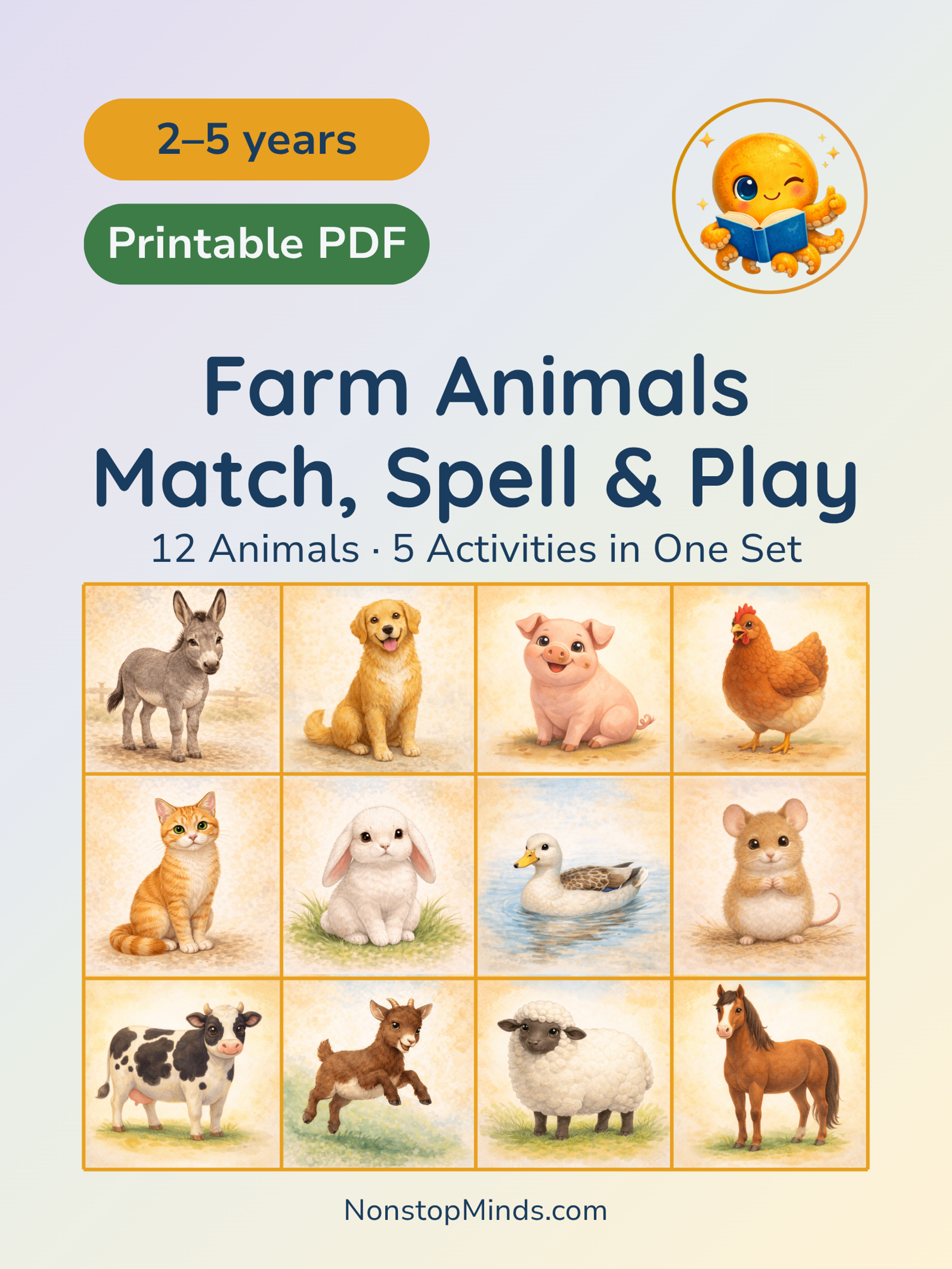
The most useful prompts are the ones that require the child to construct a sequence, not just answer yes or no. Asking a child to retell what happened in the book you just read together, to narrate the day from the beginning ("Start from when you woke up — who was there? what happened first?"), or to invent an ending for a story you left deliberately unfinished are all versions of the same exercise: the child has to hold a sequence in mind and deliver it to someone who doesn't already know it. Our Farm Animals Match, Spell & Play naturally triggers this kind of verbal production, naming the animals, working through the spelling, then talking about where animals live and what they do. That vocabulary-and-narrative combination maps directly to the competency the research links to long-term reading outcomes. For the earlier foundation that this builds on, our piece on reading to your baby — when to start covers how the read-aloud habit and the story-production practice work as two sides of the same process.
The brainstem, the beat, and a brief note on sleep and screens
In 2021, Bonacina and colleagues at Northwestern University published a study in npj Science of Learning involving more than 150 preschoolers. The researchers measured two things: how well each child could synchronize movement to a steady beat, and how robustly the auditory brainstem (the brain's hearing relay station, which converts raw sound into organized brain signals) encoded speech sounds. They also ran the full battery of standard preliteracy tests — phonological awareness, letter knowledge, vocabulary, rapid naming.
Children who performed well on the beat-synchronization task outscored peers on every single preliteracy measure. They also showed more stable brainstem encoding of speech sounds, including in background noise. The mechanism is not that musical children are generally more advanced. It is that synchronizing movement to rhythm trains the auditory brainstem to build more precise representations of speech sounds, which is foundational for distinguishing similar sounds like /b/ and /p/, the exact discrimination that phonics instruction depends on.
The practical implication is not enrolling a 5-year-old in drum lessons. It is letting the child bang on things to music, clap along to songs with a strong beat, march through the living room, and dance to music with a clear steady pulse. The activity looks like play because it is play. The brainstem encodes accordingly.
Two additional findings are worth a brief mention. On sleep: Joechner and colleagues, publishing in Psychophysiology in 2021, found that 5-and-6-year-olds consolidate memory during sleep through a different mechanism than adults, with specific electrical brain patterns called sleep spindles doing work that the mature system handles differently. The implication is that uninterrupted overnight sleep matters especially during this developmental window, given that the infrastructure is still being built. A consistent bedtime routine, which we cover in our piece on why daily routines reduce toddler tantrums, remains relevant for exactly these reasons at 5.
The screen research is also worth a brief mention. A 2024 study in JAMA Pediatrics by Wang and colleagues, following nearly 16,000 children from age 3 to 6, found that content type predicted mental health outcomes more strongly than total daily screen time. Under the same overall screen budget, children who watched a higher proportion of educational programming had roughly 27 percent lower odds of mental health problems at age 6. The practical question is less "how much?" and more "watching what?" — which turns out to be a more useful frame than total-minutes tracking for most families.
Frequently Asked Questions
Kindergarten teachers, when surveyed in large national studies, consistently rank behavioral and social capacities above academic content as the skills that predict a smooth first year: the ability to follow two-step directions, wait without disrupting the group, ask for help when stuck, and manage a minor disappointment without falling apart. Academically, recognizing some letters and numbers, writing a first name, and being able to tell a simple story are reasonable targets, but none of them are the main event. A child who can manage 26 letters but cannot sit through a 10-minute group activity will have a harder first semester than a child who knows 15 letters and can regulate.
The most research-supported activities for 5 year olds at home are: building with blocks, LEGO, or puzzles (spatial construction, which UK Millennium Cohort research on 12,099 children found to be among the strongest predictors of age-7 math achievement); writing letters freehand on paper with a pencil or crayon (the only condition in which preliterate children's brains recruit the reading circuit, per functional brain-imaging research at Indiana University); giving the child a daily household chore; asking the child to retell stories and narrate events aloud; and any activity that involves keeping a steady beat — clapping games, marching, or rhythm play. Screens with genuinely educational content add value within a reasonable daily total.
The developmental research at 5 does not divide by gender — the same capacities matter, and the same activities build them. For high-energy children, the most practical adjustment is anchoring the cognitive work to physical movement: clapping games rather than worksheets, building projects with a clear goal before drawing or writing, outdoor pattern-seeking before letter practice at a table. The chores finding, the handwriting-reading circuit evidence, the spatial construction-to-math connection, and the beat-synchronization preliteracy research all apply equally regardless of gender.
Research does not support a specific structured-activity quota, and the strongest predictors of kindergarten success develop through ordinary daily life rather than dedicated prep sessions. The World Health Organization recommends at least 180 minutes of physical activity at any intensity per day for children under 6, but this is about health broadly, not school readiness specifically. One focused 20-minute hands-on activity plus a consistent daily chore plus unstructured outdoor time covers more developmental ground than several hours of worksheet-style practice. The goal is not a full schedule — it is making sure that the daily routine includes real responsibility, hands-on building, conversation with attentive adults, and time to move.
For educational and informational purposes only. Not a substitute for professional medical, developmental, or educational advice. If you have concerns about your child's development or school readiness, consult your pediatrician or your school district's early childhood team.
- Babayiğit, S., Roulstone, S., & Wren, Y. (2021). Linguistic comprehension and narrative skills predict reading ability: A 9-year longitudinal study. British Journal of Educational Psychology, 91(1), 148–168.
- Bonacina, S., Krizman, J., White-Schwoch, T., Nicol, T., & Kraus, N. (2021). Rhythm, reading, and sound processing in the brain in preschool children. npj Science of Learning, 6, 20.
- Gilligan, K. A., Flouri, E., & Farran, E. K. (2017). The contribution of spatial ability to mathematics achievement in middle childhood. Journal of Experimental Child Psychology, 163, 107–125.
- Hawes, Z. C. K., Gilligan-Lee, K. A., & Mix, K. S. (2022). Effects of spatial training on mathematics performance: A meta-analysis. Developmental Psychology, 58(1), 112–137.
- James, K. H., & Engelhardt, L. (2012). The effects of handwriting experience on functional brain development in pre-literate children. Trends in Neuroscience and Education, 1(1), 32–42.
- Joechner, A.-K., Wehmeier, S., & Werkle-Bergner, M. (2021). Electrophysiological indicators of sleep-associated memory consolidation in 5- to 6-year-old children. Psychophysiology, 58(8), e13829.
- Vinci-Booher, S., & James, K. H. (2021). Protracted neural development of dorsal motor systems during handwriting and the relation to early literacy skills. Frontiers in Psychology, 12, 750559.
- Wang, H., Zhao, J., Yu, Z., Pan, H., Wu, S., Zhu, Q., Dong, Y., Liu, H., Zhang, Y., & Jiang, F. (2024). Types of on-screen content and mental health in kindergarten children. JAMA Pediatrics, 178(2), 125–132.
- White, E. M., DeBoer, M. D., & Scharf, R. J. (2019). Associations between household chores and childhood self-competency. Journal of Developmental and Behavioral Pediatrics, 40(3), 176–182.
- Zubler, J. M., Wiggins, L. D., Macias, M. M., Whitaker, T. M., Rice, C. E., Tahir, M., & Ghandour, R. M. (2022). Evidence-informed milestones for developmental surveillance tools. Pediatrics, 149(3), e2021052138.
More Articles
Parallel Play in Toddlers: Why Side-by-Side Is the Social Work
Your toddler spent the entire playdate building separate towers, and nobody shared a single block. That counted — more than it looked. A 2025 longitudinal study found that playing beside a specific child consistently predicted later social play with that same child, but not the other way around. Here's what parallel play in toddlers actually is, why the science calls it strategic rather than passive, and what it means for how you run a playdate.
When Do Babies Point: Why It Matters for Language
Most milestone articles treat pointing as a box to check around 12 months. The research tells a different story — one that starts months earlier, runs through the infant brain, and traces back to how much the parent is pointing. Here's what the last fifteen years of research actually found, and what it means for everyday interactions.
When Do Babies Wave Bye-Bye: Why Your Baby Needs You to Wave First
Most baby milestones unfold on a biological schedule — waving isn't one of them. A 2023 study found that babies develop imitation ability because their caregivers imitate them first, and waving is named directly as a cultural gesture learned through that loop. Here's what the research says about the 9–12 month window, why the first wave looks nothing like a wave, and what helps it arrive.